



Lai Ching-te marks two years with mixed reviews from voters
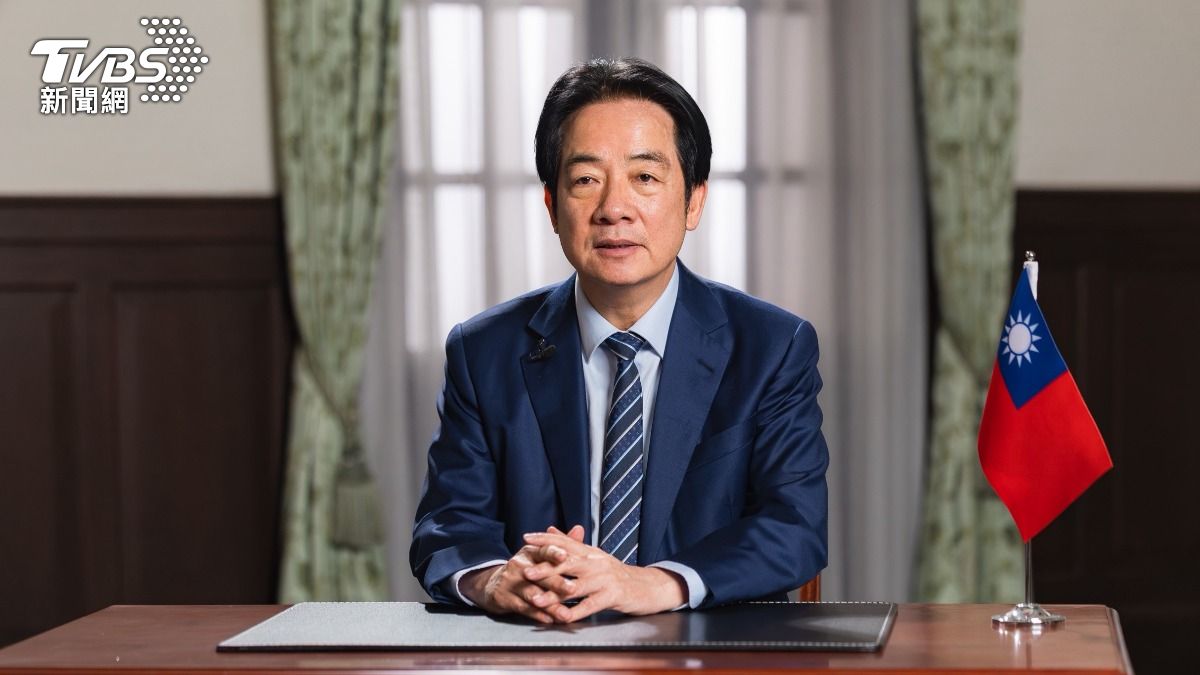
TAIPEI (TVBS News) — Two years into his presidency, Lai Ching-te (賴清德) is getting starkly different reviews depending on what voters care about. If you're watching the stock market, you're probably relieved — economic satisfaction surged 12 points. If you've been scammed, you're likely frustrated — anti-fraud efforts scored the worst rating of any policy. A new poll released Thursday (May 14) captures this divide: Lai's approval climbed to 38%, a 6-point rebound, but most Taiwanese remain dissatisfied.
The survey by TVBS Poll Center (TVBS民調中心) found that disapproval dropped 10 points to 45%. Satisfaction with the government's economic performance rose from 34% to 46% — the largest increase among 11 policy areas surveyed. The improvement comes as Taiwan has posted strong GDP growth and its stock market has rallied, factors the polling organization cited as likely contributors.
But the survey also revealed persistent frustrations with everyday governance. Anti-fraud efforts scored just 34% approval — unchanged from a year ago — while 56% expressed dissatisfaction, the highest disapproval of any policy area. Judicial reform fared nearly as poorly, with 55% dissatisfied and only 31% satisfied.
Cross-strait relations also remained a sore spot, with 51% of respondents dissatisfied with Lai's handling of ties with China, though that figure dropped 7 points from the previous year. The poll was conducted after Kuomintang Chairwoman Cheng Li-wun (鄭麗文) visited China, a trip that has renewed debate over cross-strait dialogue.
On domestic policy, however, Lai found brighter spots. His signature "Healthy Taiwan" (健康台灣.) initiative earned the highest marks, with 50% approval and 35% disapproval—the only policy area where satisfaction clearly exceeded dissatisfaction as Taiwan has become a super-aged society. Defense policy ranked second at 47% approval, though 46% disapproved, reflecting a near-even split that mirrors ongoing legislative battles over military spending.
The Executive Yuan (行政院), Taiwan's cabinet, recently proposed an eight-year military procurement plan totaling NT$1.25 trillion (around US$39.6 billion). But the Legislative Yuan (立法院), Taiwan's parliament, passed a rival bill capping defense spending at NT$780 billion (around US$24.7 billion). The opposition Kuomintang (國民黨) and Taiwan People's Party (民眾黨) backed the lower figure, highlighting the "minority government" dynamic Lai faces with opposition parties controlling the legislature.
Beyond policy ratings, the poll measured approval of Lai's leadership team. Vice President Hsiao Bi-khim (蕭美琴) saw her approval climb to 45%, up 9 points from a year ago and her highest rating since taking office. Premier Cho Jung-tai's (卓榮泰) approval rose 4 points to 37%, while the cabinet overall improved to 36% from 30%.
The poll also measured public trust in Lai's leadership. Some 44% of respondents said they trust the president, up from 38% a year ago, while 48% said they do not. When asked about confidence in his future performance, 41% expressed optimism compared to 51% who said they lacked confidence.
On the question of national direction, 42% said Lai is leading the country the right way, up from 36% a year ago, while 40% said he is heading in the wrong direction, down from 49%. The narrowing gap suggests Lai has stabilized his political standing, though he remains underwater on most metrics heading into the second half of his term.
Lai's trajectory has been volatile since taking office in May 2024. His approval peaked at 40% during his first 100 days, dropped to 32% at his one-year anniversary, and plunged to 28% after Washington announced 20% tariffs on Taiwanese goods in August 2025. The administration also faces external pressures, including ongoing U.S. tariffs, the U.S.-China trade war, and U.S.-Iran tensions, which the poll noted have complicated domestic policymaking.
The poll reveals a president governing two Taiwans: one that sees economic progress and another that feels abandoned on everyday concerns. With two years remaining before the 2028 election, Lai's challenge is clear—convince the scam victims and court reformers that they're living in the same Taiwan as the stock market winners. ◼ (At time of reporting, US$1 equals approximately NT$31.58)
>>> The TVBS Poll Center conducted the survey by telephone May 4-10, interviewing 1,138 adults across Taiwan. The margin of error is plus or minus 2.9 percentage points.