


Taiwan left guessing after dueling Trump-Xi readouts
TAIPEI (TVBS News) — Premier Cho Jung-tai (卓榮泰) faced a diplomatic puzzle Friday (May 15) but stressed that Taiwan is "closely monitoring" the situation. China had just warned President Trump that mishandling the island could spark a confrontation, while the White House never mentioned Taiwan in its summit summary. Was the silence a sign of private reassurances — or evidence that Taiwan had been sidelined?
Before entering Taiwan's parliament, the Legislative Yuan (立法院), in the morning, reporters asked the premier whether the White House's decision to omit Taiwan from its official summit readout was a positive or negative signal — a question that goes to the heart of whether Washington had privately reassured Taipei or simply sidelined the issue. Cho did not respond and walked into the chamber.
Foreign Minister Lin Chia-lung (林佳龍), whose ministry monitors U.S.-China dynamics daily, struck a more appreciative tone that same day. He thanked the United States for reaffirming its Taiwan policy and support for peace and stability in the Taiwan Strait. Taiwan will "continue to strengthen self-defense" and work with "all countries that love freedom and democracy," Lin said in a statement.
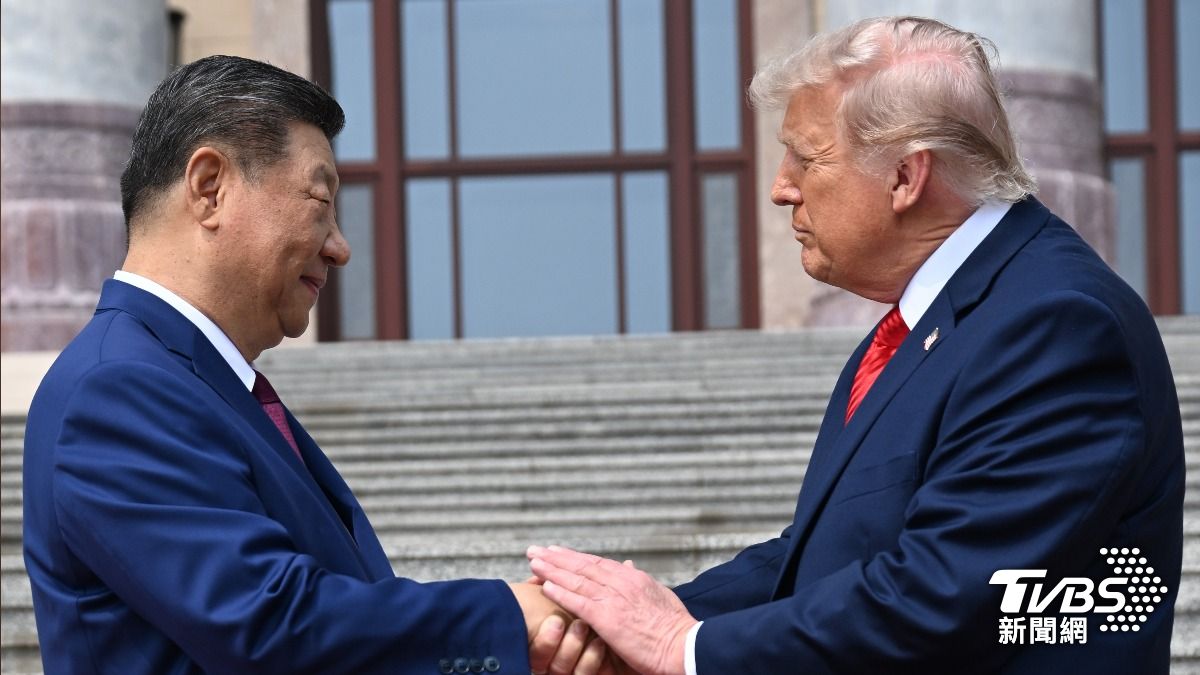
Both officials were responding to Chinese President Xi Jinping's (習近平) sharpest warning yet on Taiwan during Thursday's summit at the Great Hall of the People in Beijing. "If handled poorly, the two countries will collide — even conflict," Xi told Trump, according to China's official readout released by state news agency Xinhua (新華社). Xi also called Taiwan independence and Taiwan Strait peace "as incompatible as fire and water" and urged the United States to handle Taiwan with "utmost caution."
The White House, however, made no mention of Taiwan in its summit readout — a striking omission given Xi's emphasis. It focused instead on economic cooperation, fentanyl, American agricultural products, and an agreement that the Strait of Hormuz must remain open. The two sides also agreed that Iran must never possess nuclear weapons.
Secretary of State Marco Rubio later confirmed that Taiwan came up during the talks, telling NBC News that U.S. policy "has not changed." Rubio said American arms sales to Taiwan "did not feature prominently" in the discussions. He warned that any forced change to the status quo would be "bad for both countries."
Taiwan's Ministry of Foreign Affairs (外交部) also noted Rubio's comments that China's military buildup is aimed not only at Taiwan but at projecting power globally. It said Chinese warplanes and vessels continued operating around Taiwan through Friday, underscoring what it called a "major risk" to regional peace and stability.
Analysts said Xi's language marked a significant escalation from previous summits. Wang Hsin-hsien (王信賢), a specialist in cross-strait relations at National Chengchi University (政治大學), told United Daily News that Xi's use of words like "collision" and "conflict" carried "military undertones." The language reflected Beijing's growing "sense of urgency" on Taiwan, Wang said.
Chang Teng-chi (張登及), a professor at National Taiwan University (台灣大學), told UDN that Beijing may have pressured Washington heavily during the talks. "The U.S. may have avoided mentioning Taiwan on the first day to avoid affecting the next day's discussions," Chang said. He added that Beijing's message was clear: strategic stability requires careful handling of the Taiwan issue.
The next test comes in September, when Trump has invited Xi to visit the White House on Sept. 24. That meeting will offer another opportunity for Xi to press his case on Taiwan — and for Taiwan to parse another set of dueling readouts. Treasury Secretary Scott Bessent said Trump will have "more to say" on Taiwan "in the coming days," but declined to elaborate.
Taiwan faces a paradox: If the White House omitted Taiwan because the issue was handled privately and reassuringly, silence is good news. If Taiwan was omitted because it wasn't discussed — or because Washington made concessions — silence is a warning. Until Trump speaks again, Taiwan won't know which. ◼