



Taiwan’s OSAT Sector Enters Unprecedented Expansion Cycle
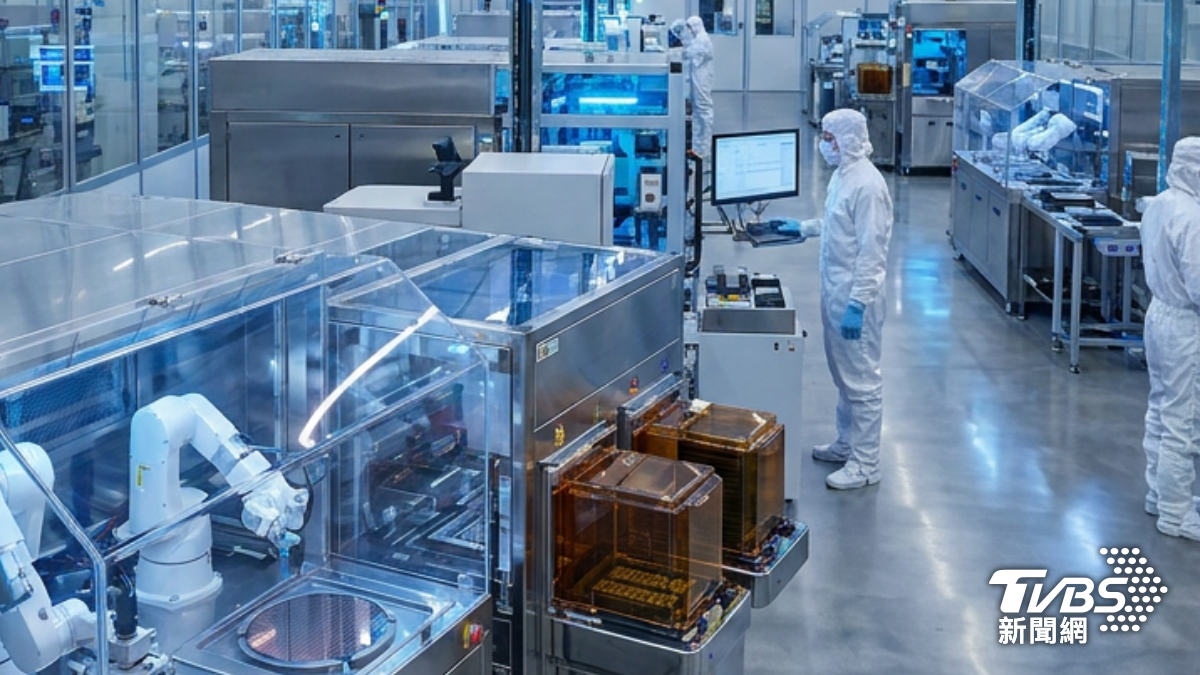
Taiwan’s chip packagers and testers, the companies that take a freshly made semiconductor wafer and transform it into a usable, qualified module, are in the middle of the biggest expansion their industry has ever seen.
Combined capital spending across Taiwan's outsourced semiconductor assembly and test sector, known as OSAT, is on track to hit a record NT$400 billion (around US$12.5 billion) in 2026. More than half of that will come from a single company, ASE Technology Holding, and its subsidiary Siliconware Precision Industries (SPIL). April's monthly numbers, read alongside first-quarter earnings, show that demand for advanced packaging and high-end testing is running well ahead of capacity. The sector is now structurally constrained, not by orders, but by equipment lead times, available real estate, and clean-room space.
ASE has raised its full-year capital spending forecast for a second time this year, to US$8.5 billion. Together with SPIL, it has snapped up more than ten new sites across Taiwan since January, including United Renewable Energy's Zhunan plant, Innolux's Fab 2 and Fab 5 in Tainan Science Park, and properties from HannStar Display and GPM. A new joint venture with Wus Printed Circuit will build a NT$35.24 billion (US$1.1 billion) advanced packaging plant in Kaohsiung's Nanzih park, focused on fan-out chip-on-substrate and flip-chip ball grid array, two packaging methods that route signals between a chip and the rest of the board. The facility is due to open in September 2029.
King Yuan Electronics (KYEC), one of Taiwan's biggest specialist test houses, has lifted its 2026 investment budget to NT$50 billion (US$1.6 billion) and signed factory leases in Yangmei, Toufen, and Tongluo in recent months. By the end of 2026, its total production capacity is expected to be 30 to 50 percent higher than today. Powertech Technology, which is leading Taiwan's push into fan-out panel-level packaging (FOPLP), a newer technique that builds packages on large rectangular panels rather than round wafers, has also raised its capital spending to NT$50 billion (US$1.6 billion).
Smaller players are scaling just as fast. Sigurd Microelectronics has lifted its capital spending nearly 50 percent, from NT$5.9 billion (US$185 million) to NT$8.8 billion (US$275 million), and is readying its new Hukou Phase II plant for later this year. Ardentec has taken a similarly aggressive line, with wafer-testing equipment lead times now stretched to six to eight months. Both are positioning to take spillover orders from customers waiting in line for CoWoS, TSMC's advanced packaging platform that bundles GPU dies with high-bandwidth memory, and to win new test programmes for AI ASICs, the custom AI chips that the cloud giants are designing themselves rather than buying from Nvidia.
ChipMOS Technologies reported first-quarter net profit up 186 percent year on year on memory-driven test demand. WinWay's first-quarter revenue reached NT$2.98 billion (US$93 million), up nearly 30 percent year on year, while BTL Group's AI testing business has crossed 10 percent of revenue and its order book is full into September.
Equipment lead times remain the single biggest constraint, and the scramble for clean-room real estate has become so intense that smaller suppliers are increasingly being shut out of the locations they want by larger players willing to move first.
Two themes are likely to define the rest of 2026. First, CoWoS overflow from TSMC will keep feeding ASE, Powertech, KYEC, Sigurd, and Ardentec. Second, the custom AI chip programmes ramping at Amazon Web Services, Google, Microsoft, and Meta will need high-end test capacity through 2027 and 2028. The spending commitments now visible across Taiwan's OSAT sector are an explicit bet on a multi-year cycle the industry expects to keep running well into the late 2020s.