


From DGX-1 to HGX: How Taiwan Became Nvidia’s AI Engine
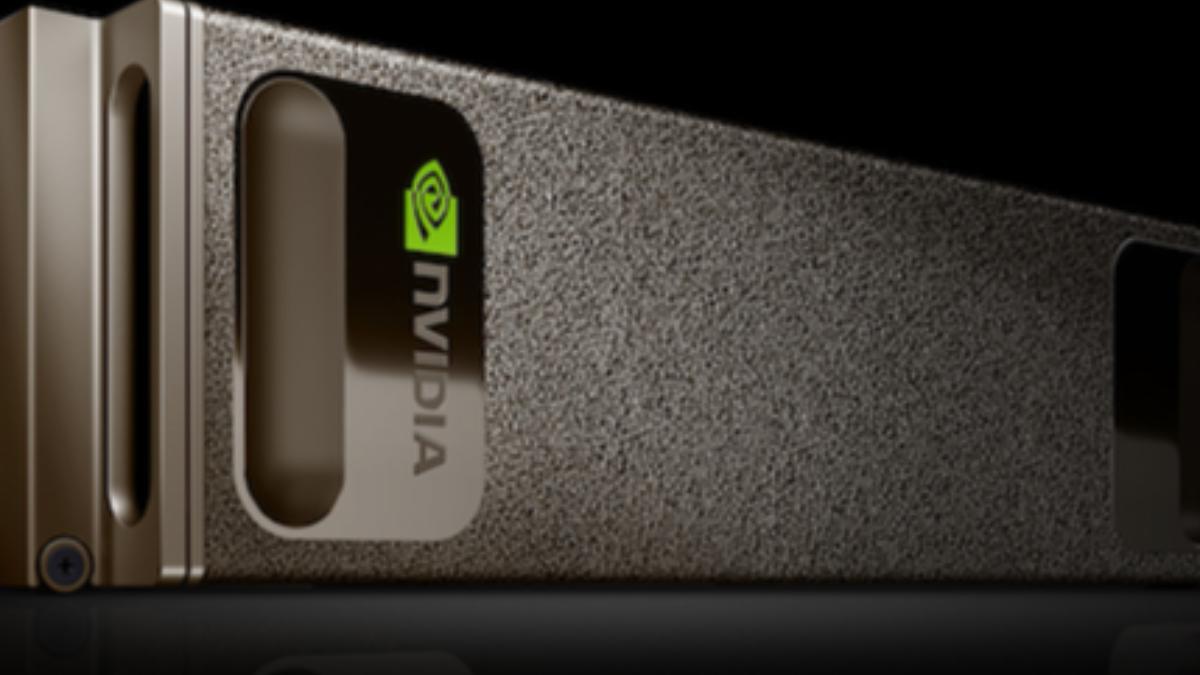
How did Taiwan become, in Jensen Huang's words, the epicenter of the AI revolution? The first major step came following the launch of the DGX-1.
In August 2016, Huang personally delivered the first production unit of Nvidia's DGX-1 AI supercomputer to OpenAI's office in San Francisco. He set the system down in front of Elon Musk and the OpenAI engineers, opened the cover, and signed the inside of the chassis with a black marker: "To Elon & the OpenAI Team! To the future of computing and humanity. I present you the World's First DGX-1!"
The machine inside was already a Taiwan story. Its eight Tesla P100 GPUs were Pascal-era chips built on TSMC's 16nm FinFET process with CoWoS-stacked HBM memory. The system drew 3,500 watts at full load, enough to power a typical American household, and cost US$129,000.
What made the DGX-1 radical was its architecture. The eight GPUs were linked through NVLink, Nvidia's proprietary interconnect, running at 160 gigabytes per second per GPU, roughly ten times the bandwidth of the PCI Express standard used in conventional servers. The cards behaved less like eight independent processors and more like one large processor with eight sets of arms. Building the server around the GPUs rather than the CPU was a decisive break with thirty years of server design, and it shaped everything that followed.
But the DGX-1 had a limitation that mattered more than its specifications. It sold one box at a time. The hyperscalers building data centers around GPU compute wanted thousands of identical servers, configured to their own specifications and sourced through the contract manufacturers they had used for a decade. Nvidia had a design house in Santa Clara and a single assembly line. It could not ramp to the volumes Microsoft, Google, Meta, and Amazon were beginning to plan around.
The answer was the HGX Partner Program, announced in May 2017. Nvidia opened the DGX-1 design under a licensing framework that let four Taiwan ODMs build the same architecture, customized to each hyperscaler and procured through the channels those customers already used.
The four were Foxconn, Inventec, Quanta, and Wistron, the companies that already built most of the world's cloud-server hardware. Nvidia did not have to forge a new manufacturing relationship with each hyperscaler. The relationships existed. They simply had to be pointed at a new product.
Taiwan's advantage was not only its customer base but its speed when designs changed. The HGX architecture allowed customer-specific variations in memory, networking, storage, and chassis dimensions, and supplying them required a component ecosystem that could turn around new specifications in days rather than months. That ecosystem already existed, clustered along the manufacturing corridor running through Taipei, Taoyuan, and Hsinchu.
By the end of 2019, the model was working. The foundation Taiwan would build the AI era on was now in place.