



Computex 2026: The Three Themes That Ran Through Every Hall
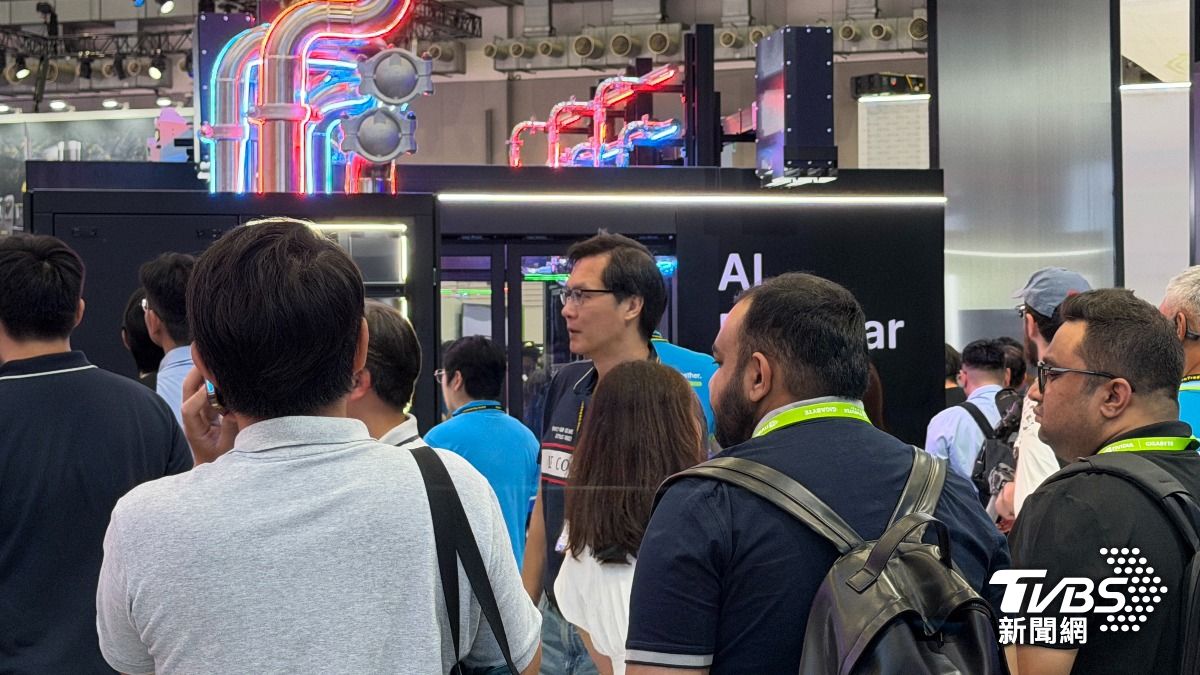
The crowds arrived early and never thinned. From the moment the gates opened each morning, the aisles of the Nangang Exhibition Center filled with a press of analysts, buyers, engineers, reporters, and tech enthusiasts that did not let up until the halls closed in the evening. Booths that in previous years drew a polite trickle were three deep in people leaning in to watch a robot arm sort parts or a coolant loop pulse through a transparent server rack. There was a charge in the air that trade shows rarely carry, the sense of being inside something while it is still happening rather than reading about it afterward. The banner overhead read "AI Together," and for once the slogan matched the feeling on the floor.
Nvidia's GTC Taipei keynote, held the day before Computex 2026 opened, set that tone. Chief executive Jensen Huang walked the audience through a vision of the next decade, and by the time he finished the week had its frame. What followed on the show floor confirmed what the monthly revenue reports of Taiwan's leading technology firms had been signaling for months. The AI infrastructure build-out is accelerating at a stunning rate, and as newer themes like agentic computing, robotics, and optical connectivity gather force, the pace looks set to quicken rather than ease. Three themes above all permeated the floor, and each one fed the next.
Agentic computing, the idea that software agents which reason, retrieve information, call tools, and act on a person's behalf will become the primary way people use machines, was the overriding theme of the show. In his keynote Huang described an era in which data centers, PCs, autonomous vehicles, humanoid robots, and even satellite systems share a common AI architecture, and he framed the agent itself as the coming interface for the personal computer. The keyboard and the application window, in this telling, give way to a single prompt that sets off a long chain of reasoning and action behind the screen.
Qualcomm chief executive Cristiano Amon struck a similar note in his keynote, calling 2026 the "Year of the Agent." The framing was everywhere because the demand behind it is real and measurable. The research firm IDC projects that the number of active AI agents worldwide will climb from 28.6 million in 2025 to 2.2 billion by 2030, roughly an eightyfold increase in five years. That is the kind of curve that reorders an industry, and every major vendor at the show was busy positioning its products as the place those agents will run. The question the floor kept returning to was not whether the agents are coming, but what they will run on, and where.
If agents were the software answer to that question, physical AI was the hardware one. The second theme was the application of these models to machines that move in the real world, and Computex 2026 gave robotics its own dedicated zone, with the keynote stages following suit. NXP chief executive Rafael Sotomayor devoted his entire keynote to robotics, and Nvidia robotics vice president Deepu Talla led a session titled "The Era of the Robotic Factory Has Arrived." Crowds gathered around demonstrations that would have been research curiosities in earlier years, from dexterous grasping arms to wheeled humanoids taking instructions in plain speech.
Ennoconn, the industrial-computing arm of Foxconn, gave the trend a number that drew attention. It expects the global physical-AI market to grow from US$5.8 billion in 2025 to more than US$120 billion by 2035, a compound annual growth rate above 35 percent. Sotomayor offered the most grounded reading of where this starts. Factories, not households, will lead robot adoption, he argued, because a factory is a controlled environment with a measurable return on investment, while the unpredictable home remains the hardest problem in the field. The path to the humanoid runs through the loading dock and the assembly line first.
The third theme became more apparent the longer Computex went on, and it sat underneath the other two: connectivity. Executives and analysts at the show argued that if the first wave of the AI boom belonged to computing and the second to memory, the next belongs to the wires and light that link chips together. As individual processors stop getting dramatically faster, the bottleneck shifts to how quickly data can move between them, and that has turned interconnect into a headline category of its own. Agents and robots both depend on it, because neither works if the data cannot keep up.
The argument showed up at both ends of the spectrum. At the data center end was co-packaged optics, or CPO, the technology that builds the optical engine directly into a switch package rather than plugging it in separately, cutting the power and latency cost of moving signals as light instead of electricity. At the everyday end was the spread of Wi-Fi 8 silicon from MediaTek, Qualcomm, and Broadcom. Between them sat a clear message. The next phase of the build-out will be won partly on the quality of the connections, and the companies that move a signal from copper to light at the right moment stand to be repriced the way the compute leaders already have been.
Stand back from these three themes and a single argument comes into focus. Agentic computing will create the next wave of demand, physical AI is one of the first places that demand touches the physical world, and connectivity is the constraint that decides how fast any of it can scale. They are not three separate stories so much as one story told from three angles, and Computex 2026 was the first show where all three were visible at once, on the same floor, in the same week.
That convergence is what gave the show its charge. The excitement in the aisles was not hype for its own sake. It was the recognition that the demand, the applications, and the plumbing have finally clicked into a single working ecosystem. And that ecosystem is being assembled in Taiwan. The booths at the show were not product showcases so much as a live readout of who is positioned to convert this moment into the orders, capacity, and market share that will define the rest of the decade. The crowds were not there to see the future described. They were there because they could watch it being built in real time.