



Computex 2026: The Quiet Silicon Realignment
At Computex 2026, the silicon industry did more than simply attend the show. It realigned. While crowds focused on server racks, dexterous robots, and high-speed interconnects, the deeper story appeared in the chip announcements and partnership deals. The old battle lines of the processor world are dissolving. Nvidia has entered the CPU market, Arm is building its own data-center processors, MediaTek is expanding from phones to AI servers, and even Intel and Nvidia have found reasons to cooperate. What emerged is a new map of the industry, shaped by the demands of agentic computing and held together by alliances as much as by competition. All of this continues to rely on Taiwan’s unmatched manufacturing ecosystem.
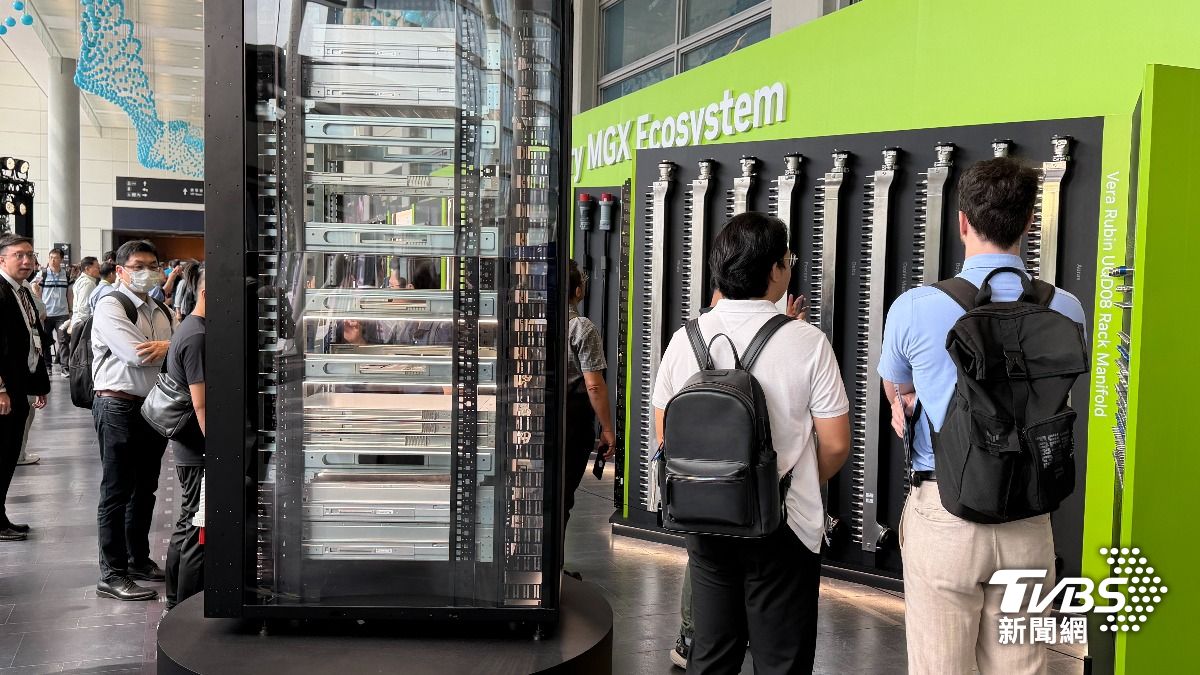
Nvidia delivered the clearest signal of this shift. Its central message was that the Vera Rubin platform, its next-generation rack-scale system, has entered full production. Jensen Huang highlighted that the supply chain built for Vera Rubin is twice the size of the one for the current Grace Blackwell generation. Assembly time for a full rack has dropped from about two hours to roughly five minutes. The flagship Vera Rubin NVL72 configuration links 72 Rubin GPUs and 36 Vera CPUs into a single liquid-cooled rack. From software’s point of view, the rack operates as one very large supercomputer. Nvidia works with about 150 Taiwan supply-chain partners across more than 350 factories in 30 countries.
Two new Nvidia products brought this vision down to the chip level and reinforced the agent thesis in hardware. The Vera CPU is Nvidia’s first processor designed specifically for agentic workloads. It prioritizes single-thread performance, memory bandwidth, and low latency over raw core count. The chip features 88 custom cores and delivers task completion roughly 1.8 times faster than a comparable x86 processor. Early customers announced at the show include Anthropic, OpenAI, Oracle, and CoreWeave.
While the Vera CPU targets the data center, the RTX Spark addresses the desktop. This Arm-based processor, developed in partnership with MediaTek, combines a 20-core Grace-class CPU with a Blackwell RTX GPU that offers 6,144 CUDA cores. It supports up to 128 gigabytes of unified memory and delivers roughly one petaflop of AI performance. Built on TSMC’s 3-nanometer process, the RTX Spark represents Nvidia’s attempt to reinvent the 40-year-old PC architecture. Laptops and desktops powered by the chip will launch this fall from Asus, Dell, HP, Lenovo, Microsoft Surface, and MSI, with Acer and Gigabyte to follow. Notebook versions are expected to start around US$2,200.
Intel arrived at the show prepared to defend its traditional territory. Chief executive Lip-Bu Tan used his June 2 keynote to launch the Xeon 6+, codenamed Clearwater Forest. This is Intel’s first data center processor built on the Intel 18A manufacturing process. It offers up to 288 efficient cores and up to 2.5 times the performance of the previous generation. Intel also demonstrated its Crescent Island data center GPU and new Ethernet networking products. In addition, the company signed a strategic partnership with Foxconn that covers AI racks, edge computing, physical-AI platforms, and custom chip design.
AMD chose a more low-key approach. The company had already unveiled its MI400 accelerator lineup at CES in January and used Computex mainly to reinforce its broader roadmap. Chief executive Lisa Su has projected 35 percent annual CPU growth over the next five years. The sixth-generation EPYC processor, codenamed Venice, is now in production on TSMC’s 2-nanometer node. The Instinct MI400 accelerator, equipped with 432 gigabytes of HBM4 memory, remains on track for the second half of 2026. AMD’s Helios rack-scale platform appeared on the show floor through ODM partners such as Wiwynn, while Foxconn displayed an AMD Instinct MI350P card via its Ingrasys subsidiary.
Qualcomm used its keynote to stake a longer-term claim in the data center. It introduced the new Dragonfly brand, although chief executive Cristiano Amon deferred detailed specifications to an investor day on June 24. The company delivered more immediate news in the client segment with the Snapdragon C platform for low-cost Windows laptops and the X2 Elite. Qualcomm also announced a partnership with Hiwin to integrate its Dragonwing edge-AI silicon into semiconductor handling equipment. The move signals ambitions that extend beyond PCs into factory-floor applications.
Two established players used the show to expand well beyond their original businesses. MediaTek, traditionally known for mobile and consumer chips, presented a wide-ranging showcase under the theme “AI Without Limits.” Its most visible contribution was the co-development of Nvidia’s RTX Spark processor. The booth also featured an award-winning Wi-Fi 8 chip family led by the Filogic 8800, automotive platforms in the Dimensity AX line, Genio modules for industrial and IoT devices, and advanced data-center connectivity technologies including co-packaged optics. This breadth reflects MediaTek’s “One MediaTek” strategy, which integrates mobile, automotive, computing, IoT, and data-center capabilities into a single edge-to-cloud offering. The company has also raised its 2026 custom-ASIC revenue target to US$2 billion, with Google’s next-generation tensor processing unit understood to be a major anchor.
Arm made an even sharper departure from its roots. It promoted the Arm AGI CPU, its first mass-produced, self-designed data center processor. Chief executive Rene Haas reminded the audience that more than 250 billion Arm-based chips have been manufactured using Taiwan’s supply chain. He stated simply that without Taiwan, there would be no Arm. Arm-based processors are projected to exceed 20 percent of the data-center CPU market for the first time in 2026.
The clearest signal from Computex 2026 was not any single product but the chip industry’s structural realignment. The rise of agentic computing is forcing silicon vendors to rethink their roles and relationships. Old categories are blurring. Nvidia now makes CPUs, Arm designs its own processors, MediaTek spans from phones to servers, and former rivals are opening new avenues for cooperation. These complex systems and enormous capital requirements make solo efforts impractical. Nvidia has taken a stake in Intel and collaborates with the company on laptop chips. Nvidia and MediaTek jointly developed the RTX Spark. Foxconn partners with Intel on AI racks and custom silicon. Companies that compete fiercely in one area increasingly depend on one another in the next. The line between rival and partner continues to shift.
The center of this emerging landscape sits in Taiwan. Vera Rubin, RTX Spark, AMD’s Venice, MediaTek’s broad portfolio, and Arm’s first self-designed processor all depend on TSMC’s most advanced nodes and the island’s packaging and assembly expertise. The deeper lesson from Computex 2026 is that the contest for agent workloads will last for years. Alliances will keep evolving, and the advantage will flow to the companies that can build and maintain the broadest coalitions of partners rather than those relying on a single chip.