



Computex 2026: The Move to Optical Gathers Speed
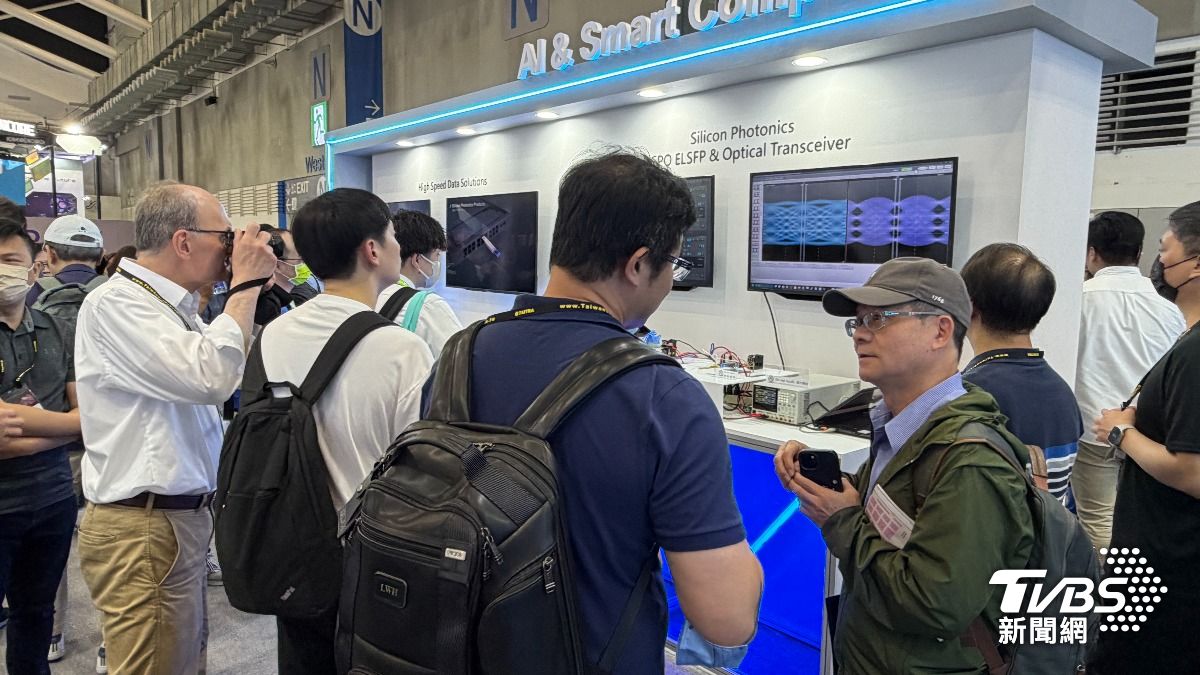
Light was one of the hottest topics of conversations at Computex 2026. Across the keynotes and the show floor, attention kept returning to optical interconnects, the technology that carries data between chips as photons instead of electrons. The reason is simple: rack performance increasingly depends on how quickly data can move between the chips inside it, and copper is running out of headroom.
The physics is unforgiving. Modern AI clusters link thousands of GPUs that exchange enormous volumes of data continuously, and copper handles the job well only at short distances. As per-lane data rates approach 400 gigabits per second, signal integrity degrades, power consumption per bit climbs, and heat builds in racks that are already running at 200 kilowatts. Industry participants broadly agree that 400 gigabits per lane is the tipping point where optical becomes cheaper and more efficient than copper, and that threshold is now being crossed.
Silicon photonics, the technique of routing data as light through waveguides etched into silicon, solves the problem at the source. The savings are not marginal. A data center running 1,000 network switches could save over 2.6 megawatts by moving to optical interconnects, and co-packaged optics, or CPO, the approach that builds the optical engine directly into the switch package instead of plugging in separate modules, cuts per-port power from roughly 30 watts to around 9.
The center of this transition sits, once again, in Taiwan. TSMC's Compact Universal Photonic Engine, or COUPE, is a manufacturing platform that bonds an electronic chip to a photonic chip using the company's SoIC-X advanced packaging. COUPE entered mass production in 2026, with volume shipments ramping through the middle of the year. The first generation delivers 1.6 terabits per second through standard connectors, double the current copper Ethernet maximum; a second generation targeting 6.4 terabits is set to arrive in 2027, and a third aiming at 12.8 terabits is on the roadmap. TSMC claims five to ten times better power efficiency and ten to twenty times lower latency than conventional optical modules, and it is filing silicon photonics patents at roughly twice Intel's rate.
The first major customers are the two companies whose silicon already anchors most AI networks. Nvidia built two switch families on COUPE: Spectrum-X Photonics for Ethernet, whose top configuration moves 400 terabits per second across 512 ports while using 3.5 times less power than conventional designs, and Quantum-X Photonics for InfiniBand. Broadcom's Tomahawk 6-Davisson, a 102.4-terabit switch, stacks photonic engines directly onto its switching silicon using the same TSMC platform.
The show floor made the abstraction physical. Foxconn's booth displayed its in-house co-packaged optics and 1.6-terabit optical modules alongside its Vera Rubin racks, part of its claim to produce over 60 percent of the key components in an AI rack. Wiwynn showed a co-packaged-optics scale-up rack ready for both Nvidia and AMD platforms. Around them, a Taiwan supplier ecosystem is forming: the Silicon Photonics Industry Alliance now counts more than 30 member companies, AMD has invested US$280 million in a Taiwan-based photonics research center, and Ayar Labs, a startup backed by Nvidia, AMD, and TSMC, demonstrated the first working COUPE-based connectivity solution with Taiwan's Alchip in late 2025.
The opportunity is pulling in companies from well beyond the networking industry. Jarllytec, a hinge maker by heritage, saw optical communication revenue triple in 2025 and expects it to pass 10 percent of sales in 2026. Hon Precision is working with Advantest and Teradyne on optoelectronic testing for CPO switches, targeting validation by late 2026.
Competition exists but trails. Samsung Foundry plans its own optical engines in 2027 and turnkey CPO services by 2029; Intel has the research pedigree but no major external photonics customers. TSMC's roughly three-year head start in volume manufacturing, plus its standing relationships with Nvidia and Broadcom, gives it a commanding position.
Optical connections have huge potential in the data center. They carry far more data than copper, lose less of it over distance, and consume a fraction of the power per bit, savings that compound into megawatts across a large facility. In time, those gains should ease the power and heat constraints that now limit how large AI clusters can grow. The transition will be gradual: the technology must prove itself in volume, and most data center traffic will travel over copper for many years yet.
What Computex 2026 made clear is that the momentum is accelerating. TSMC's platform is in early production, the two biggest makers of network silicon have committed to it, and new entrants are flocking to the ecosystem.