



SEMI sees global semiconductor market topping $2T by 2030
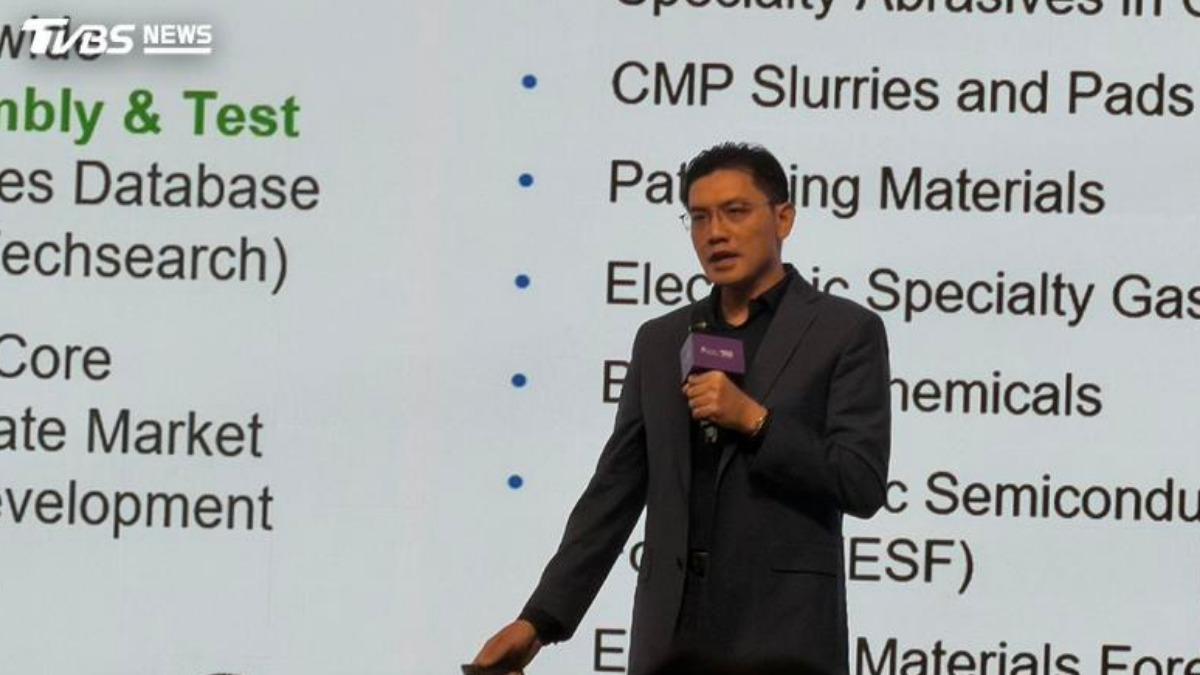
TAIPEI (TVBS News) — The global semiconductor market is expected to exceed US$2 trillion by 2030 as demand for artificial intelligence infrastructure, high-performance computing and high-bandwidth memory (HBM) drives a new semiconductor expansion cycle, according to a market outlook released by SEMI (國際半導體產業協會) ahead of SEMICON Taiwan 2026 (國際半導體展).
Previous industry forecasts had broadly put the semiconductor market at US$1 trillion by 2030. Surging demand for AI computing, HBM and related infrastructure has pushed that outlook sharply higher. Unlike traditional semiconductor cycles, which were closely tied to replacement demand for consumer electronics such as smartphones and PCs, the current expansion is increasingly being driven by sustained investment in AI infrastructure.
While consumer device shipments remain relatively weak, silicon wafer consumption associated with AI infrastructure continues to increase. SEMI expects wafer shipment area, measured in million square inches (MSI), to maintain year-over-year growth of close to 10% this year.
Capital spending by the world's four largest cloud service providers is also rising sharply. Combined with investment from emerging cloud operators and Chinese companies, SEMI expects overall cloud capital expenditure to exceed US$1 trillion this year, providing a major source of demand for semiconductor manufacturing capacity.
Wafer Fab Equipment Outlook Raised to US$220 Billion
With TSMC (台積電) accelerating 2-nm volume production and expanding investment in 3-nm capacity, SEMI has raised its forecast for the global wafer fab equipment (WFE) market in 2028 to US$220 billion, up from an earlier estimate of US$200 billion. The revised forecast would represent an increase of nearly 90% from the 2025 level.
Back-end manufacturing is also emerging as another major growth area as AI chips become more complex and require more sophisticated testing, packaging and system integration. Semiconductor test equipment is expected to be the fastest-growing segment, reaching about US$24 billion by 2028. Assembly and packaging equipment is projected to reach US$10 billion over the same period, supported by growing adoption of chiplet architectures and HBM stacking.
HBM Demand Tightens Memory Capacity
Strong demand for HBM and server DRAM is absorbing production capacity that would otherwise serve conventional applications, with SEMI expecting tight memory supply-demand conditions to persist beyond 2028. Manufacturers are directing investment toward process upgrades for 3D NAND, involving stacks of more than 400 layers as they seek greater storage density.
The move toward advanced nodes and increasingly complex three-dimensional structures is also changing the economics of semiconductor materials. Rather than growth being driven primarily by higher wafer volumes, SEMI sees the industry shifting toward higher dollar value per wafer, as advanced processes require more deposition steps, planarization, specialty chemicals and other high-value materials.
The global semiconductor materials market is forecast to expand from US$83 billion this year to US$92 billion next year, with the market expected to post double-digit growth for a second consecutive year. Deposition materials and chemical mechanical planarization (CMP) materials are expected to be among the strongest growth areas.
Taiwan Remains Key to AI Semiconductor Supply Chain
Despite new semiconductor fabs being built across the United States, Europe and China, SEMI said the capacity required to meet core global AI demand over the next three to five years will remain heavily dependent on Taiwan, South Korea and Japan.
Taiwan's strengths span leading-edge foundry manufacturing, advanced packaging, semiconductor testing interfaces and critical materials, positioning the island to benefit across the AI semiconductor manufacturing value chain.