



Taiwan’s National Palace Museum opens floral art exhibition
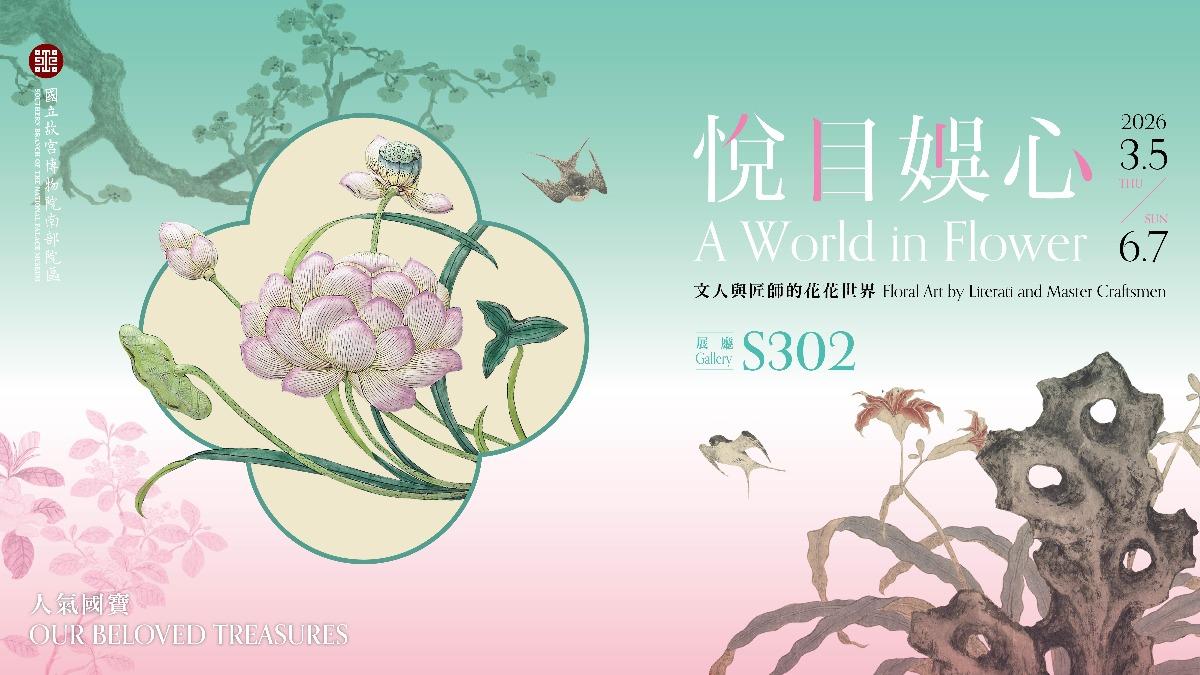
TAIPEI (TVBS News) — The Southern Branch of the National Palace Museum (故宮南院), located in Chiayi County, southern Taiwan, announced Friday (March 27) that its special exhibition "A World in Flower: Floral Art by Literati and Master Craftsmen" runs until June 7. The exhibition features Wen Zhengming's (文徵明) "Album of Flowers" (花卉冊), showcasing eight floral paintings and inscriptions reflecting Ming and Qing dynasty artists' contemplations on recreating nature.
The exhibition includes masterpieces such as the Jadeite Cabbage (翠玉白菜), one of the museum's most iconic treasures, a Planter with Narcissus in Jade and Gold (清十八世紀金葉玉卉水仙盆景), and a Jade flower holder in the shape of daylilies (清玉萱花花插). Other highlights include a Rhinoceros horn cup shaped like a magnolia flower (明晚期犀角雕玉蘭花式杯) and a Copper-enamel lotus leaf box from the Qianlong period (清乾隆銅胎畫琺瑯荷葉式盒).
The "Album of Flowers," created in 1533 during the Jiajing era, was inspired by a summer retreat to Xishan Island (洞庭西山) in China's Jiangsu province with a friend, where Wen painted the renowned flowers. The museum emphasized the allure of flowers, noting their role in nature to attract pollinators and signal the arrival of vibrant seasons. Flowers have long been a timeless artistic subject, captivating viewers with their beauty and vitality.
Artists captured nature's essence through various mediums and techniques, as Wen Zhengming expressed in his inscriptions. Wen wrote, "By and large, when the ancients painted from life, it was done somewhere between intention and spontaneity. It gave their work a vivid vitality, and when they picked up a brush, a sense of charm seemed to arise naturally." ◼