


STSP’s Rise: Taiwan’s Southern Semiconductor Surge
For much of the 20th century, Taiwan’s high-tech success centered in the north. Hsinchu gave rise to the island’s first generation of semiconductor giants, including TSMC, while Taipei provided crucial government support. The south, by contrast, remained known for sugarcane fields, petrochemical complexes, and the mills of China Steel.
Thirty years later, that geography has reversed. The Southern Taiwan Science Park (STSP), once a stretch of rice paddies north of Tainan, has become the single largest revenue-generating cluster in Taiwan’s technology economy and a vital link in the global semiconductor supply chain.
The STSP was first proposed at an Executive Yuan meeting on July 1, 1993. Its development plan received approval in May 1995. Planners designed the park to address the pronounced north-south economic imbalance. At the time, technology investment clustered heavily around Taipei and Hsinchu, while the south depended on aging heavy industry. The government believed the successful Hsinchu model, which brought together talent, land, power, water, permits, and tax incentives in a single streamlined zone, could be replicated in Tainan. The new park would take shape around the high-speed rail line and the universities of southern Taiwan.
Early tenants included optoelectronics pioneers, TFT-LCD display makers, and precision-machinery suppliers. The turning point came when TSMC decided to invest. In 1999, the company broke ground on Fab 6 in its new Tainan campus. Fab 14 followed in the early 2000s. In May 2000, the Intellectual Science Park developed by Taiwan Sugar Corporation in Luzhu, Kaohsiung, was designated as a science park site. In July 2004, it was renamed the Kaohsiung Science Park and incorporated into the STSP system. This expansion turned the STSP into a multi-site network spanning two cities rather than a single campus in Tainan.
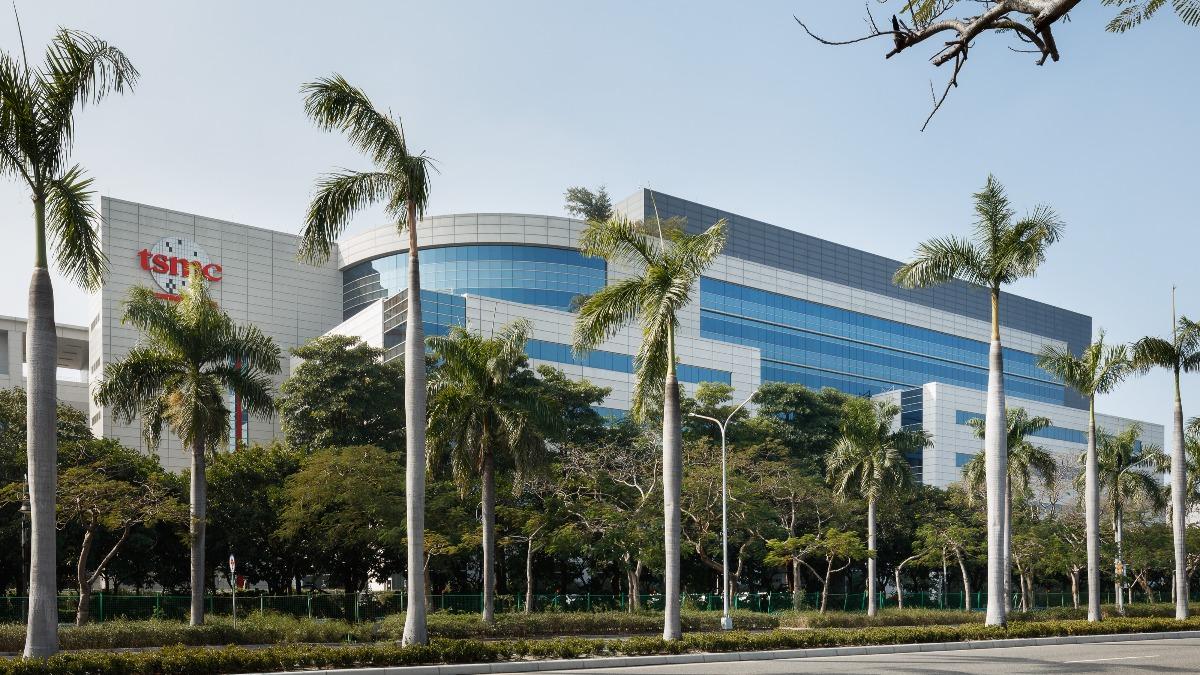
The park’s modern scale took shape through TSMC’s eight-phase Fab 18 complex in Tainan. This facility introduced 5nm, 4nm, and then 3nm production, supporting major clients such as Apple, Nvidia, AMD, Qualcomm, and MediaTek. Total investment in Fab 18 reached an estimated NT$1.86 trillion (approximately US$58.1 billion), and the complex employs more than 11,000 people directly. By the mid-2020s, semiconductors accounted for roughly half of all employment at the STSP.
The park also hosts a strong supporting ecosystem. UMC operates multiple fabs, ASE Group runs major packaging and test facilities, and optoelectronics, precision-machinery, and biotech companies fill the remaining space in Phases I through III. Firms such as Merck Group, Gudeng, and Ebara Precision Machinery Taiwan, along with many specialty materials suppliers, have helped localize more of the high-end semiconductor supply chain that was once dominated by companies from Japan, Korea, and Germany.
The STSP’s 2025 results highlighted the extent of its transformation. Full-year revenue reached NT$2.97 trillion (approximately US$92.8 billion), representing a 34.26 percent increase from the previous year. This growth rate was the fastest among Taiwan’s three major science parks and allowed the STSP to surpass Hsinchu (NT$1.7 trillion, approximately US$53.1 billion) as the largest revenue contributor in the national park system. Combined, Taiwan’s three science parks generated NT$5.8 trillion (approximately US$181.3 billion) in revenue in 2025, a 21.83 percent rise over 2024. Integrated circuits alone accounted for more than NT$4.8 trillion (approximately US$150 billion) across the network.
The main driver behind this surge was the global AI build-out. TSMC’s advanced-node capacity at Fab 18 remained fully sold out throughout the year, with 3nm wafers in particularly high demand as orders for high-performance AI processors and custom silicon exceeded supply. Two related trends further strengthened results: precision-machinery revenue grew 24.73 percent as chip-process equipment orders increased, and biotechnology revenue rose 11.73 percent on the strength of medical-device exports.
Today, the STSP is best understood as a corridor rather than a single park. Its four main nodes form an integrated ecosystem:
The Tainan campus (Phases I–III) remains the core. It is still the largest by both footprint and revenue. It is anchored by TSMC’s Fab 14 and Fab 18 complex, along with UMC, ASE, and numerous materials and equipment suppliers.
Kaohsiung Science Park (Nanzih and Lujhu) represents the 2nm frontier. TSMC’s Fab 22 in Nanzih began 2nm volume production in the fourth quarter of 2025 and is scheduled to reach Phase 2 mass production in the second quarter of 2026. A16 technology, which adds backside power delivery to the N2 process, is slated for late 2026. In December 2025, Merck Group opened a 150,000-square-meter semiconductor “Mega Site” in Lujhu, marking the largest single investment in Merck’s global electronics-technology division.
Ciaotou Science Park serves as a newer Kaohsiung-area site focused on packaging, testing, and specialty processes. Sync-Tech, a subsidiary of Sitronix, has broken ground on a new packaging and testing fab. Additional tenants are moving in to support the ecosystems of TSMC’s Fab 22 and Fab 18.
Shalun Smart Green Energy Science City and Shalun Eco-Scientific Park Phase IV point to the next stage of growth. Shalun Phase IV spans 531 hectares on former agricultural land in Tainan. At full build-out, it is projected to generate up to NT$2.2 trillion (approximately US$68.8 billion) in revenue and create roughly 35,000 jobs. TSMC has requested land in Shalun for both 1.4nm and 1nm production. Plans call for an initial three-fab cluster (P1–P3) for 1.4nm, followed by another three-fab cluster for 1nm. This development would mark TSMC’s first Giga-Fab centered on sub-2nm technology. Construction is underway, with occupancy permits targeted for 2028.
Several factors explain why the STSP has not only reproduced but surpassed the success of the original Hsinchu model.
First, the park offers unmatched density. Every step of the chip supply chain, from wafer fabrication to packaging, testing, materials, and equipment support, now lies within a single day’s drive. Engineers can move between TSMC fabs, ASE packaging lines, Merck materials plants, and university partners in just a few hours.
Second, the STSP administration provides institutional agility through one-stop services for environmental, safety, labor, and tax issues. Its flexible leasing model also allows the government to adjust tenant footprints in response to changing industry cycles.
Third, strategic land and water planning has been critical. The conversion of former agricultural land in Shalun into a dedicated semiconductor zone enables expansion without affecting residential areas. New reservoirs and desalination projects are addressing the substantial water needs of the 2nm generation and beyond.
Finally, talent anchoring gives the STSP a competitive edge. Proximity to National Cheng Kung University and other southern institutions supplies a steady pipeline of engineers. At the same time, lower housing costs compared with Hsinchu have helped attract both young workers and mid-career specialists relocating from the north.
Looking ahead, the National Science and Technology Council projects stable-to-strong growth for all three science parks in 2026, driven by AI applications and advanced semiconductor technology. Minister Wu Cheng-wen has called the science parks “the main arteries of the national economy,” a description that now applies particularly well to the STSP.
With Fab 22 ramping up 2nm and A16 production, Shalun’s 1.4nm Giga-Fab advancing through construction, Merck’s materials site fully operational, and the Ciaotou packaging ecosystem expanding, the STSP is on track to surpass the NT$3 trillion (approximately US$93.8 billion) revenue mark. In doing so, it will further establish Tainan and Kaohsiung as the twin capitals of the next generation of chip manufacturing.