


Why Grab chose Taiwan for its US$600M super app expansion
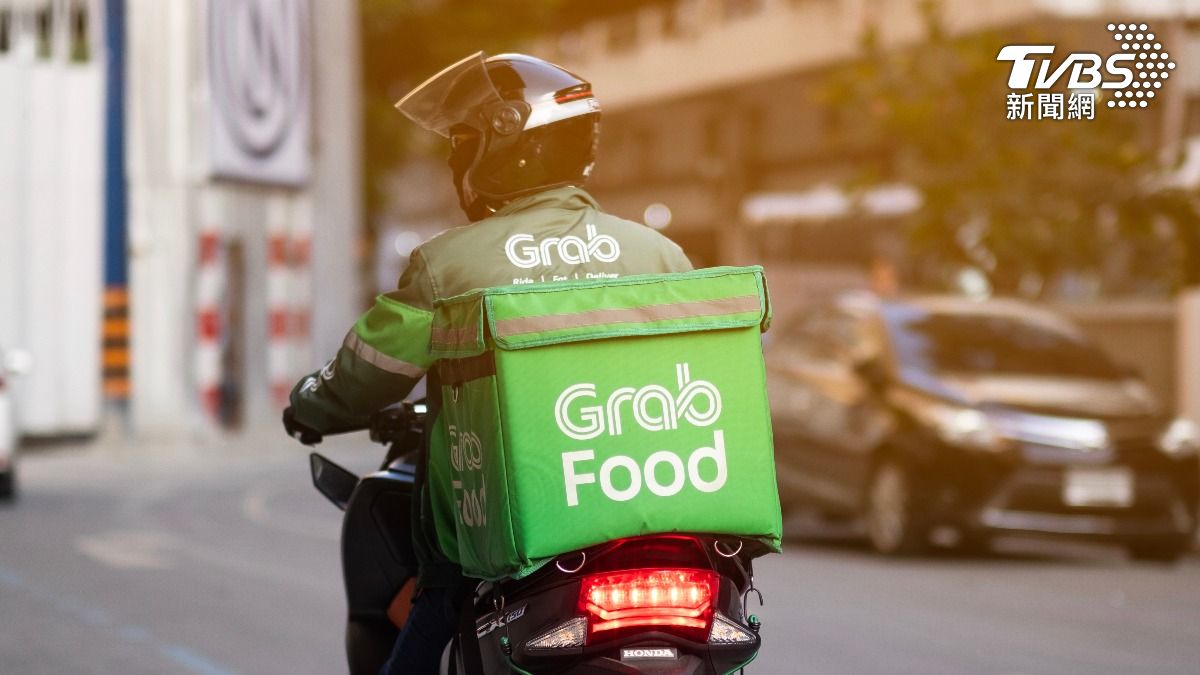
Few are aware that the Grab co-founder has deep ties to Taiwan. Despite opposition from some shareholders, why did he push so hard to break into the market? The acquisition of foodpanda appears to be a grab for delivery market share, but it is actually paving the way for a "super app." As this aggressive integrator moves in, some ride-hailing operators have already signaled their willingness to align with Grab.
TAIPEI (Business Today/TVBS News) — In late March, Grab Holdings Limited announced it had reached an agreement with foodpanda's (熊貓) parent company, Germany's Delivery Hero. Grab, Southeast Asia's leading delivery and ride-hailing company, will acquire Delivery Hero's Taiwan delivery business for US$600 million (approximately NT$19.3 billion) in cash. The deal shocked industry players. In fact, Grab's bold move surprised not only the Taiwan market but also caught some shareholders off guard.
According to sources, when the acquisition was discussed at a Grab shareholders' meeting, some shareholders expressed opposition on the spot. They argued that Grab had only recently turned profitable and was facing fierce competition in Indonesia from Gojek, another local "super app." A super app integrates transportation, communications, payment, shopping, entertainment and lifestyle services to provide consumers with a one-stop experience. Spending US$600 million to plant a flag in the unfamiliar Taiwan market at this time, they argued, was too aggressive.
The matter was ultimately put to a vote. Grab employs a "dual-class share structure," with Class A common shares carrying only one vote per share, while the core team, including co-founder Anthony Tan (陳炳耀), holds Class B shares carrying up to 90 votes per share. As a result, the acquisition passed under Tan's firm control. Uber, which holds 13% of common shares and nearly 4% of total voting rights, abstained due to conflict-of-interest concerns.
Although some shareholders had reservations about the foodpanda acquisition, Gary Ting (丁學文) enthusiastically backed the deal. Ting is the general manager of KYMCO Capital (金庫資本), which invested US$30 million in Grab in 2020.
Devouring Foodpanda — Not Just for the Delivery Market
In early April, shortly after Grab formally submitted its merger application to the Fair Trade Commission (公平會), Ting gave an exclusive interview to Business Today (今周刊) magazine. Drawing on KYMCO Capital's seven-year investment and joint venture relationship with Grab in Southeast Asia, he offered his personal perspective as a shareholder, analyzing Grab's possible blueprint for entering Taiwan through the acquisition and the deeper calculations behind Grab's decision.
"Grab's acquisition of foodpanda appears to be aimed at Taiwan's delivery market, but it is actually entering with a super app — something Taiwan doesn't yet have," Ting said. "It's like a catfish that will churn Taiwan's calm waters, bringing unprecedented disruption and opening up far greater possibilities for future market transformation."
Ting explained that a super app's success relies on the "flywheel effect," which requires balancing two types of customer groups: high-frequency, low-margin users and low-frequency, high-margin customers.
Grab has now reached break-even in Southeast Asia, but challenges are mounting. Inflation and rider pushback have made the thin-margin, high-volume strategy difficult to sustain. This has forced the long-listed Grab to break free from conventional thinking and develop proprietary AI algorithms and integration capabilities to generate profits. "Moving beyond the existing base to create new growth has become urgent," Ting said.
Ting believes that across the Asia-Pacific region, Taiwan is the best sandbox and the location where Grab can best leverage its advantages. The Taiwan market is characterized by high-end, niche segments, and existing services are highly fragmented. This leaves Taiwan stuck in the predicament of having "no real super app," with operators operating in silos. "By entering now, Grab can play the role of the best integrator and honest broker," Ting said.
Profit Model — Targeting 30 Percent of Market Players
Following the logic of "plant the flag first, then integrate," foodpanda became the ideal entry point for Grab's purposes. In 2025, foodpanda achieved gross merchandise value of US$1.8 billion in Taiwan with user penetration approaching 70 percent. The company's adjusted EBITDA had also turned profitable, meaning the average profit per delivery order was now positive.
According to Ting's analysis, if Grab successfully enters the Taiwan market, it could play the role of "the ideal harmless outsider." Local operators would likely not reflexively resist cooperation. Grab's strategy won't be to take over everything but rather to follow the Chinese proverb "of three thousand li of waters, take only one ladle" — meaning it will be selective. Attracting only about 30 percent of market players would be enough to establish a clear profit and application model.
Specific strategies may include serving as a commercial development platform in Taiwan, helping local businesses improve efficiency and reduce costs. Grab could also share profits through algorithms, achieving a multi-stakeholder win-win AI success model.
As Southeast Asia's leading super app, Grab's services range from food and grocery ordering to package delivery, ride-hailing and online payments. The platform even extends to lending and insurance services, covering multiple aspects of daily life. Across eight major Southeast Asian markets, one in every 15 people uses Grab daily, translating to more than 40 million highly active users.
"Delivery is absolutely not the endpoint for Grab's entry into Taiwan!" said Henry Chiang (姜家煒), general manager of Gogoro Taiwan (睿能創意), who formerly served as foodpanda's Taiwan operations director. Taiwan's delivery market has evolved from the cash-burning subsidy price war into a mature phase, Chiang noted. This paradoxically makes it an ideal starting point for Grab to "enter at the lowest cost." The strategy would be to first use delivery to build brand awareness and establish user habits. Then, Grab would replicate the ride-hailing services that have been proven successful time and again in Southeast Asia.
Grab's choice of Taiwan as its first foray outside ASEAN may be tied to co-founder Anthony Tan's family background. Tan, now in his 40s, comes from a Malaysian Chinese business dynasty. His grandfather co-founded the locally renowned automotive group Tan Chong Motor (陳唱摩多), which established its position in the automotive industry by securing the distributorship for Nissan (日產) in Malaysia in its early years.
In 2006, when Anthony Tan's father Tan Heng Chew (陳興洲) took over the family business, he extended its reach to Taiwan for the first time, securing the general distributorship for Japanese automaker Subaru (速霸陸). Anthony Tan, who had just completed his studies at the time, began making frequent trips to Taiwan during this period.
"Taiwan at that time, with its high density of taxis and motorcycles, made a strong impression on the young Anthony Tan," a close acquaintance told Business Today. The intensely crowded urban mobility landscape made Tan sense for the first time the tension between transportation demand and gaps in service.
Before founding Grab's predecessor My Teksi in 2012 — a ride-hailing platform created to address unfair taxi meter practices in Malaysia — Tan even tried to arrange a visit with Lin Tsun-tien (林村田), chairman of Taiwan Taxi (台灣大車隊), through family connections. He hoped to get a glimpse of how Taiwan's local taxi industry operates, but the meeting never materialized due to Lin's busy schedule.
Neither Anthony Tan nor Lin Tsun-tien could have imagined that the companies they each built would one day become partners — or even competitors.
Not Yet Landed, but local Platforms are Already Aligning
For now, Grab still needs approval from the Fair Trade Commission to establish operations in Taiwan. However, according to Business Today, some Taiwan ride-hailing platform operators are already positioning themselves to "align" with Grab.
One industry observer noted that Uber holds a stable position as the domestic ride-hailing leader with over 50 percent market share. Local fleet leader Taiwan Taxi also controls more than 30 percent of the market, while the remaining roughly 15 percent is divided among platforms like LINE GO and yoxi. "There are just too many competitors right now. To fend off the big whale, the only choice is to cooperate with Grab," said a senior executive from a platform outside the two giants.
A platform operator told Business Today that they have already expressed willingness to cooperate with Grab through back channels. Grab responded that whether to enter Taiwan's ride-hailing market remains under evaluation.
In reality, Taiwan's ride-hailing market is already saturated, and the total number of taxi licenses is approaching capacity, making it difficult to recruit new drivers — all challenges for Grab in operating ride-hailing services in Taiwan. A transportation expert noted that against this backdrop, cooperating with local Taiwan fleets remains the best option; Taiwan Taxi's stance is therefore crucial.
When asked whether he would consider an alliance with Grab, Lin told Business Today, "We are very open to any form of cooperation." He recalled that when Uber aggressively entered the Taiwan market years ago, his company still achieved steady growth through its fleet advantages and offline services. "No matter who we partner with, it only makes sense if it adds value," Lin said.
Besides the fleet size bottleneck, one of Grab's key weapons in ASEAN markets — motorcycle passenger transport — is temporarily off the table. Taiwan regulations have not yet permitted motorcycle taxis to operate.
According to sources, Uber approached Taiwan motorcycle operators two years ago, attempting to introduce the successful motorcycle passenger transport model from India. The effort failed due to regulatory restrictions. An anonymous platform operator believes that if Taiwan legalizes motorcycle passenger transport in the future, it would significantly expand the ride-hailing market. This would give Grab a major edge.
Regardless of how events unfold, Grab's arrival in Taiwan means the biggest beneficiaries will be consumers. At the same time, Taiwan's industry will be forced to accelerate consolidation — those who fail to consolidate risk being eliminated. Grab is not just a foreign competitor but an "integrator" bringing momentum for change, allowing consumers to enjoy convenience while demonstrating to the industry the necessity of cooperation and innovation. ◼ (At time of reporting, US$1 equals approximately NT$31.67)
>>> For More Reading:
This article is excerpted from the No. 1529 issue of Business Today (今周刊). Click here for the Chinese-language version of this story: 股東獨家親解》金庫資本丁學文:「鯰魚」攪水,市場將有很大的質變空間 Grab殺進台灣 葫蘆裡賣什麼藥?
>>> More Coverage:
01 | 台積電CoPoS系列3一晶圓代工決戰先進封裝!輝達多元結盟、巨頭夾擊,美韓意圖反撲…台積電如何接招?