



Computex 2026: Taiwan’s Server ODMs Step Into AI Spotlight
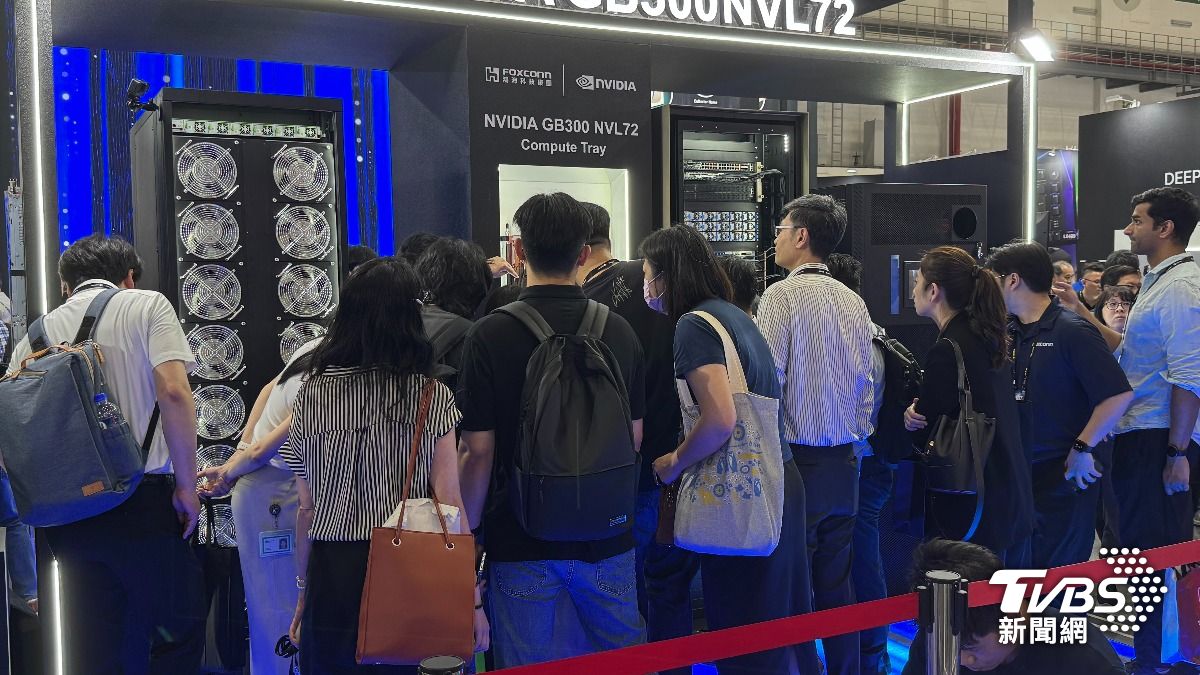
Computex 2026 opens on June 2 in Taipei under the banner “AI Together,” and for Taiwan’s server makers the timing is close to perfect. The first quarter delivered record results across the entire group. Hyperscaler orders for Nvidia’s next-generation GB300 rack systems are accelerating into the second half of the year. And a new category of compute that the industry has started calling Physical AI, is opening a fresh growth lane alongside the familiar workloads of training and inference.
The companies in question are the original design manufacturers, or ODMs, that quietly assemble most of the world’s cloud infrastructure. Foxconn, Quanta (through its cloud arm QCT), Wiwynn, Inventec, Gigabyte, Asus, ASRock, Chenbro, Pegatron, and Compal all have confirmed booths at the show. For four days in Nangang, visitors will be able to walk a single hall and see, side by side, the entire Taiwan AI server assembly base. Every one of them is racing to scale capacity fast enough to meet rising demand from AWS, Google, Meta, Microsoft, Oracle, and other hyperscalar customers, and the show floor is where they will collectively make the case that they can.
Computex AI Server Lineup
Foxconn arrives in a position of growing strength. Chairman Young Liu has stated publicly that the company holds more than 40 percent of the AI server market, a lead it intends to extend through 2026. First-quarter revenue reached NT$2.12 trillion (US$66.4 billion), up nearly 30 percent from a year earlier, with March alone setting a single-month record at NT$803.7 billion (US$25.1 billion). The company’s booth is expected to anchor the AI infrastructure narrative, building on the Vera Rubin NVL72 reference rack that Foxconn co-developed with Nvidia and unveiled at GTC in March. Vera Rubin is Nvidia’s upcoming rack-scale platform, the successor to today’s Blackwell systems, and Foxconn will showcase it alongside its own liquid cooling subsystems and modular data center designs.
Quanta Computer is exhibiting through QCT, its cloud subsidiary, with a hospitality suite at TaiNEX 1. Quanta posted Q1 revenue of NT$809.2 billion (US$25.3 billion), up 67 percent, with March alone setting a single-month record at NT$362.8 billion (US$11.4 billion). Chairman Barry Lam has said order visibility now extends into 2027 and that AI server demand is on track to double again in 2026. The Vera Rubin transition sits at the centre of QCT’s roadmap, but the company is also positioned to ride a second growth engine: custom ASIC servers built around chips designed by hyperscalers themselves rather than bought from Nvidia. These are entering volume production in the current quarter.
Wiwynn, the cloud-native specialist spun out of Wistron, posted Q1 revenue of NT$276.5 billion (US$8.7 billion), up 62 percent, on the strength of hyperscale orders from Amazon, Google, Meta, and Microsoft. Computex will be the company’s opportunity to highlight three pieces of work that have moved its business forward: open-architecture sled designs that let customers swap components without redesigning the rack, integration of 800-volt direct-current power shelves that reduce conversion losses inside the data center, and rack-level liquid cooling that has now been validated at customer sites.
Inventec brings Q1 revenue of NT$200.3 billion (US$6.3 billion), up 28 percent, with management guiding to double-digit sequential growth through Q2 and stronger momentum in the second half. Inventec’s booth is expected to feature mid-density AI servers aimed at tier-two cloud providers and large enterprise buyers, a segment that often gets overlooked in the GPU arms race but represents a meaningful slice of total deployments.
Gigabyte has the most expansive footprint of any single vendor at the show, with two booth locations covering networking and full system integration. After 2025 group revenue of NT$336.9 billion (US$10.6 billion), up 27 percent year on year, the company’s value-tier AI server SKUs are increasingly winning in mid-tier deployments where price-to-performance matters as much as raw GPU count.
Compal and Pegatron, traditionally better known for notebook and consumer electronics assembly, are using Computex 2026 to reinforce their server credentials. Compal’s AI server shipments doubled in Q1 and are projected to double again in Q2. Pegatron has been expanding aggressively through its Mexican and Indianapolis facilities. Both companies will display general-purpose and AI-optimized rack designs and will use the show to communicate North American capacity expansions to customers and analysts in the same breath.
Two Currents Reshaping the Show Floor
Two structural shifts dominate this year’s agenda, and both are accelerating ODM order books in different ways.
The first is the migration of compute from training to inference. As generative AI moves from laboratory cluster builds to mass-market deployment, hyperscalers are placing multi-quarter orders for inference-optimized configurations alongside the GPU clusters used for training. Training is the heavy, intermittent work of building a model; inference is the lighter, continuous work of running it for end users. Inference-optimized racks tend to be denser, cooler, and more memory-balanced than training racks. For ODMs the shift means a more predictable demand curve and a richer mix of products to sell. The Computex booths will reflect that change, with denser, memory-optimized designs sitting alongside the maximum-density training racks.
The second shift is a wholesale rethink of power and cooling. As per-rack power consumption pushes past 100 kilowatts toward 200 kilowatts in next-generation Vera Rubin configurations, traditional air cooling has run out of headroom. Delta Electronics, which is now the most important AI infrastructure exhibitor outside the ODMs themselves, is mass-producing megawatt-class liquid cooling distribution units, optimized cold plates, and 800-volt direct-current power systems. At GTC 2026, Nvidia chief executive Jensen Huang argued that power and cooling can no longer be retrofitted around the compute layer. They have to be designed in from the start. Foxconn, QCT, Wiwynn, and Compal are all expected to present integrated rack solutions that take that philosophy to its logical conclusion.
Product Displays
Vera Rubin NVL72 reference platforms will be the headline product across multiple booths. NVL72 refers to a configuration that links 72 GPUs into a single rack-scale system that behaves, from the software’s point of view, like one very large computer. Mass production is set to ramp in the second half of the year, and almost every major ODM will have a version of it on the floor. Servers based on AMD’s Instinct accelerators will also feature through partner systems, a reminder that the AI compute market is no longer a one-vendor story.
Liquid cooling and power subsystems are increasingly being designed and assembled in-house rather than sourced as bolt-on accessories. Foxconn’s involvement in cold plates, manifolds, and midplane components is the most visible example of this vertical integration, but it is no longer unique. QCT’s rack-level integration story tells the same arc, as do Wiwynn’s open-architecture sleds. The era when cooling was an afterthought sourced from a separate vendor is ending.
H2 2026 Outlook
Demand is running into hard physical constraints, and the ODMs know it. TSMC’s 3-nanometer process node remains the single most contested advanced manufacturing capacity in the world, with allocation fights playing out between Nvidia, AMD, Broadcom, Marvell, Apple, and MediaTek. CoWoS, the advanced packaging technology that stitches GPU dies to high-bandwidth memory, remains supply-limited even for customers who have already secured wafer capacity upstream. ABF substrates, the high-end circuit-board material that connects chips to the rest of the system, are seeing prices rise 3 to 7 percent each quarter. And a persistent shortage of T-glass fiberglass cloth, a specialty material dominated by Japan’s Nittobo and used in the most demanding circuit boards, is now projected to run into 2027, with copper-clad laminate lead times stretched to 24 weeks.
The ODMs that secure allocation across all of these layers will set the pace. Those that do not will face real shipment risk regardless of how full their order books look. The good news is that the broader Taiwan ecosystem is responding in scale. Combined 2026 capital expenditure at Zhen Ding, Unimicron, and Compeq, the three leading domestic substrate and high-end PCB suppliers, now exceeds US$5 billion. ASE, the world’s largest semiconductor assembly and test provider, has broken ground on a US$3.4 billion advanced testing park in Kaohsiung. The bottlenecks are real, but the capital is moving.
The outlook for the back half of the year is unusually positive and unusually broadly distributed. Demand visibility now extends well into 2027. Foxconn has guided to both sequential and year-on-year revenue growth in Q2, a notable projection given that Q2 is traditionally weaker than Q1. AWS’s ramp of in-house ASIC servers from Q2, followed by broader ASIC contributions from Q4, should diversify the AI customer base beyond Nvidia GPU platforms in a way that has been talked about for years but is only now arriving. Wiwynn and QCT are expected to maintain triple-digit growth into Q3 before tougher year-on-year comparisons set in. Compal, Pegatron, Asus, Chenbro, and ASRock should benefit from a secondary demand wave as tier-two cloud providers and large enterprise buyers begin deploying AI infrastructure in volume rather than in pilots.
For four days in June, Computex will make all of this visible in one place. Nowhere else is it possible to get such a vivid snapshot of the forces reshaping global AI infrastructure landscape: the shift from training to inference, the rethink of power and cooling, the vertical integration of rack-level design, and the geographic redistribution of manufacturing across Mexico, Thailand, and the United States. The booths in Nangang are not just product showcases. They are a live readout of which Taiwan ODMs are best positioned to convert today's record order books into the shipped revenue that will define the rest of the year.