



Larger and hotter AI chips lift Taiwan's test equipment makers
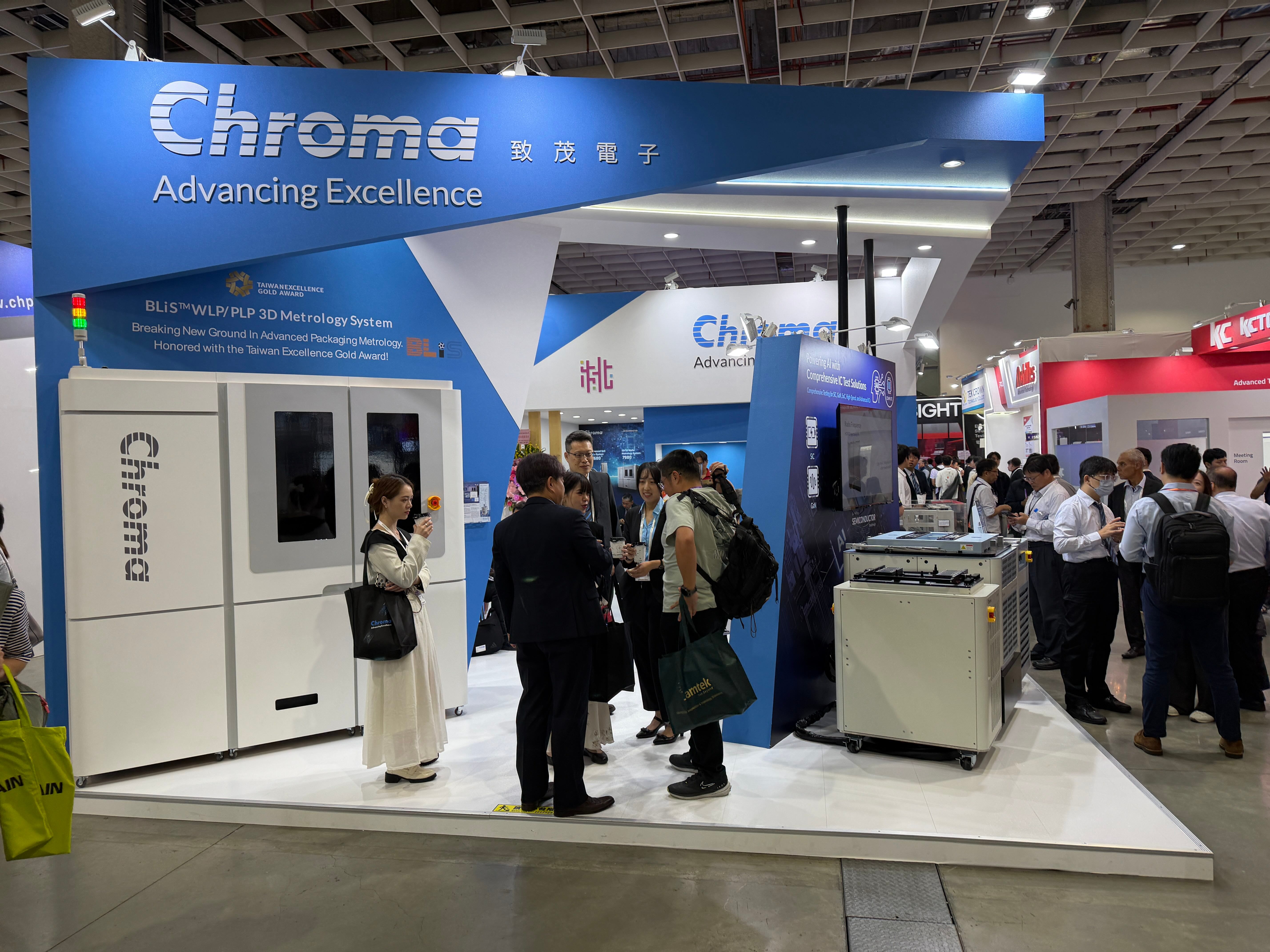
Testing has become a larger part of making AI hardware. Processors draw more power, chip packages are larger, and server boards are packed more densely, so manufacturers must measure electrical performance more precisely, hold chips at set temperatures during tests, and inspect more connections for defects. Taiwan's Chroma, Hon Precision, and Test Research supply equipment for each of those tasks, and customer spending on it has lifted all three companies' sales sharply.
Chroma supplies automated testing and measurement systems for semiconductors, optical devices, power equipment, and batteries. Hon Precision specializes in machines that handle chips during testing and keep them at their operating temperature. Test Research, or TRI, supplies inspection and electrical-testing equipment used primarily in electronics assembly and is expanding into semiconductor packaging.
Chroma’s third-quarter revenue reached approximately NT$17.93 billion (US$547 million), up 180% from a year earlier and 33% from the previous quarter. Net profit attributable to shareholders was NT$5.65 billion (US$172 million), with earnings per share of NT$13.34. Operating margin reached about 40%. Battery production equipment contributed to the quarter’s sales increase alongside AI-related demand,
Its AI business extends beyond processors. Increasingly powerful servers need equipment that verifies power supplies and distribution systems under heavy electrical loads, and Chroma also supplies system-level testing, which assesses chips in conditions closer to their eventual use.
Optical communications offers further growth. Co-packaged optics, or CPO, places optical components close to chips to support faster data transmission, so manufacturers must verify both electrical and optical performance. Chroma says it has received CPO production equipment orders for the first quarter of 2027. Based on customers’ current plans, equipment volumes for one testing stage could be four to five times those used during this year’s pilot production.
Hon Precision addresses the physical challenges surrounding the test itself. Its handlers move packaged chips into position, establish the required testing conditions, and sort devices afterward, while active temperature control removes or supplies heat to keep the chip at the specified temperature as the tester runs its measurements. That becomes harder as AI processors consume more power and their packages grow larger.
Third-quarter revenue rose 97.5% year on year to NT$16.19 billion (US$494 million), and net profit increased approximately 85.7% to NT$6.72 billion (US$205 million). AI, high-performance computing, and custom chip applications accounted for 78% of orders during the first nine months, up from 72% in 2025.
The company is developing handlers for larger packages and system-level testing, and it is targeting a 50% increase in annual production value in 2027. Revenue recognition depends on customer acceptance after equipment is delivered.
TRI works further along the manufacturing process. Its optical systems inspect component placement and visible solder joints, X-ray equipment examines connections hidden beneath packages, and electrical testers identify open or short circuits. Larger AI server boards and densely packed assemblies increase the inspection required.
Third-quarter revenue was approximately NT$2.90 billion (US$88 million), with net profit of NT$834 million (US$25 million). For the first nine months, revenue increased 29.8% to NT$8.29 billion, and October sales rose 71.9% year on year to NT$926 million, indicating continued demand after the quarter closed.
TRI is using AI-assisted image analysis to improve inspection and expanding its semiconductor-packaging equipment business, applying increasingly precise optical and X-ray measurements to smaller structures.
For all three companies, each increase in chip power, package size, optical connectivity, or board complexity opens new market opportunities. Their expansion shows the increasingly important role Taiwan is playing in building the global AI manufacturing ecosystem.
US$ conversions use an illustrative exchange rate of NT$32.8 per US$1.