



Computex 2026: MediaTek’s Pivot from Phones to Cloud ASICs
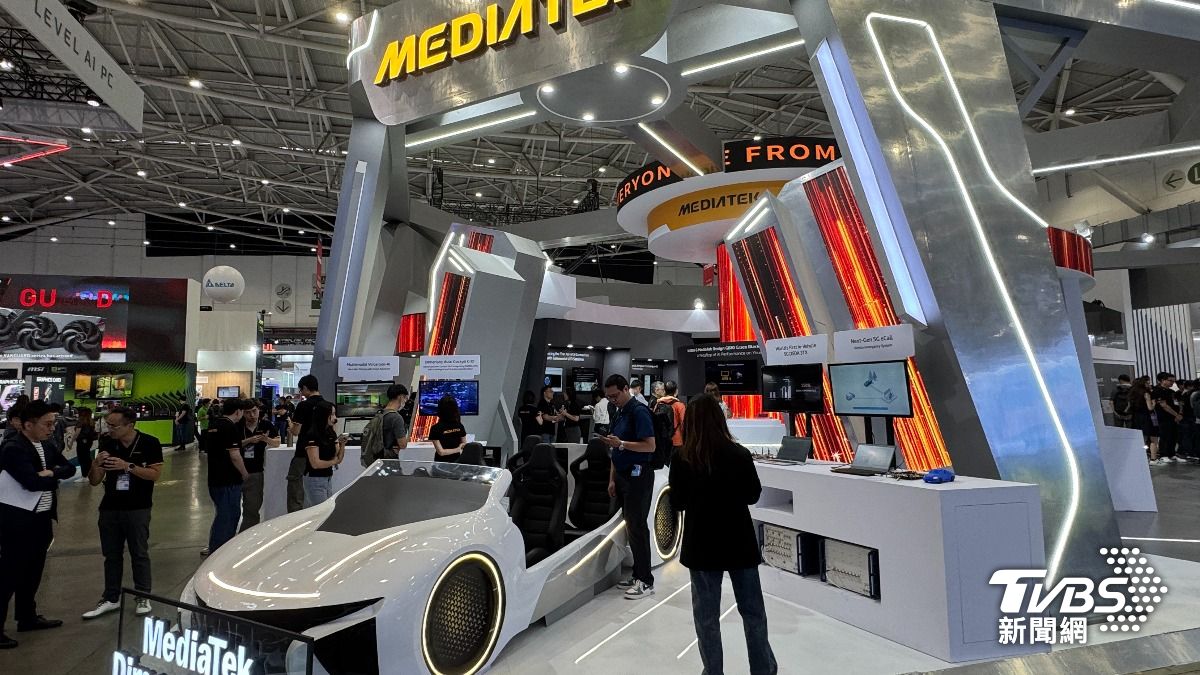
For most of the last twenty years, the MediaTek story has been about smartphones. The company built itself into the world's largest mobile chip designer by volume on the back of mid-tier Android handsets sold across Asia, Latin America, and Europe. At Computex 2026, the next chapter of the company's history will begin to unfold.
The 2026 numbers pull in two directions. MediaTek reported first-quarter revenue of NT$149.15 billion (US$4.71 billion), down nearly 3 percent from a year earlier, with operating profit falling 24 percent. Smartphone revenue, still 49 percent of the business, fell 15 percent both sequentially and year on year. On the April 30 earnings call, chief executive Rick Tsai told analysts he expects global smartphone shipments to drop around 15 percent in 2026, a knock-on effect of memory chip prices rising sharply as DRAM capacity is diverted into AI servers. The mobile cycle that built MediaTek has hit an air pocket.
What is keeping the 2026 story positive is the rapid emergence of a business that did not exist at this scale 18 months ago: cloud ASICs. These are the custom silicon chips that hyperscalers such as Google and Amazon design in-house and have manufactured in Taiwan rather than buying off the shelf from Nvidia. For MediaTek, cloud ASICs are no longer a side project. They are the engine pulling the company through a soft mobile cycle and into a new identity.
Diversification Across Multiple Product Lines
On the same call, Tsai doubled MediaTek's 2026 cloud ASIC revenue forecast, lifting it from US$1 billion to US$2 billion. The company's first major cloud ASIC project, widely understood in the industry to be Google's next-generation TPU, is on track to deliver that US$2 billion in the fourth quarter alone, with several billion more flowing through 2027 and a successor product targeting mass production by the end of that year. Several additional data center ASIC opportunities are in final-stage negotiations.
The smart device platform business, which now represents 46 percent of revenue, grew 23 percent sequentially and 13 percent year on year, with management guiding to double-digit annual growth in 2026 even before the data center ASIC ramp arrives. Power management chips added another 14 percent sequential gain. MediaTek is diversifying away from smartphones in real time, and the diversification is happening across multiple product lines at once.
MediaTek is also beefing up its advanced packaging capabilities. In May the company brought in Chen-Hua Douglas Yu, one of the six R&D leaders known inside TSMC as the "six knights" and a central figure in the foundry's advanced CoWoS packaging development, as an informal adviser following his retirement.
The Yu appointment sits alongside a broader engineering build-out. MediaTek is now investing across optical communications, 400G SerDes, 64G die-to-die interconnect, 3.5D packaging, customized high-bandwidth memory, and integrated voltage regulators. Each of these is a building block of modern AI accelerator design. Together they amount to the toolkit required to compete for cloud AI data center silicon through the late 2020s.
What to Look for at Computex
The MediaTek booth itself will likely showcase the consumer side of the company that most visitors will expect to see, including the Nvidia-co-developed N1 and N1X laptop chips, the latest smart device and auto platforms, and a range of edge AI silicon.
But behind that consumer surface sits the more interesting story. MediaTek is no longer a smartphone chip company that also does other things. It is becoming a cloud AI silicon company that still happens to dominate mid-tier smartphones. Computex 2026 is where that pivot becomes public, and the booth at L0818 is where the most attentive visitors will read it.