



Taiwan marks 115th birthday amid dueling political visions
TAIPEI (TVBS News) — One National Day, two Taiwans. Hours apart on Friday (Oct. 2), the Presidential Office and the opposition-led legislature unveiled competing visions for the island's 115th birthday: one celebrating 30 years of democratic evolution, the other showcasing semiconductor chips as the symbol of national strength.
The dual announcements highlight how Taiwan's governing and opposition camps frame the island's story for domestic and international audiences ahead of the Oct. 10 holiday. The date commemorates the 1911 Wuchang Uprising that sparked the fall of China's last imperial dynasty, an event that occurred nearly 800 kilometers away, across the Taiwan Strait, in a country Taiwan's government no longer claims to rule.
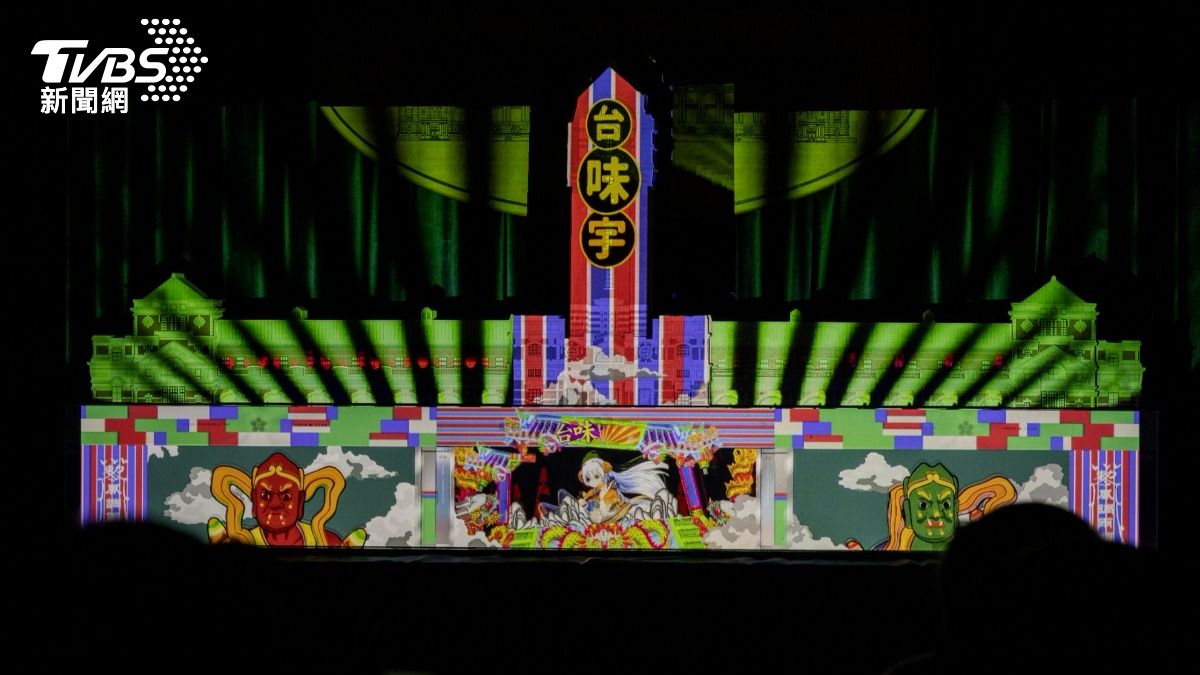
At the morning event, Presidential Office Secretary-General Pan Men-an (潘孟安) introduced a light sculpture exhibition titled "Democratic Taiwan, Heartbeat of the World" (民主的台灣,世界的心跳). The show marks both the 30th anniversary of Taiwan's first direct presidential election and the 10th year of the light sculpture tradition.
"This is Taiwan's modern history of the past 30 years," Pan said. "We hope that in the next 30 years, and for many more 30 years to come, democracy will be sustained in Taiwan for generations."
The exhibition's visual identity, designed by Chiu Hsi-min (邱璽民), incorporates symbols of Taiwan's democracy movement: the 1996 ballot, the Wild Lily and Sunflower representing student movements, rainbow flags for LGBTQ rights, and the "democracy trucks" that became fixtures of street protests.
Hours later at the Legislative Yuan, Taiwan's parliament, Speaker Han Kuo-yu (韓國瑜) struck a different tone. "This year's main visual uses Taiwan's most powerful, most representative element — semiconductor chips that dominate the globe — as our National Day design," said Han, who chairs the National Day Preparatory Committee. The Kuomintang legislator called the choice "amazing."
The event featured promotional clips celebrating the Republic of China and a singing performance by an elementary school choir, the children sporting small flag stickers on their cheeks. The contrasting themes reflect Taiwan's divided political landscape. The Presidential Office operates under President Lai Ching-te's (賴清德) Democratic Progressive Party, while the Kuomintang has controlled the legislature since February 2024. Both events, however, share the formal framework of celebrating the Republic of China's founding.
Lee Hou-ching (李厚慶), secretary-general of the National Cultural Association of Taiwan (NCAT, 中華文化總會), said the video-mapping show — a technique that projects animated images onto building facades — would feature 65 documentary photographs chronicling Taiwan's democracy movement, including images captured over four decades by photographer Chiu Wan-hsing (邱萬興).
"Over the past 30 years, we have accumulated nearly 100 million ballots," Lee said, his voice rising with evident pride. "These 100 million ballots represent the height of three Mount Jades. All the people of Taiwan who guard democracy; you are all democracy's mountain builders."
The association also released 11 commemorative badges marking milestones including the 1947 February 28 Incident, the 1979 Kaohsiung Incident, and the lifting of martial law in 1987. Han thanked New Taipei City Mayor Hou Yu-ih (侯友宜) and Taitung County Magistrate Yao Ching-ling (饒慶鈴), both Kuomintang members, for hosting National Day events in their jurisdictions.
The National Day evening gala, themed "World Stage: Gathering in Taiwan," will be held Friday (Oct. 9) at Banqiao First Stadium, featuring performances blending Hoklo, Hakka, Indigenous, and new immigrant cultures, alongside artists from Japan, South Korea, and Indonesia. Fireworks will follow at Taitung Seaside Park on Saturday (Oct. 10), with Golden Melody Award-winning Indigenous singer A-Bao (阿爆) serving as music director for a 30-minute pyrotechnic display of 19,000 fireworks synchronized to live orchestral accompaniment.
The main ceremony at the Presidential Office plaza is expected to draw more than 10,000 guests, with the light sculpture exhibition running Wednesday (Oct. 7) through Saturday on Ketagalan Boulevard, half-hourly from 7 p.m. to 9:30 p.m.
At both press conferences, officials offered the same benediction: Happy birthday, Republic of China. Yet the question lingering over the celebrations was not which vision of Taiwan — democratic heritage or technological might — better captures the island's identity, but why its political camps could not find a way to celebrate both, together.
"Let us demonstrate our unity, demonstrate our sincerity," Han said, "and wish the Republic of China a happy birthday." ◼