



Taiwan’s AI Server Makers Extend Record Run in May
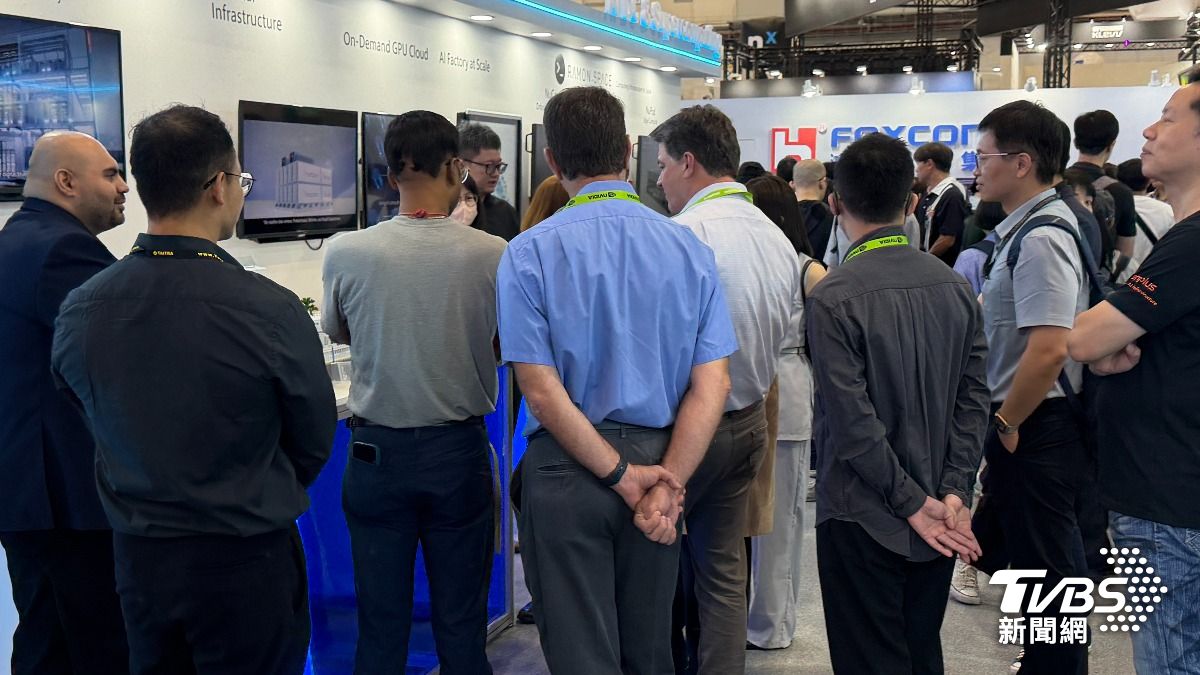
Taiwan's server manufacturers closed out May 2026 with another round of record monthly revenues. The reports came days after Computex 2026 wrapped in Taipei on June 5, where Nvidia CEO Jensen Huang used his keynote to reaffirm the sheer scale of AI infrastructure demand.
Foxconn (Hon Hai), the world's largest electronics contract manufacturer, reported May revenue of NT$859.4 billion (US$27.0 billion), a new monthly high and an increase of nearly 40 percent year on year. Cloud and networking products, the division that houses AI server racks, were again the main growth engine. The company said AI rack orders remain on a growth trajectory through the second quarter with relatively stable visibility, and revenue for the first five months reached NT$3.82 trillion (US$120 billion), up 32 percent from a year earlier. Chairman Young Liu told shareholders that the old Taiwan tech industry adage of a weak May and June no longer applies in the AI era, and that the second-half outlook is optimistic barring major disruptions.
Quanta posted May revenue of NT$311.5 billion (US$9.84 billion), its third-highest monthly total ever and up 94 percent year on year, as it transitions customers onto Nvidia's Vera Rubin platform. Five-month revenue reached NT$1.46 trillion (US$45.9 billion), up 83 percent, and the company plans three new California factories by year-end to support AI server production.
Wistron reported NT$290.2 billion (US$9.1 billion) for May, up 39 percent year on year, and a record NT$1.42 trillion (US$44.6 billion) for the first five months, an increase of 106 percent. Management expects AI server growth to stay in triple digits this year, with networking products expanding roughly tenfold.
Wiwynn, the pure-play builder of hyperscale data center systems, posted NT$84.1 billion (US$2.6 billion), up 18 percent, with five-month revenue a record NT$443.3 billion (US$13.9 billion), up 45 percent. MiTAC hit an all-time monthly high of NT$13.6 billion (US$430 million), up 49 percent, on hyperscale rack demand. Pegatron, a latecomer to the AI server race, reached a 2026 high of NT$96.0 billion (US$3.04 billion) as its rebuilt server business gained traction.
The contrast with the PC business is stark. Quanta shipped 3.5 million notebooks in May, down 8 percent year on year, and Wistron expects notebook shipments to keep falling through the third quarter. The AI server is carrying the sector.
The boom has spread beyond the contract manufacturers to Taiwan's brand-name PC makers. Gigabyte, whose AI servers now account for roughly 72 percent of total sales, posted first-quarter revenue of NT$105.1 billion (US$3.3 billion), up 60 percent year on year, and plans to double its server capacity. Asus delivered record first-quarter brand revenue of NT$194.1 billion (US$6.19 billion), up 44 percent, followed by April sales increase of 46 percent, and its co-CEO has targeted 100 percent AI server growth for 2026. Both companies used Computex to push deeper into rack-scale Nvidia systems.
Two key trends emerged from the show. The first is the move to extreme power density: chips unveiled at Computex carry thermal design power above 1,000 watts, racks have jumped from 10 kilowatts to 200 kilowatts in five years, and next-generation platforms target one megawatt, forcing the industry's shift from air to liquid cooling. The second is the bottleneck migration, with supply constraints moving upstream from chips to advanced packaging, ABF substrates, PCBs, memory, and manufacturing equipment.
The challenges are real, but so is the momentum. Vera Rubin is ramping into the second half, order visibility is holding, and the companies that filled Nangang's halls last week closed May with record months. For Taiwan's server makers, the question for the rest of 2026 is not whether the demand exists, how fast they can build to meet it.