



Acer builds a broader business around enterprise AI and services
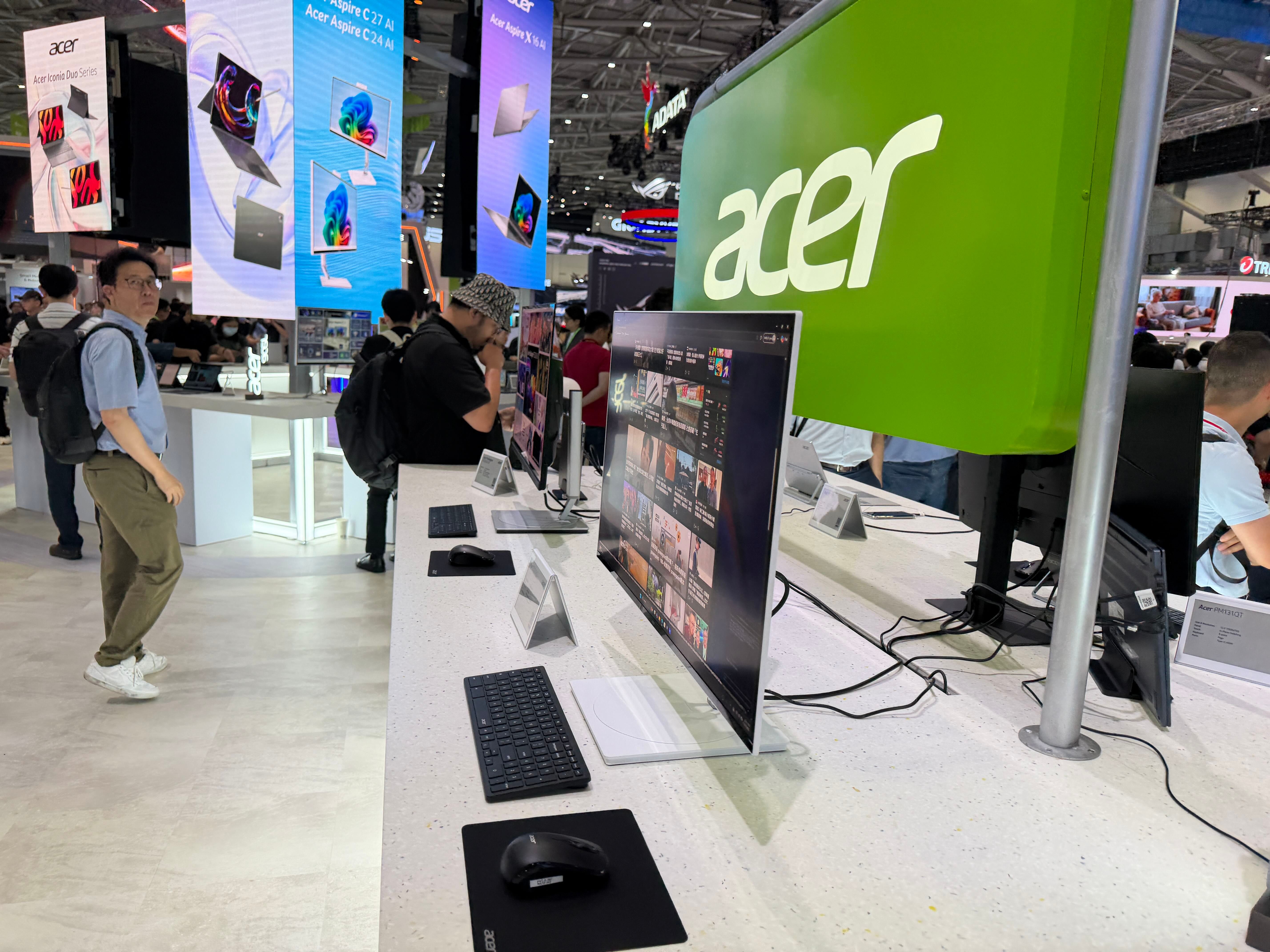
Acer is building a broader group of businesses in enterprise computing, industrial applications, and technology services as it looks for growth beyond the PC. Those businesses now account for more than a third of its revenue and are growing faster than its computers. The approach differs from that of Asus and Gigabyte, which have grown quickly by supplying AI servers and computing racks.
Founded in 1976, Acer spent decades building an international brand and distribution network. It is now extending that reach into industrial computers, healthcare, energy, and appliances, alongside cloud and software services. Its subsidiary Acer e-Enabling Service Business, which supplies cloud and AI services, reported third-quarter revenue growth of 73% and net profit growth of 31%. Such businesses give Acer more to offer corporate customers than replacement computers.
AI servers are part of the strategy too. Subsidiary Altos supplies servers and workstations, including Nvidia-based systems, and works with systems integrators to help customers deploy applications. Its aiGeni software supports the process from AI development to production. Altos is also developing liquid-cooled systems and has outlined plans for Vera Rubin servers in 2027. Its emphasis is on organizations adopting AI in their own operations, including enterprises, universities, and government agencies.
That emphasis has more in common with MSI’s interest in private AI than with the cloud-scale business of the largest server suppliers. Chairman and chief executive Jason Chen argues that demand will spread from cloud infrastructure to on-premises servers, desktops and notebooks as companies seek greater control over their data.
The latest results suggest the strategy is taking hold. Third-quarter 2026 revenue reached NT$91.82 billion (approximately US$2.80 billion), up 25.1% from a year earlier. Operating profit doubled to NT$3.02 billion (US$92 million), while net profit increased 92.3% to NT$2.13 billion (US$65 million), the strongest third-quarter result in five years. Earnings per share were NT$0.71, with a gross margin of 11.9% and an operating margin of 3.3%.
Growth continued in October, taking revenue for the first ten months to NT$275.94 billion (US$8.41 billion), up 24%. Businesses outside PCs and displays contributed 35.3% of that total and grew 35.9%, outpacing PC revenue growth of 21.1%.
The immediate challenge remains PC affordability. Chen warned in September that fourth-quarter PC prices could rise 5–20% as component costs work through to finished products. Diversification reduces Acer’s dependence on the replacement cycle, and its enterprise AI business lets it earn from customers’ software, integration and computing needs together. The opportunity lies in turning those capabilities into repeat business as organizations move beyond AI trials.
US$ conversions use an illustrative exchange rate of NT$32.8 per US$1.