


Taiwan's AI data center boom exposes 800-volt safety gaps: German certifier
TAIPEI (TVBS News) — Taiwan's AI data center capacity could grow tenfold by 2029, but safety standards for the industry's shift to 800-volt power systems are "just beginning," a senior executive at a major global certification body warned.
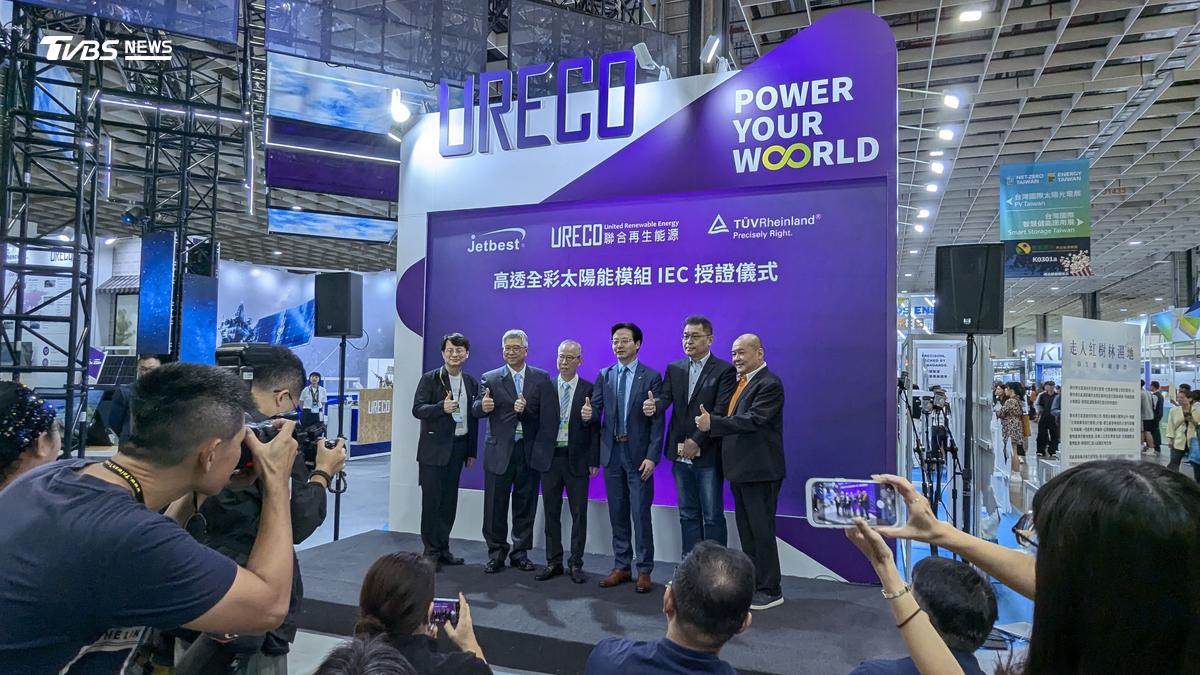
Weichun Li (李衛春), senior vice president of global power electronics at TÜV Rheinland, a German company that tests and certifies products for safety compliance worldwide, spoke with TVBS last Tuesday (Oct. 13). The interview took place ahead of Energy Taiwan (台灣智慧能源週), the island's largest renewable energy exhibition, where the company announced its white paper on AI data center standards two days later.
"It's not just safety gaps; there are also performance gaps and reliability gaps," Li said, his tone growing more emphatic. "Data centers require higher stability and reliability than other systems, higher than solar, energy storage, or charging infrastructure." The shift to 800-volt DC architectures, championed by Nvidia for next-generation AI computing, promises greater energy efficiency and smaller facility footprints, but Li warned that the transition is outpacing existing standards.
"The higher the voltage, the higher the safety risk," he continued. "The higher the voltage, the greater the challenge for components and materials. And the higher the voltage, the more your standards, testing, and certification systems are lacking."
Taiwan's current AI data center capacity stands at roughly 60 to 70 megawatts, Li estimated, but could reach 400 to 500 megawatts by 2029, a nearly tenfold increase. The projection aligns broadly with data reported in April by The Reporter (報導者), a Taiwan-based investigative outlet, citing Taiwan Power Company (台電) figures. As of November 2025, Taipower had received 79 AI data center power applications totaling about 4,758 megawatts; yet only four sites were actually drawing power at the time, the outlet reported.
Those challenges are the focus of the white paper, co-published with energy media platform RECCESSARY and InfoLink Consulting. The document addresses the convergence of AI-driven electricity demand and Taiwan's energy market reform, outlining verification challenges in several areas: medium-voltage electrical safety, high-frequency materials, electromagnetic interference, thermal management, and liquid cooling systems.
Despite these emerging industry standards, Li said Taiwan's own regulatory framework has yet to catch up. "For AI data centers in the Taiwan market, it really is just the beginning," he added. "Many things may not yet be complete or comprehensive, but it requires a process."
Taiwan's Ministry of Economic Affairs (經濟部) brought data centers above 5 megawatts under its Energy Usage Plan review (能源使用說明書) regime in November 2025, according to government records, requiring developers to submit efficiency plans or face project delays. But Li suggested more work is needed.
TÜV Rheinland, which would benefit commercially from expanded certification requirements, has positioned itself as both critic and solution provider. "We can assist local institutions as they develop their standards," Li said. "We have accumulated experience earlier, more fully, and more completely." The company is also evaluating whether to expand its Taiwan operations, he added, potentially adding technical experts, service teams, and testing capabilities.
The company has already released standards for high-voltage cables, connectors, and HVDC systems for AI data centers, Li said. A standard for solid-state transformers — technology that eliminates multiple power conversion steps and reduces energy loss — is expected by the end of October.
"Within six months, we aim to have standards in place," Li explained, describing the company's approach to keeping pace with rapid technological change. "We hold closed-door meetings with 20, 30, or 40 companies at a time. We also convene industry seminars with upstream and downstream players."
Leaning forward, Li expressed optimism that Taiwan could emerge as a regional standard-setter for AI data center infrastructure, given its position as a global hub for AI hardware manufacturing. "Taiwan has the most complete AI industry ecosystem," he said. "The leading companies are all here, supplying overseas markets, especially the United States, Southeast Asia, the Middle East, and Europe."
TÜV Rheinland began its Greater China operations in Taiwan 40 years ago, tracking the island's evolution from IT to semiconductors to renewables. "We have accompanied Taiwan all the way," Li said. The question now is whether Taiwan's regulations can keep pace with its ambitions. ◼