


Hermes Testing expands as AI demand lifts sales to a record
Hermes Testing Solutions, a Hsinchu-based supplier of semiconductor testing equipment and probe cards, more than doubled its sales in the third-quarter and plans to spend more than four times that quarter’s revenue on expansion. Revenue rose 154.2% from a year earlier and 25% from the previous quarter to a record NT$1.50 billion (approximately US$45.7 million). The planned investment of approximately NT$6.4 billion (US$195 million) targets the precision testing and packaging technologies needed for increasingly complex AI chips.
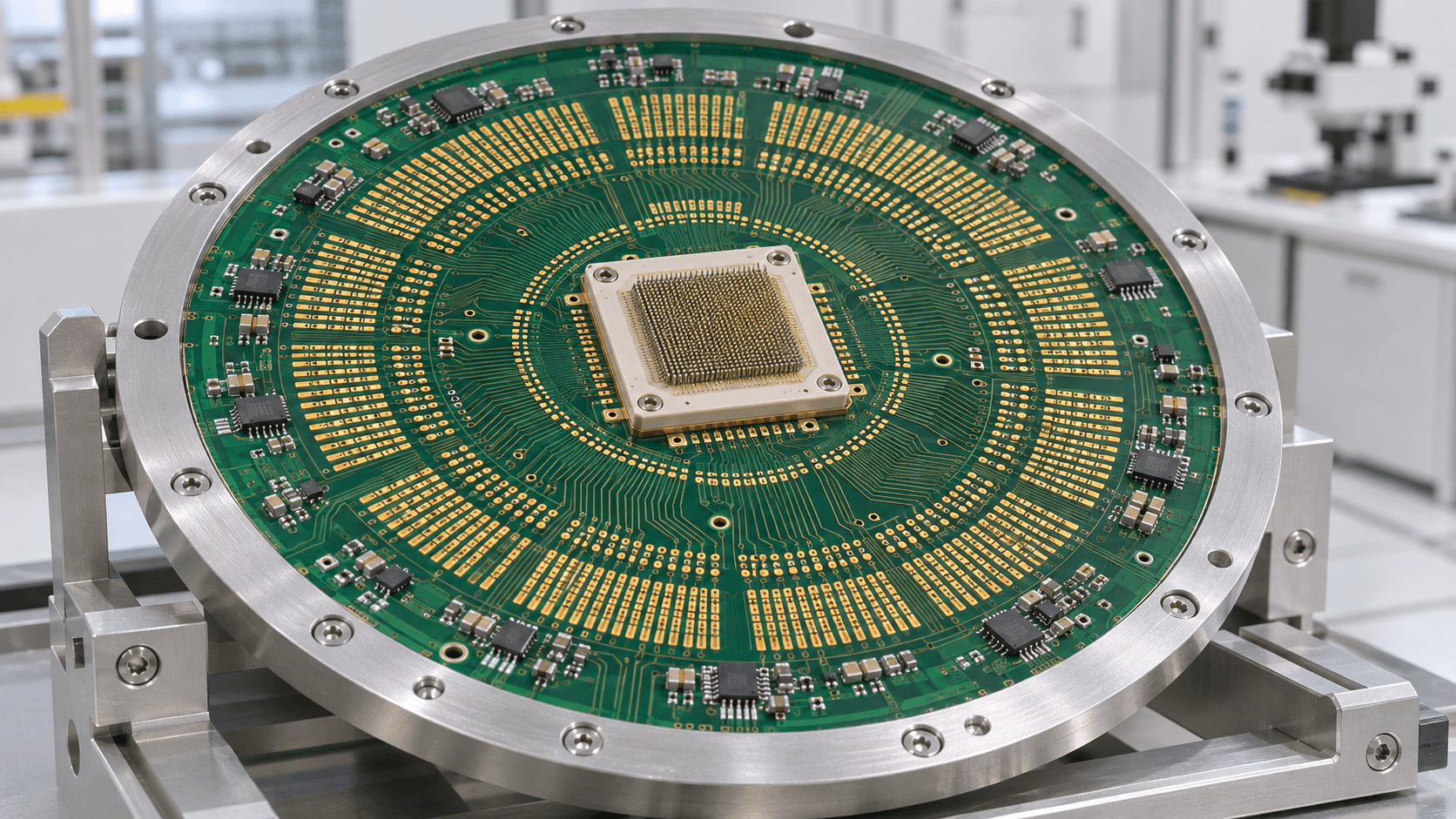
Founded in 2004, Hermes supplies products and engineering services that help manufacturers identify defective chips while they are still on wafers. Its probe cards create temporary electrical connections between those chips and testing machines. As processors handle faster signals and greater electrical loads, those connections must operate accurately across increasingly dense contact points.
AI is increasing both the amount of testing and the cost of missing a defect. Accelerators combine processing chips and high-bandwidth memory in expensive packages, making it vital to identify faulty components before assembly. Testing continues after packaging and can include operating finished devices under conditions that resemble their eventual workloads. Suppliers therefore gain twice, from higher chip output and from more demanding testing of each device.
The testing business comprises three types of company. Advantest and Teradyne supply the automated testing systems that generate signals and measure chip performance. Probe card manufacturers provide the customized connections between those systems and wafers. Testing service companies such as Taiwan’s KYEC operate equipment on customers’ behalf. Hermes’s probe card business sits in the second group, on the equipment side of the industry.
There it faces established international suppliers including FormFactor and Technoprobe, alongside Taiwan’s MPI, which makes wafer probe cards, and Chunghwa Precision Test Tech, known as CHPT, which supplies them for applications including high-performance computing and networking. Competition depends on making accurate, durable contacts that match each chip’s layout and electrical requirements.
Hermes has built its position partly through cooperation with Micronics Japan, another major probe-card supplier. It set up a probe-card production line in 2020 using technology transferred from the Japanese company, and the two announced a further strategic partnership in May 2025. Hermes later added internal circuit board assembly and expanded internationally, opening a U.S. operation in 2026.
The planned investment covers a research center in Hsinchu and manufacturing facilities in central and southern Taiwan. The sites will will support probe cards, silicon photonics equipment, laser probe cleaning machines, and advanced packaging equipment.
Two of the products under development address chips that are harder to test. Hermes is working on microelectromechanical, or MEMS, probe cards for dense, closely spaced chip contacts. For silicon photonics, which uses light to carry data, it is developing equipment that combines optical and electrical testing.
Its Symphony system takes the company beyond testing into advanced packaging, including CoWoS and chiplet assemblies. The equipment reflows solder bumps without flux, the chemical material conventionally used to help solder form reliable joints, which extends Hermes’s business into the manufacturing processes that create chip connections.
Sales have kept growing since the quarter closed, with October revenue up 61.9% year on year to NT$506 million (US$15.4 million). A one-time charge linked to listing preparations distorted the third-quarter bottom line. Hermes recognized approximately NT$1.12 billion (US$34.1 million) in employee share-subscription expenses, which produced a net loss attributable to shareholders of NT$286 million (US$8.7 million), or NT$10.23 per share. The company described the charge as noncash, and it earned NT$298 million (US$9.1 million) over the first nine months of the year.
Hermes is seeking a larger role in an industry where each new chip generation requires more specialized equipment. Its own probe cards, optical testing, and packaging machinery give it several ways to meet that demand, and each brings it into closer competition with established global suppliers.
US$ conversions use an illustrative exchange rate of NT$32.8 per US$1.