



DigiAsia opens in Taipei with push for 'HEARTificial' over AI-only ads
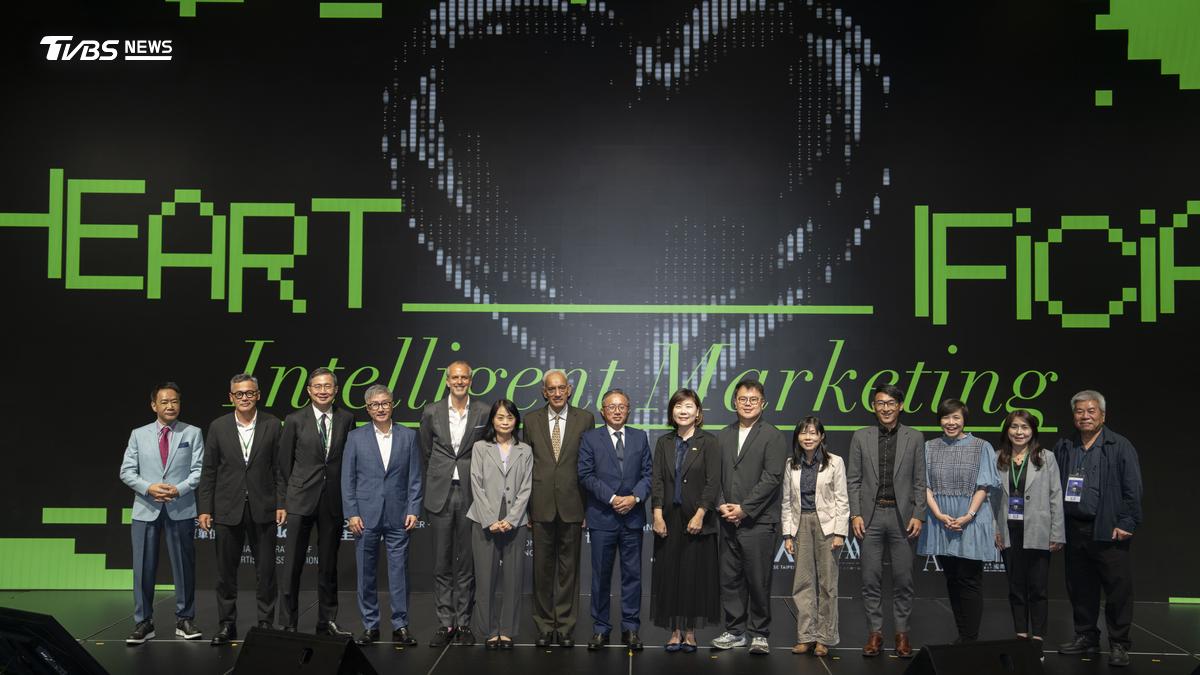
TAIPEI (TVBS News) — Asia's advertising industry opened its premier digital marketing congress in Taipei on Wednesday (Oct. 28). Leaders from 18 regional markets gathered to debate a counterintuitive proposition: that human emotion, not algorithmic efficiency, will determine which brands survive the AI revolution.
The 7th DigiAsia congress, held under the theme "HEARTificial Intelligent Marketing," brings together C-level executives, chief marketing officers, and technology disruptors. The biennial event is authorized by the Asian Federation of Advertising Associations (AFAA). It is organized by the Taipei Association of Advertising Agencies (TAAA, 台北市廣告代理商業同業公會).
Fredrik Boreström, world president of the International Advertising Association (IAA), set the tone in opening remarks Wednesday. "What got us here will not get us there," he told attendees. "Our industry is changing faster than ever before."
The conference's central argument arrives as the advertising industry grapples with consumer backlash against AI-generated content. S.K. Swamy, chairman of AFAA, said the challenge extends beyond rejection to a problem of authenticity.
"People are increasingly finding it difficult to discern what is AI and what is not AI," Swamy told TVBS a day earlier, his voice measured as he described the industry's deepening authenticity crisis. He cited a jewelry commercial featuring an AI-generated model indistinguishable from live footage. "Unless it says AI content, declared AI content, very difficult to figure out," he said.
Despite concerns, Swamy argued that the industry must adapt. "Look, people, at the end of the day, must embrace technology," he said. "If you don't embrace, somebody else is going to do it."
The two-day forum features speakers from platforms including LinkedIn, LINE, and Meta, alongside executives from networks dentsu and McCann. Taiwan's Ministry of Economic Affairs and Ministry of Digital Affairs officials also addressed the opening ceremony.
"Asia matters enormously to the IAA," Boreström added, his voice rising with emphasis as he addressed the packed hall. "It's home of some of the world's fastest-growing, most dynamic advertising markets."
Boreström urged attendees to use the gathering as an opportunity for cross-border dialogue. "I encourage you to really connect with different people, exchange ideas, challenge convention, and imagine what new possibilities are there for our industry," he said.
In a separate interview ahead of the congress, Boreström emphasized the IAA's mission to bridge regional perspectives. "One of the things that we want to try to do is kind of build these bridges between the different regions and our different chapters," he said. He noted that macroeconomic pressures are forcing companies worldwide to "do more with the same or more with less," making cross-regional collaboration critical.
Boreström, who also leads LinkedIn's agency development team across international markets, connected the conference theme to broader industry evolution. "In a world where we'll have more and more machines talking to machines, having kind of a human brand and being able to like be engaging, I think is going to be more and more important," he said in the interview.
No independent data comparing emotional marketing strategies against AI-optimized campaigns was presented at the opening session.
Swamy projected that AI disruption would stabilize within three to four years. "It's like the digital boom that happened in 2000 and went to the bust," he said.
He compared the current moment to previous technological upheavals. "Any new thing that we have seen in the past also, there is a destructive phase and then there is a regenerative phase," Swamy said. "So I think that is certainly going to be the way this phase also will move."
The transformation poses particular challenges for smaller agencies. While large players have invested heavily in AI capabilities, "most of the small and medium-sized entities are grappling with this new technology," Swamy said.
Taiwan has served as host of DigiAsia since 2014. The congress continues through Thursday at Taipei New Horizon. ◼