



Vera Rubin drives growth for Taiwan’s AI cooling suppliers
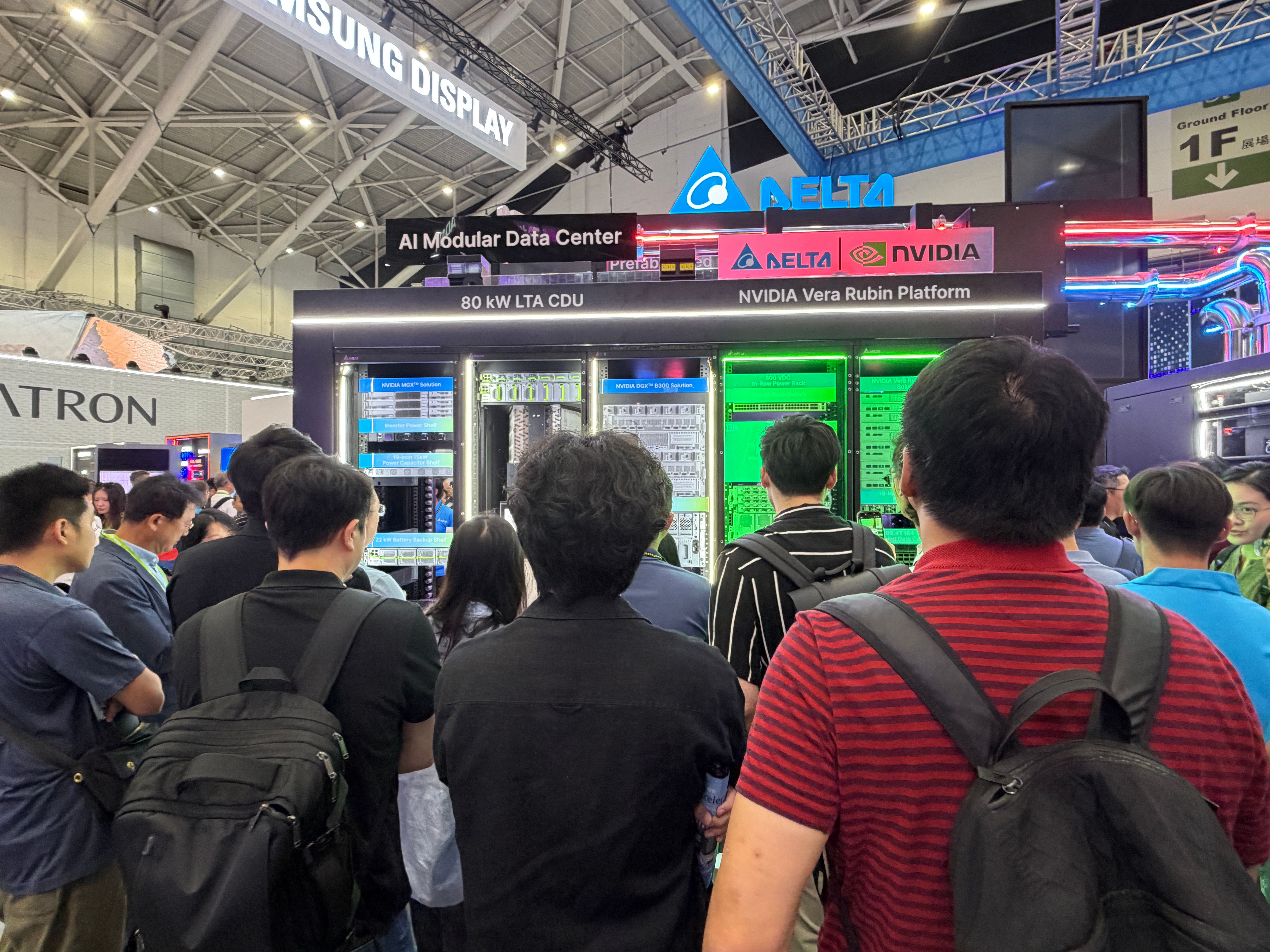
Cooling is becoming a larger part of the investment required to build AI data centers. As manufacturers pack more computing power into servers and racks, they need systems that can remove concentrated heat reliably and operate efficiently. Taiwan’s cooling suppliers are working alongside server manufacturers to develop cold plates, coolant distribution units, and other equipment for AI data centers.
Nvidia’s Vera Rubin platform is the most significant new development. Its fully liquid-cooled design extends cooling beyond the main processors, broadening the range of components that suppliers must accommodate. Nvidia specifies a coolant inlet temperature of 45°C, enabling facilities in suitable climates to reject heat through dry coolers without operating mechanical chillers. This has created opportunities for suppliers of cold plates, manifolds, pumps, heat exchangers, and cooling controls.
The commercial impact is already visible. Delta Electronics reported that liquid cooling revenue reached approximately NT$25 billion (US$785 million) in the third quarter of 2026, representing around 13% of consolidated revenue. Other domestic thermal management suppliers also reported substantial sales through September.
In direct-to-chip cooling, liquid circulates through sealed cold plates attached to processors and other components. Manifolds distribute coolant through the rack, while coolant distribution units, or CDUs, manage circulation and heat transfer. Liquid-to-liquid systems transfer heat to a facility water loop; liquid-to-air systems discharge it into the surrounding air. Immersion cooling, which places equipment in a dielectric fluid, is a separate approach.
This range matters because data centers have different buildings, workloads, and infrastructure. New facilities can integrate liquid cooling from the outset, while existing sites may need equipment that works with their established cooling arrangements. Taiwan’s suppliers are developing products for both markets.
Delta illustrates the expansion from individual components into integrated infrastructure. Its 2026 portfolio includes cold plates for Vera Rubin NVL72, liquid-cooled busbars, and a 3MW GoCool liquid-to-liquid CDU. In October, it presented a prefabricated AI modular data center combining liquid cooling with 800 VDC power infrastructure for Vera Rubin-based installations. These offerings connect thermal management with the broader task of delivering power and deploying computing capacity.
Delta’s quarterly net profit reached NT$23.5 billion (approximately US$738 million), up approximately 26% from a year earlier, with earnings per share of NT$9.04 (US$0.28). Its results also show the operational demands accompanying growth. Management said component shortages, changing customer requirements, and shipment delays had increased inventory, with write-downs weighing on margins. Coordinating deliveries is becoming more important as power equipment, cooling systems, and computing hardware must arrive in the right sequence.
Asia Vital Components, or AVC, reported record quarterly sales of approximately NT$59.09 billion (approximately US$1.85 billion), up about 51.8% year on year. Its portfolio spans cooling products, fans, casings, and system assembly, giving it several roles in server production. The company’s rising revenue reflects the broader opportunity to supply components and assemblies as customers expand computing capacity.
Auras also reached a quarterly revenue record, with sales rising approximately 12.5% from the preceding quarter. Its cold plates, manifolds, and CDU development position it across several parts of the liquid-cooling system. Asus named Auras among the component partners in its liquid-cooling framework announced in February, providing a concrete example of cooperation between thermal specialists and server manufacturers.
Kaori is extending its heat-exchange expertise into broader cooling systems. Its Kaori Thermal business displayed in-row and in-rack CDUs, sidecar systems, rear-door heat exchangers, and rack manifolds at Computex 2026. Quarterly revenue reached approximately NT$3.74 billion (around US$117 million), up from NT$2.31 billion (approximately US$73 million). The group also supports other thermal applications, including fuel-cell equipment, so its total sales growth should be understood across that wider product mix.
Vera Rubin strengthens the case for this broad approach. Cooling performance increasingly depends on the complete path from the component to the facility, including fluid distribution, connections, controls, and maintenance. Manufacturers must deliver consistent quality across these elements as customers move from prototypes to larger installations.
Taiwan’s advantage lies in the close working relationships between thermal specialists, component makers, and server manufacturers. Those relationships help suppliers adapt cooling designs to new platforms and prepare them for production. As AI infrastructure expands, the opportunity is growing from selling individual cooling components to providing complete thermal systems and support services.
US-dollar equivalents are approximate, using NT$31.86 per US$1 for consistency.