



MediaTek’s AI expansion gains pace as Q3 revenue climbs
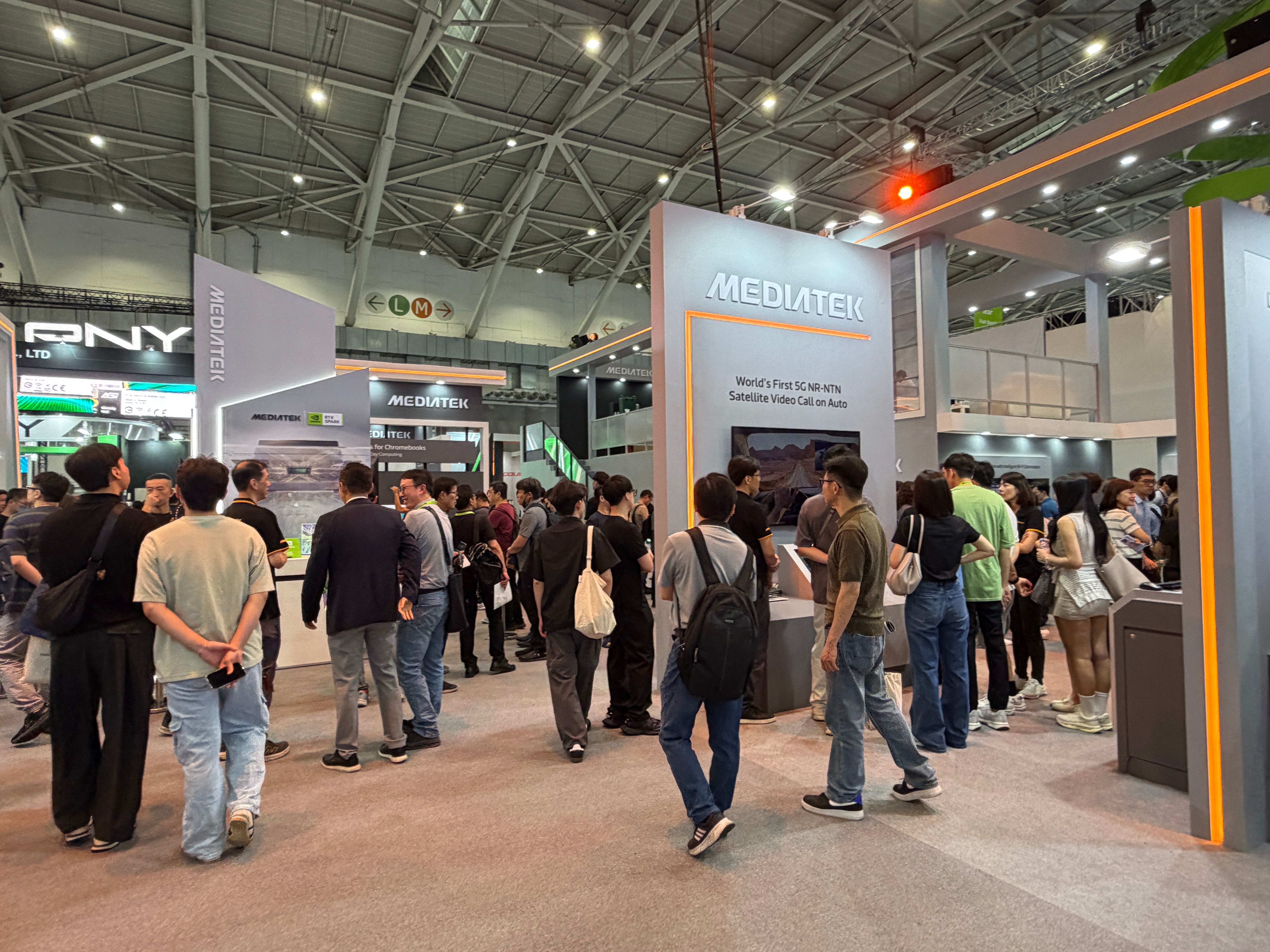
MediaTek is entering a new stage of growth. Speaking at Taiwan Weeks on 3 November, CEO Rick Tsai said 2026 revenue would exceed US$21 billion, a company record, and named AI data centers, computing, and automotive as the key drivers for its next phase of expansion.
Consolidated revenue rose 18.3% from a year earlier and 10.4% from the previous quarter to NT$168.06 billion (about US$5.17 billion). Net profit reached NT$27.88 billion (about US$858 million), and gross margin was 46.3%.
In September, MediaTek began shipping its first custom AI accelerator, a chip designed around one cloud customer's own computing needs. The company expects the program to bring in US$2.5 billion in fourth-quarter revenue and about US$16 billion in 2027. Cloud operators buy these application-specific integrated circuits, or ASICs, to run specific AI workloads faster and more cheaply than they could on general-purpose chips. Tsai tied the opportunity to the spending plans of Amazon, Google, Microsoft, and Meta, whose combined capital expenditure he said could rise from about US$730 billion in 2026 to US$1.1 trillion in 2027.
Nvidia is a key partner in MediaTek’s broader expansion into AI infrastructure, computing and automotive. In August it announced a US$3.5 billion investment in MediaTek's convertible bonds, along with plans to cooperate on data centers, AI computing on personal devices, and vehicles. Through Nvidia's NVLink Fusion platform, MediaTek can help customers connect their own custom processors to Nvidia's processors, networking, and software.
Smartphones remain a core market for MediaTek, although mobile revenue fell 17% from a year earlier and made up 37% of quarterly sales. MediaTek is responding at the top of the market with the 2-nanometer Dimensity 9600 Pro, which improves processing, graphics, and power efficiency in flagship phones. Two dedicated neural processors on the chip handle everything from low-power background tasks to demanding AI applications that run on the phone itself.
The rest of MediaTek's device business is growing much faster. Chips for 5G modems, AI tablets, AI PCs, and car cockpit systems generated 58% of quarterly revenue, up 63% from a year earlier. Power management chips added about 5%, helped by demand from data centers. The Nvidia relationship carries into these markets too. The two companies are developing successive generations of the DGX Spark and RTX Spark computers for developers, businesses, and consumers. In cars, MediaTek's Dimensity Auto platforms use Nvidia graphics and AI technology to power more capable digital cockpits. These projects extend MediaTek’s core expertise in energy-efficient chip design into products with different customers and replacement cycles from smartphones.
Delivering the data center expansion will require sufficient manufacturing and packaging capacity. MediaTek says its next AI accelerator remains scheduled for volume production in the first quarter of 2028, while a second customer should begin contributing revenue that year. Securing substrates, memory and advanced packaging, and achieving reliable production yields, will determine how quickly its growing order pipeline becomes revenue.
MediaTek says its next AI accelerator is still on track for volume production in the first quarter of 2028, and a second custom chip customer should start contributing revenue the same year. How quickly that growing data center order book turns into sales depends on whether MediaTek can secure enough substrates, memory, and advanced packaging, and achieve consistent production yields.