


Taiwan proposes democratic chip alliance with Europe
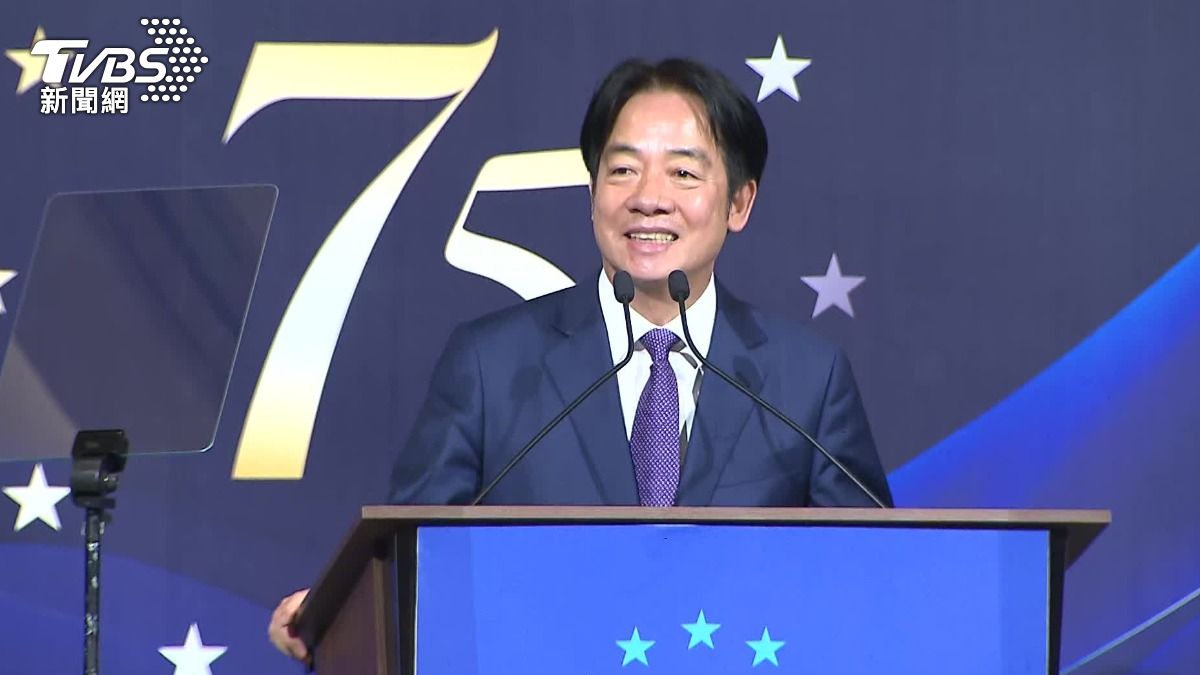
TAIPEI (TVBS News) — In a spirited address that underscored Taiwan's deepening ties with Europe, President Lai Ching-te (賴清德) hailed democracy as the bedrock of their relationship during the annual Europe Day Dinner on Thursday (May 29). Speaking before a packed hall of European Chamber of Commerce Taiwan (ECCT, 歐洲商會) representatives, Lai commemorated the 75th anniversary of the Schuman Declaration, the visionary post-war blueprint that birthed today's European Union.
"The declaration symbolized a new following in the postal War era of democracy, unity and cooperation," Lai told the assembled diplomats and business leaders. "As we face the geopolitical changes and drastic economic changes of today's world, the Schuman declaration speaks to us profoundly." His words resonated throughout the elegantly decorated venue, drawing nods of agreement from European representatives.
Taiwan and Europe have cultivated increasingly substantial economic ties, with bilateral trade volumes soaring to US$84.7 billion (approximately NT$2.54 trillion) last year. This remarkable figure underscores the flourishing partnership between the self-governing democratic island and European nations, creating a powerful economic bridge across continents despite complex geopolitical challenges.
"Europe is Taiwan's largest trading partner. It is also Taiwan's largest source of foreign direct investment," President Lai noted during his address, gesturing emphatically to emphasize the point. "This demonstrates our vibrant economic and trade cooperation and reflects the high levels of confidence our businesses have in each other's markets and systems." The statement highlighted how economic interdependence has become a cornerstone of Taiwan-European relations.
The President articulated Taiwan's ambition to forge more formalized frameworks for trade and investment with Europe, moving beyond ad hoc arrangements. With measured optimism, he advocated for groundbreaking economic partnership agreements with the European Union that would establish "a more transparent, stable and predictable business environment" for companies operating across both markets. Such agreements would represent a significant diplomatic achievement for Taiwan.
In a bold diplomatic maneuver during his speech, President Lai spotlighted Taiwan's indispensable position within global technology supply chains. The island nation, home to semiconductor manufacturing giant TSMC, unveiled an ambitious new initiative centered on creating privileged semiconductor partnerships exclusively among democratic nations. The proposal represents a strategic pivot in how Taiwan leverages its technological prowess in an increasingly divided global landscape.
"Today's Taiwan is an internationally recognized democracy and a semiconductor industry vital to global security and prosperity," Lai stated, his voice carrying throughout the hushed banquet hall. "This enables us to play a key role in restructuring global democratic supply chains and the economic order." The remarks underscored Taiwan's strategic calculation that its semiconductor dominance provides crucial leverage in international relations despite diplomatic isolation.
The President issued a stark warning about authoritarian regimes — a thinly veiled reference to China — expanding their influence through non-market tactics, including aggressive price subsidies and strategic resource monopolies. Countering these maneuvers, he announced that Taiwan "will introduce an initiative on semiconductor supply chain partnerships for global democracies." The proposal aims to insulate critical technology supply chains from potential coercion by authoritarian states.
"This is more than a proposal for economic cooperation," Lai emphasized, leaning forward at the podium as camera flashes illuminated his determined expression. "It is an alliance of shared values and advanced technology." The statement revealed Taiwan's strategy to intertwine its technological capabilities with its democratic identity, creating a value proposition that resonates with European nations increasingly concerned about technological dependencies on authoritarian states.
The President conveyed heartfelt appreciation for European diplomatic backing regarding peace across the Taiwan Strait — the 110-mile waterway separating Taiwan from mainland China that has become an increasingly militarized flashpoint. Lai characterized European support as "vital to regional security and prosperity," a statement that acknowledges Taiwan's precarious position facing military pressure from Beijing, which claims the self-governing island as its territory.
As crystal glasses clinked throughout the ornate banquet hall, Lai concluded the evening with an impassioned toast to the flourishing Taiwan-Europe partnership. With European diplomats and business leaders standing in solidarity, he pledged that Taiwan "will continue to bolster itself to achieve real peace through strength, and will work with democratic partners to safeguard freedom and democracy." The moment captured Taiwan's strategic pivot toward deeper European engagement amid regional tensions. ◼