



Foxconn builds its future around AI infrastructure, robotics, and EVs
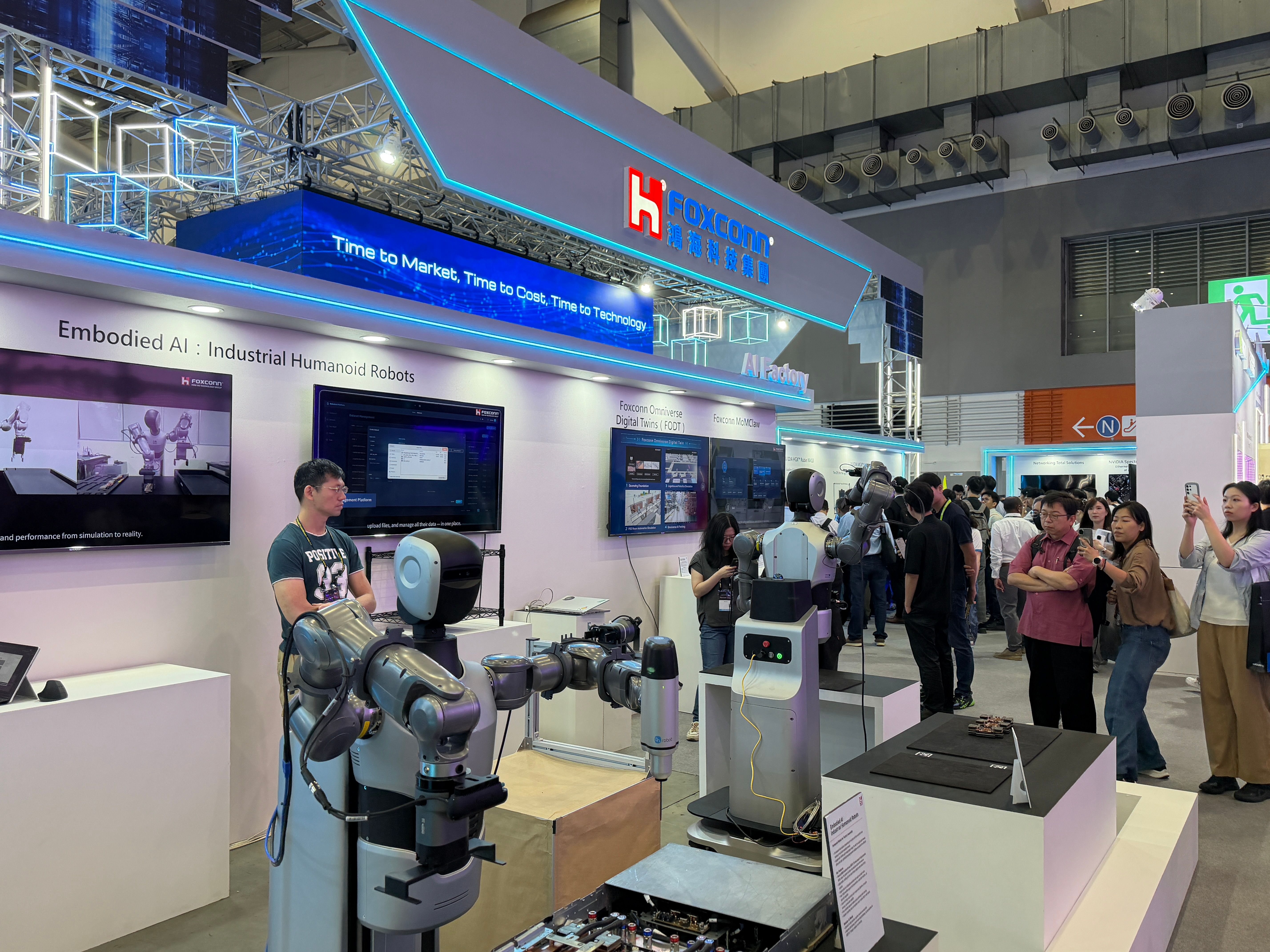
Foxconn aims to turn its global manufacturing scale into a commanding position across AI infrastructure, robotics, electric vehicles and intelligent healthcare. At Hon Hai Tech Day on October 30–31, its exhibits ranged from modular AI infrastructure to new electric vehicle designs. Connecting them is a business strategy that combines the group’s manufacturing scale with a larger role in product development, systems integration, and software.
That ambition builds on capabilities Foxconn already possesses. The company manufactures components, assembles servers, and integrates complete racks. Its next opportunity is to bring computing, power, cooling, and communications together earlier in the design process, then deliver systems that require less work at the customer’s site. At the event, executives emphasized cooperation across the group from the start of development, connecting precision manufacturing with customer engineering requirements.
AI infrastructure provides the clearest example. Increasingly powerful processors require more electricity, liquid cooling, and faster connections. Customers must coordinate those systems before expensive computing equipment can begin useful work. Foxconn’s strategy is to take on more of that coordination and move installation and testing into its factories.
Its DSX POD reference design applies this approach to modular infrastructure for Vera Rubin systems. Wiring, cabling, piping, and functional testing can be completed before delivery. Foxconn says the approach could shorten on-site deployment from the six months cited in its announcement to as little as 14 days. That timetable assumes a prepared site with the necessary power, cooling and network connections; it describes installation of the prefabricated system.
A separate exhibit with Teco showed what broader integration involves. The partners displayed a 40-foot container combining computing racks, power distribution, cooling, energy management, and fire protection. Teco contributes the electrical and mechanical engineering needed to support the computing equipment. For data center customers, factory assembly promises to reduce the number of installation tasks and suppliers they must coordinate on location.
Foxconn’s partnership with Schneider Electric extends the same approach. Announced in June, it combines Foxconn’s computing platforms, rack integration, and manufacturing with Schneider’s power, cooling, and energy-management expertise. The companies plan reusable designs for AI data centers, including modular power and cooling equipment. Standardizing these designs could help customers repeat installations across different locations with fewer engineering changes.
Nvidia is central to this infrastructure strategy, but Foxconn’s opportunity spans different computing architectures. Google Cloud also participated in Tech Day, discussing the manufacturing demands created by faster development of its custom AI processors. Foxconn’s commercial proposition is the ability to turn changing customer designs into volume production, supported by components, engineering, and manufacturing capacity across the group.
The same AI investment is changing how Foxconn operates its factories. Its FoxBrain model adapts existing open foundation models using industrial data. Specialized applications include Genesis for manufacturing and CityGPT for urban services. This gives the company a way to apply production knowledge accumulated across its operations to tasks such as scheduling, troubleshooting, and process changes.
Foxconn reports that its AI applications have reduced labor hours spent on production scheduling by 25% and engineering workload for injection-molding changeovers by 50%. Foxconn also uses factory and robot simulations to test changes before deployment, helping it reproduce production processes across multiple locations. Through subsidiary Visionbay.ai, it is extending AI services to enterprises and governments in Asia.
Robotics provides a physical application for that manufacturing intelligence. Foxconn’s partnership with Intrinsic, announced in November 2025, aims to develop more adaptable automation for electronics production. Initial areas include assembly, inspection, machine tending, and logistics. Traditional automation often requires substantial reengineering when a product changes; more flexible robotic systems promise to make automation practical across a wider range of tasks.
The partnership combines Intrinsic’s robotics software with Foxconn’s experience of production requirements. Foxconn’s own factories provide places to develop and evaluate the technology, while successful applications could support a wider robotics business. The connection to its core operations is direct: better automation can improve manufacturing performance while giving the company practical experience it can offer customers.
Healthcare extends that combination of AI software, robotics, and manufacturing into hospitals. At Tech Day, Foxconn showcased CoDoClaw, developed with Tung’s Taichung MetroHarbor Hospital to coordinate AI tools and clinical information across specialties, initially focusing on diabetes and related cardiovascular and metabolic conditions. It also demonstrated a system linking automated chemotherapy preparation with robots that transport and deliver medication. These projects apply Foxconn’s integration capabilities to helping hospitals coordinate care and reduce time spent on routine tasks.
Electric vehicles follow a related business model. At Tech Day, Foxconn introduced the Model A+ and Model K+ SUVs and the Model K compact truck, bringing its portfolio to 12 reference designs. These designs provide platforms that automotive customers can adapt and commission Foxconn to develop and manufacture, reducing the investment and development time required to bring a new vehicle to market.
Foxconn is also investing in the components and engineering relationships needed to support that business. Under an October agreement, subsidiary Lin Yin will acquire 50% of Mitsubishi Electric Mobility for an expected ¥115 billion, approximately US$727 million. Completion is scheduled for October 1, 2027, subject to regulatory approvals and other conditions. The partners will jointly operate the business, combining Mitsubishi’s electric powertrain, software, and vehicle-control capabilities with Foxconn’s manufacturing scale.
This gives Foxconn a route into automotive business beyond securing contracts for complete vehicles. Powertrains, control systems, and related engineering can serve manufacturers using their own vehicle platforms. It also brings established automotive expertise into a group seeking to apply its electronics manufacturing model to a sector with long development cycles.
Across these initiatives, Foxconn is seeking a larger role in customers’ investment decisions. Modular data centers require computing and utility systems to work together. Flexible automation depends on software informed by production experience. Vehicle programs need engineering, components and manufacturing capacity. Healthcare systems must connect clinical information, AI tools and medical equipment with the daily work of hospital staff. Foxconn is investing in those connections so that customers can entrust it with more of each project. Its next stage of growth will come from turning that broader responsibility into repeatable products, production contracts, and long-term service relationships.