



KMT head promises zero tolerance for Chinese spies
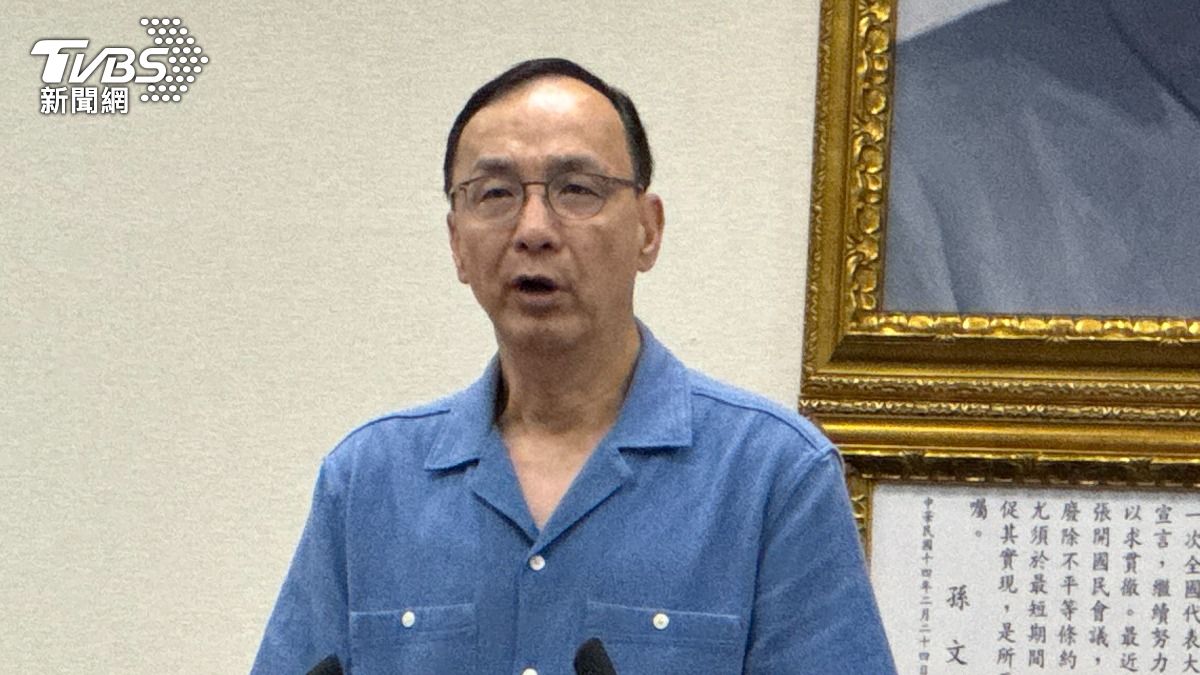
TAIPEI (TVBS News) — The chairman of Taiwan's main opposition party, the Kuomintang (KMT, 國民黨), issued a stern warning Wednesday (June 11) against any party members implicated in espionage activities. Eric Chu (朱立倫) vowed "strict discipline" and "zero tolerance" for individuals found to be compromising national security. His forceful declaration came in the wake of prosecutors questioning Lin Yueh-lung (林岳龍), who was subsequently released on bail set at NT$100,000 (approximately US$3,345), according to authorities.
Taiwan's Investigation Bureau (調查局), the island's premier counterintelligence agency, reportedly obtained information suggesting that Lin had shared sensitive personal data and legislative directories with Chinese intelligence operatives during his tenure as an aide to multiple lawmakers. Speaking at a party leadership meeting Wednesday afternoon, Chu emphatically reaffirmed the KMT's position against activities that might undermine Taiwan's national security interests or sovereignty, issues that remain deeply contentious in cross-strait relations.
Lin, who identifies himself as a spokesperson for the KMT's Taipei City Party Committee, serves as an assistant to Taipei City Councilor Wang Hsin-i (王欣儀), a local elected official in Taiwan's capital. The widening investigation has reached beyond party lines, also implicating several former staffers from the ruling Democratic Progressive Party (DPP, 民進黨), Taiwan's pro-independence governing party. Those named include Chiu Shih-yuan (邱世元), Huang Chu-jung (黃取榮), Wu Shang-yu (吳尚雨), and He Jen-chieh (何仁傑), according to investigators.
The case highlights the extraordinary sensitivity surrounding espionage allegations in Taiwan, where fears of Chinese infiltration have intensified amid growing military pressure from Beijing. Security analysts suggest both major political parties — the opposition KMT and the governing DPP — will likely face heightened public scrutiny regarding their vetting procedures and security protocols for staff members with access to sensitive information. The investigation continues as Taiwan grapples with complex questions about political loyalty and national security in an increasingly tense geopolitical environment. ◼