



Taiwan tests water quality after typhoon damages solar farms
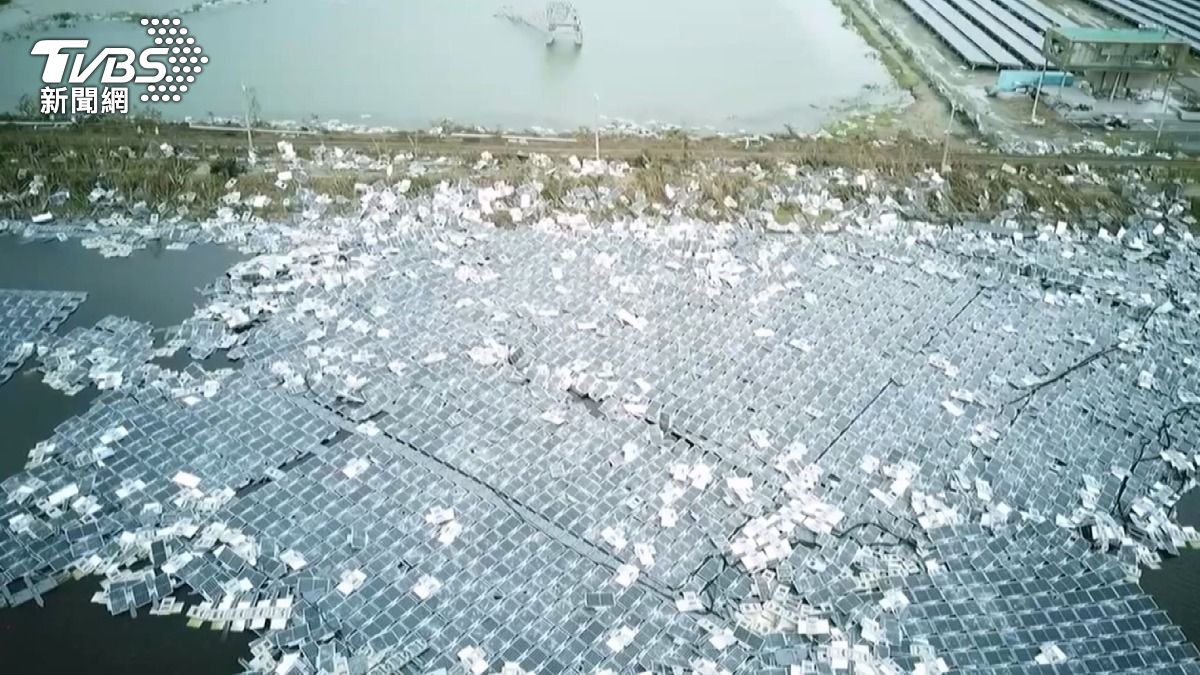
TAIPEI (TVBS News) — The aftermath of Typhoon Danas (颱風丹娜絲) continues to challenge recovery efforts across southern Taiwan, where extensive damage to solar energy infrastructure has raised environmental concerns in the agricultural regions of Chiayi (嘉義) and Tainan (台南). Taiwan's Ministry of Environment (MOEN, 環境部), the government agency responsible for environmental protection and natural resources, provided reassurance Thursday (July 17) that preliminary water quality tests at affected solar power installations showed no immediate health risks. Officials have imposed a strict timeline requiring operators to remove approximately 145,000 storm-damaged solar panels within a two-week period to prevent potential environmental contamination.
Environmental authorities have implemented comprehensive testing protocols to assess potential contamination from the damaged solar installations. The ministry, working in coordination with regional environmental bureaus, collected and analyzed water samples from three stormwater detention ponds and a fishpond near affected solar farms. Their investigation focused on ten potentially harmful heavy metals commonly associated with industrial contamination. Test results indicated completely undetectable lead concentrations and copper levels significantly below regulatory thresholds. Scientists noted slightly elevated manganese readings but attributed these to naturally occurring high background levels in the region's soil, confirming that all measured parameters remained compliant with Taiwan's Surface Water Classification and Water Quality Standards (地面水體分類及水質標準) for public health protection.
Environment Minister Peng Chi-ming (彭啓明) cautioned against premature conclusions about environmental safety, stressing the need for sustained monitoring programs to detect potential delayed contamination. "Heavy metals typically require significant time to leach into surrounding environments," Peng explained during the briefing. The ministry plans to implement an extended surveillance regime for both water and soil quality in affected areas. Officials issued stern warnings to solar farm operators, threatening substantial financial penalties of up to NT$3 million (approximately US$102,000) for companies failing to comply with the mandated cleanup timeline, citing specific provisions within Taiwan's waste management regulatory framework.
Environmental experts provided technical context regarding the damaged equipment, noting that the silicon-based photovoltaic modules predominantly used across Taiwan's solar farms exhibit relatively stable chemical properties that reduce immediate environmental risks. This characteristic has led authorities to classify the typhoon-damaged panels as general industrial waste rather than hazardous materials. The ministry has established a comprehensive disposal timeline, directing authorized solar equipment recycling facilities to process all recovered materials within a 45-day period following their removal from affected sites. ◼ (At time of reporting, US$1 equals approximately NT$29.4)