


Taiwan set for nuclear power referendum on Aug. 23
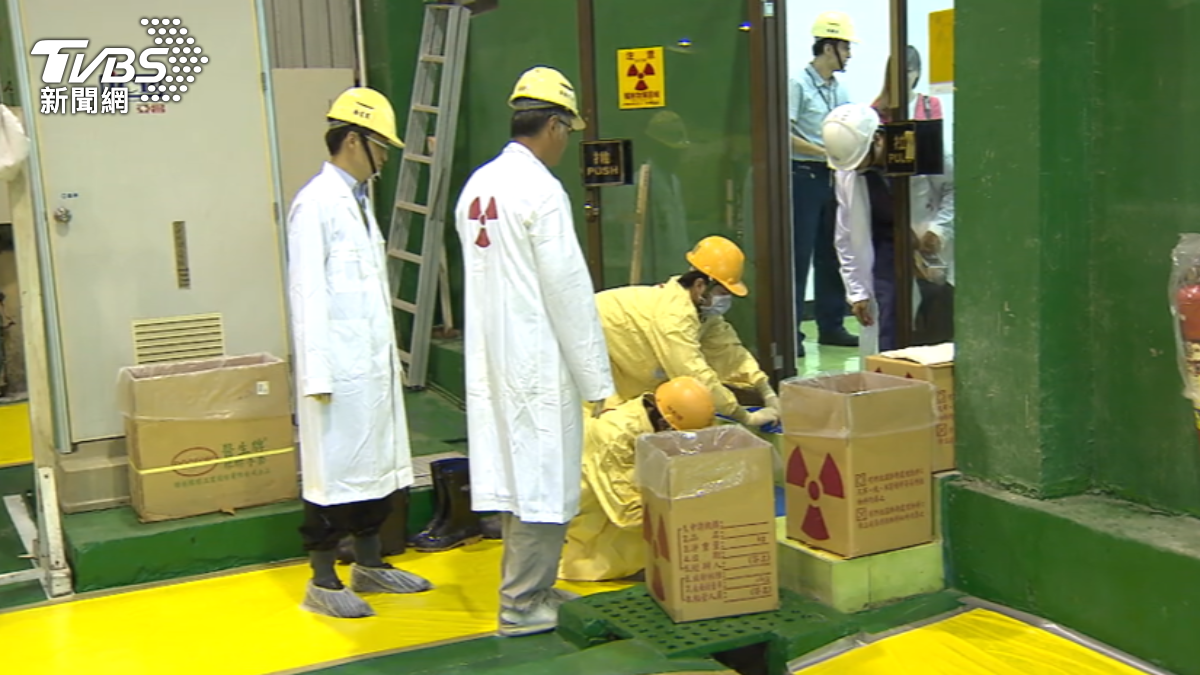
TAIPEI (TVBS News) — Taiwan stands at a crossroads in its energy future as the Taiwan People's Party (TPP, 台灣民眾黨) pushes for a referendum on Aug. 23 to restart nuclear power. The proposal comes just three months after the nation's last nuclear plant was decommissioned, officially marking Taiwan's entry into a nuclear-free era that now faces immediate reconsideration.
The nuclear revival debate centers on stark economic calculations that could reshape Taiwan's fiscal landscape. Nuclear power advocate Huang Shih-hsiu (黃士修) criticizes Taiwan Power Company (TPC, 台電) for maintaining outdated energy plans, arguing that restarting the No. 3 Nuclear Power Plant would save NT$60 billion (US$2 billion) annually while enabling NT$10,000 (US$334) cash handouts to every citizen. Huang's broader economic argument suggests Taiwan has accumulated NT$450 billion (US$15 billion) in energy-related losses since adopting its non-nuclear policy.
The cost-benefit analysis reveals nuclear power's competitive advantage at NT$1.5 (US$0.5) per kilowatt-hour, with advocates claiming a full restart could generate 60 billion kilowatt-hours annually and save approximately NT$240 billion (US$8 billion). Huang bolsters his safety argument by citing World Health Organization and United Nations reports showing the Fukushima disaster caused no measurable increase in deaths or cancer rates. He also highlights nuclear plants' earthquake resilience, pointing to Japan's Onagawa facility that served as a community shelter during the 2011 tsunami.
Opposition representative Gan Chung-wei (甘崇緯) challenges the restart's fundamental necessity, emphasizing that Taiwan maintains a healthy power reserve margin above 10% since the No. 2 unit's shutdown. His argument focuses on sustainable alternatives, contending that conservation measures and renewable energy expansion make nuclear revival unnecessary while avoiding the inherent risks of aging infrastructure. Gan's position reflects broader environmental concerns about Taiwan's seismic vulnerability and the long-term implications of nuclear waste management.
The geological reality adds another layer of complexity to the debate, with a TPC geological survey identifying the Hengchun (恆春) Fault directly beneath the plant site. This finding raises questions about structural integrity during major earthquakes, a significant concern given Taiwan's location along the Pacific Ring of Fire.
Taiwan's energy challenge has intensified dramatically as the island transforms into a global technology hub, creating unprecedented electricity demands that strain existing infrastructure. Taiwan Semiconductor Manufacturing Company (TSMC, 台積電), the world's largest contract chipmaker, is projected to consume nearly a quarter of Taiwan's total electricity by 2030, highlighting the scale of industrial energy requirements. This surge coincides with artificial intelligence development and expanded semiconductor production, sectors that have pushed electricity demand to record highs throughout 2024.
The political landscape reflects these competing pressures, with Kuomintang (KMT, 國民黨) legislator Ko Ju-chun (葛如鈞) warning that Taiwan cannot sustain its AI development ambitions without nuclear power. International stakeholders have also entered the conversation, with American Institute in Taiwan Director Raymond Greene (谷立言) and Nvidia CEO Jensen Huang (黃仁勳) publicly urging Taiwan to embrace nuclear energy. Their intervention underscores the global implications of Taiwan's energy decisions, particularly given the island's central role in semiconductor manufacturing.
Premier Chuo Jung-tai (卓榮泰) has attempted to balance these competing interests by emphasizing core government principles around nuclear safety, waste disposal, and social consensus. While expressing uncertainty about U.S. nuclear waste management practices, he signals openness to emerging nuclear technologies, particularly small modular reactors that promise enhanced safety features. The National Atomic Research Institute (NARI, 台灣國家原子能科技研究院) has already proposed a comprehensive four-year study of SMR technology, suggesting official interest in next-generation nuclear solutions.
The broader strategic implications extend beyond mere energy policy, touching on Taiwan's vulnerability to external pressure and its dependence on imported energy resources. With Nvidia announcing plans for a supercomputer facility in Taiwan and TSMC continuing its capacity expansion, the island faces an energy security challenge that could determine its economic competitiveness. The Aug. 23 referendum thus represents more than a simple policy choice — it embodies Taiwan's attempt to balance environmental concerns, economic necessity, and geopolitical reality in an increasingly complex regional landscape.