



Microloops: The Quiet Cooling Star of Taiwan’s AI Boom
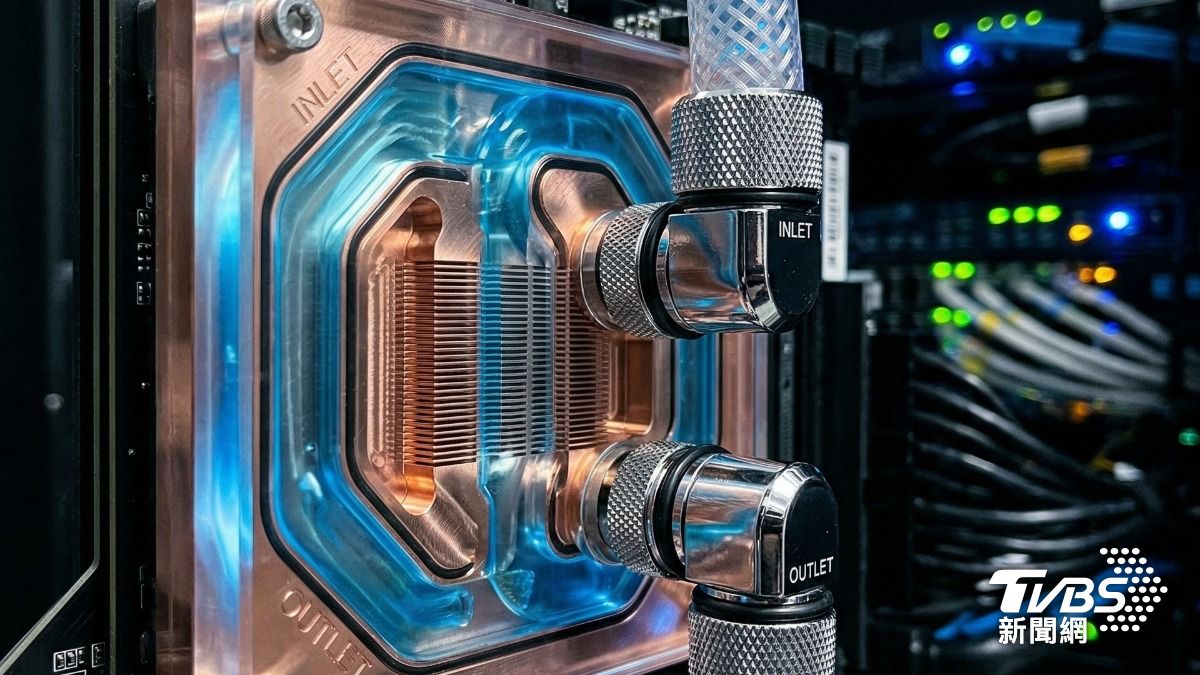
Most attention in the AI hardware race goes to chipmakers and server assemblers. But there is a quieter layer of the supply chain growing just as fast: the companies that keep all that hardware from overheating. Microloops, a Taiwan thermal management specialist founded in 2002, is one of the clearest examples of how the AI boom is lifting companies most people have never heard of.
Microloops posted first-quarter 2026 cumulative revenue of NT$854 million (US$27 million), up 50.7% year-over-year, a record for the period. March revenue came in at NT$314 million (US$9.9 million), a 38.2% increase from a year earlier. These numbers build on a strong 2025, when full-year revenue reached NT$3.7 billion (US$116 million), an 84.7% jump that also set a company record.
The figures may look modest next to the billions generated by Delta Electronics or Asia Vital Components, but management projects full-year 2026 revenue could double from 2025, with acceleration expected in the second half.
AI-related cooling products already account for roughly 60% of revenue and are projected to reach 70% by year-end. These products carry higher gross margins than traditional cooling lines, meaning profitability is improving alongside revenue.
The turning point came in 2024, when Microloops entered the supply chain of one of the world's top four cloud service providers. Since then, that customer has driven a string of record quarters. Now Microloops is pushing further. It has submitted product samples to the other three major hyperscalers for certification, laying the groundwork for a significant expansion of its addressable market.
The timing is favorable. Nvidia's upcoming Vera Rubin platform requires 100% liquid cooling, and industry-wide adoption of liquid-cooled AI servers is forecast to reach 76% in 2026, up from 15% two years earlier. As liquid cooling becomes standard, demand for the thermal modules and cold plates Microloops makes is growing structurally - not just cyclically.
To meet rising demand, Microloops has been aggressively expanding its manufacturing footprint. Its China plant in Huizhou has been scaled to four times its original capacity, while a new Vietnam factory is ready for mass production. Combined liquid cooling plate capacity across both sites is expected to reach 40,000 units per month in 2026, up from 5,000 units in China alone previously.
The dual-site approach gives Microloops flexibility to shift output between facilities depending on customer requirements, tariff conditions, and regional logistics, an increasingly important capability as geopolitics reshapes supply chains.
Microloops' product portfolio has evolved well beyond its origins in conventional heat pipes and fans. The company now offers system-level thermal modules including 3D vapor chambers, server liquid cooling plates, and immersion cooling systems. As AI server architectures shift from individual server cooling to rack-level thermal management, Microloops is positioning itself to supply increasingly complex and higher-value components.
For the rest of 2026, the outlook is firmly positive. Revenue is expected to grow each quarter, with a notable jump in the second half as next-generation chip orders ramp and liquid cooling penetration deepens. If Microloops delivers on its target of doubling full-year revenue, it will have roughly quadrupled in size in just two years.
Microloops is proof that you do not need to be a giant to ride the AI wave. With the right technology, the right customer relationships, and enough production capacity, even a mid-cap thermal specialist can find itself at the center of the decade's biggest infrastructure buildout.