


PCB Giant Zhen Ding Technology Goes All-In on AI
Zhen Ding reported January 2026 revenue of NT$13.56 billion (US$430 million), a monthly record, followed by February at NT$11.72 billion (US$368 million), a slight year-over-year dip reflecting the traditional Lunar New Year slowdown. But beneath the headline numbers, the product mix is shifting rapidly.
Server, optical communications, and IC substrate segments, the company's three AI-driven growth engines, grew more than 60% year-over-year in Q1 and now account for roughly 20% of total revenue, up from a smaller share just a year ago. AI-related applications broadly now represent nearly 70% of the company's business. Full-year 2025 revenue reached a record NT$182.52 billion (US$5.81 billion), up 6.3%, with IC substrate revenue alone growing 31.3%.
Chairman Charles Shen has described the AI wave as a "once-in-a-lifetime growth opportunity" for the PCB industry and Zhen Ding is investing accordingly.
Zhen Ding's 2026 capital expenditure will go above NT$50 billion (US$1.58 billion), a 60% jump from 2025. The 2027 budget is expected to match or exceed that figure, bringing the two-year total past NT$100 billion (US$3.16 billion) in the largest investment cycle in the company's history.
The money is funding ten new factories across three geographies: two major industrial parks in Huai'an, China; new capacity in Thailand as part of the broader Southeast Asia diversification trend; and advanced development facilities in Kaohsiung, Taiwan that keep the company close to the island's semiconductor ecosystem.
The expansion reflects a simple reality: for high-end customers, securing capacity takes precedence over negotiating price. Supply of advanced ABF substrates remains structurally tight, and existing facilities cannot keep up with demand.
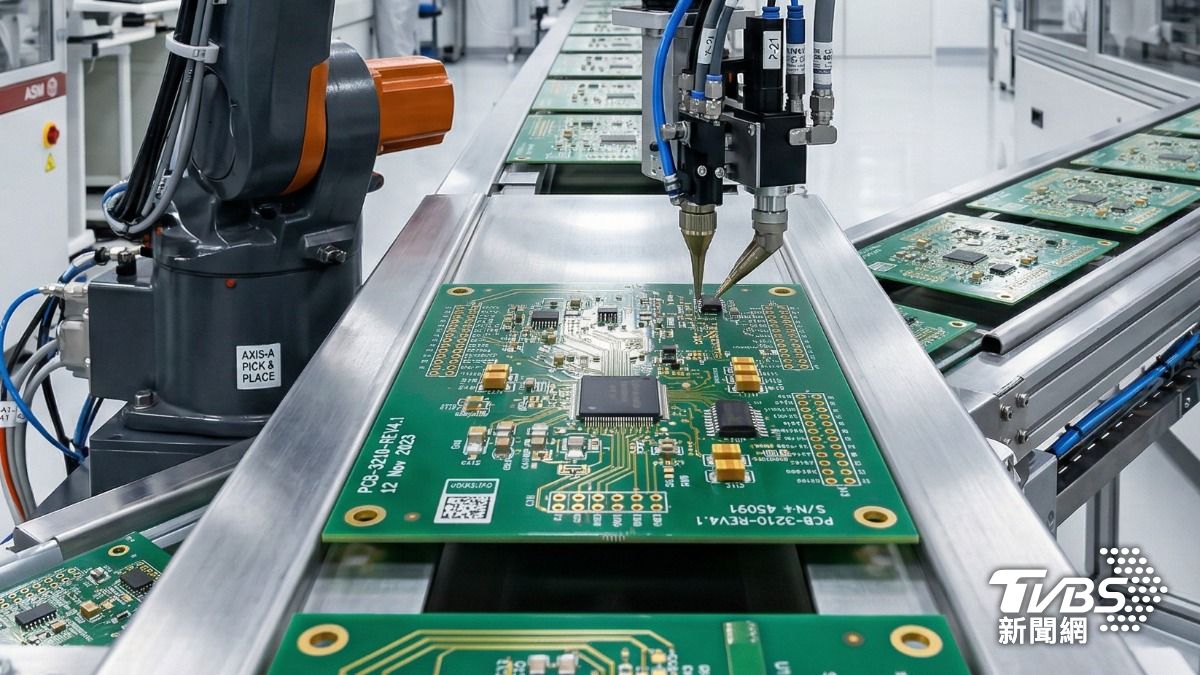
Zhen Ding's technology story reflects a fundamental shift in what a circuit board does. In the AI era, PCBs are no longer passive connectors; they are computing components that directly affect the performance of the systems they serve.
The company specializes in intelligent high-density interconnect (iHDI) and high-layer-count boards, where a single AI server motherboard requires over 100,000 drilled holes across 130-plus steps. Its ABF substrates reach 158 × 158 mm with up to 28 layers. These are cutting-edge specifications for next-generation GPU and ASIC platforms.
Looking ahead, Zhen Ding is developing glass core substrates and CoWoP (Chip-on-Wafer-on-PCB) technology with Nvidia that merge circuit boards with semiconductor packages. The company is one of only three PCB vendors still in the running for Nvidia’s CoWoP supply chain, alongside Unimicron and Kinwong. Co-packaged optics with Powertech target mass production by late 2027.
Management expects 2026 to mark the beginning of a new high-growth cycle. IC substrate revenue is forecast to grow 40–50%, with both ABF and BT substrate demand increasing quarter by quarter. The full benefit of the ten-factory expansion will translate into peak growth momentum in 2027, when high-end capacity comes fully online.
With the deepest capex commitment in the PCB industry, the broadest product portfolio, and a seat at the table for Nvidia's most advanced packaging technologies, Zhen Ding is positioning itself as an indispensable partner in the AI buildout – a dramatic reinvention for a company that built its empire on smartphone PCBs.