



Foxconn Drives Platform Playbook at 360°MOBILITY Auto Show
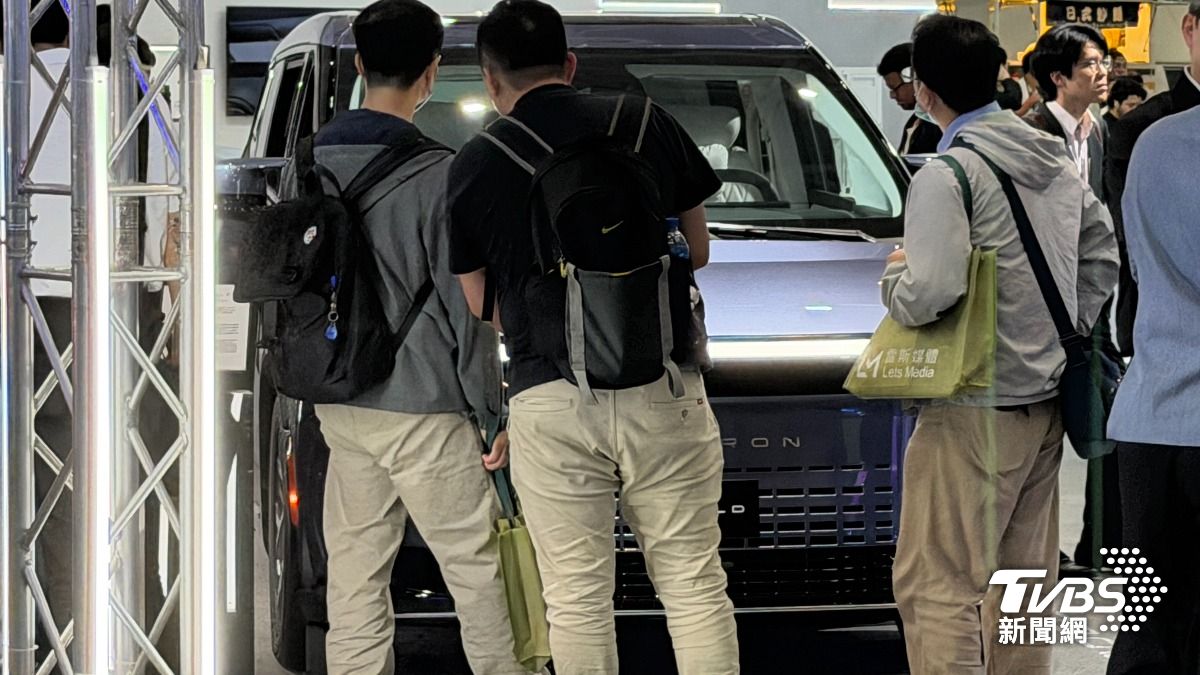
Foxconn pivoted the spotlight from AI server racks to wheels at this week's 360°MOBILITY show in Taipei, signaling it will now apply to the auto industry the same platform strategy that made it the world's leading manufacturer of PCs, smartphones and AI servers.
The company's booth was designed to show range rather than a single hero car. On display were the Model C SUV, the Model D and Model U derivatives, Foxtron's electric bus, and a wall of battery modules and powertrain components. Visitors could inspect LFP battery packs for passenger vehicles, high-energy packs aimed at unmanned aerial systems, silicon carbide power modules, electric drive units, and an in-vehicle compute stack that bundles infotainment with advanced driver-assistance features. The message was clear. Foxconn can supply the rolling chassis, the battery, the inverter, the ECU (Electronic Control Unit), and the software layer that sits on top of them.
That breadth is not accidental. Foxconn became the world's largest electronics contract manufacturer by owning the entire stack spanning enclosures, boards, thermal systems, power delivery, assembly and, increasingly, reference designs that customers can simply badge and ship. Chairman Young Liu has argued repeatedly that the same logic should apply to vehicles. The MIH Open EV Platform, now with more than 2,000 consortium members, is pitched as "the Android of the EV industry", a standardized hardware and software base that automakers can customize instead of engineering from scratch. It is the smartphone ODM model transposed onto a four-wheel skateboard.
The commercial proposition to traditional automakers is straightforward. Rather than spend four to five years and billions of dollars developing an EV architecture, a brand can license MIH, pick a Foxtron reference vehicle, and reach market in roughly two years at a fraction of the cost. Foxconn's newly opened Zhengzhou EV R&D center is explicitly targeting 24-month development cycles.
Alongside the B2B story, Foxconn is also testing a consumer-facing brand in its home market. The Foxtron Bria, Taiwan's first EV developed for global export, was displayed prominently at the booth. Priced between NT$938,000 and NT$1.198 million (US$29,300 to US$37,400), it runs a 57.7 kWh lithium iron phosphate pack and offers up to 516 km of range. Deliveries in Taiwan began earlier this year, with Southeast Asia, Europe and emerging-market exports expected to follow once certifications land.
The hard question hanging over the Taipei stand is whether the model actually travels. Foxconn has spent two decades perfecting a business where unit economics are measured in cents, cycle times in weeks, and customers are a handful of global brands. The auto industry rewards different things: long regulatory tails, dealer networks, aftersales support, and safety engineering that cannot be rushed. Foxconn is betting that its manufacturing discipline and platform scale will eventually outweigh those frictions. The 360°MOBILITY show made clear the ambition is real. Whether it translates into market share, the way it did in servers and smartphones, remains very much unresolved.