


Taiwan’s shared scooter market shifts as WeMo picks Gogoro
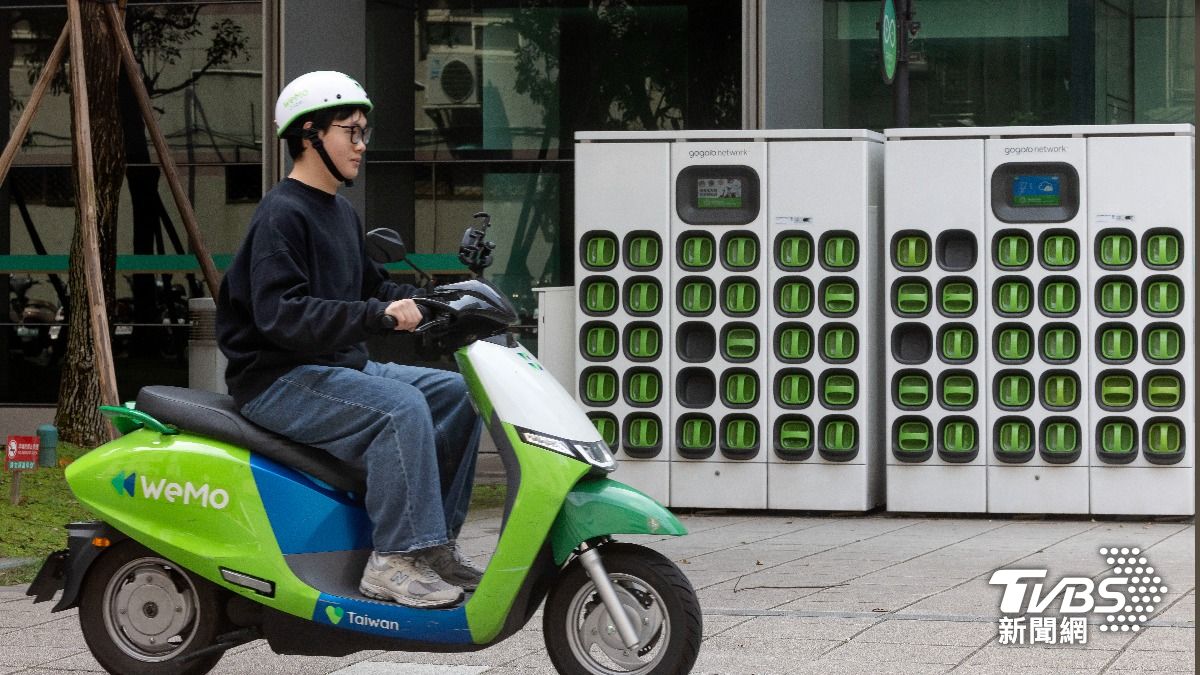
WeMo has made its first major purchase of 3,000 Gogoro electric scooters, breaking a decade-long reliance on KYMCO. Will this order worth over NT$200 million (US$6.38 million) help achieve economies of scale and push Gogoro toward profitability?
TAIPEI (Business Today/TVBS News) — In the coming months, riders on WeMo (威摩科技), Asia's largest shared electric scooter platform, will be able to ride Gogoro (睿能創意) vehicles. This development has sparked considerable discussion in the scooter market. Over the past decade, WeMo relied on KYMCO (光陽) for its electric scooters, purchasing a total of 15,000 vehicles. Now, the company has switched to Gogoro, placing an initial order for 3,000 Gogoro VIVA MIX scooters worth over NT$200 million (US$6.38 million). This shift represents a major adjustment in WeMo's partnerships and signals a new competitive landscape for Taiwan's shared electric scooter market.
Both WeMo and Gogoro have remained low-key about the partnership. WeMo said only that since its founding, the fleet has progressed from operating 7,000 "first-generation vehicles" to now fully transitioning to 8,000 "second-generation vehicles." The company continues working toward its vision of "100,000 vehicles in ten years." Gogoro simply stated that it is committed to promoting vehicle electrification and providing products and services that meet customer needs.
However, before Gogoro delivers the vehicles, WeMo must apply to the government for electric scooter purchase subsidies. When asked by this Business Today (今周刊), the Industrial Development Administration (產業發展署) under the Ministry of Economic Affairs indirectly confirmed the deal. "Regarding WeMo's recent purchase of a new batch of electric vehicles from Gogoro [...], WeMo has submitted a purchase subsidy application," the administration said. "In accordance with regulations, we have convened a meeting to confirm the feasibility of the plan and can provide purchase subsidy support."
Taiwan's shared scooter market has long been divided among three major brands: WeMo, iRent under Hotai Motor Group (和泰集團), and GoShare under Gogoro. In this competition, both WeMo and iRent have long relied on KYMCO for electric scooters. GoShare, meanwhile, has independently built its own vehicle and battery-swapping network leveraging Gogoro's technology, creating distinct market differentiation.
Surprisingly, WeMo's second-generation Fly series only launched in 2024 and has not yet reached the typical replacement cycle of six to eight years. Yet the company is not only purchasing new vehicles ahead of schedule but also turning to "old rival" Gogoro's camp, a move that has left industry observers sensing something unusual.
A shared vehicle rental operator raised questions about the move. With YouBike 2.0 restoring its first-30-minutes-free policy and the widespread adoption of TPASS monthly passes offering diverse transfer options, these alternatives are far cheaper than WeMo's per-minute pricing. For consumers, the key consideration when transferring is "getting the fastest transportation at the lowest price." As cheaper options become available, demand for shared scooters naturally declines. "With market demand slowing, why would WeMo choose to undertake such a major vehicle upgrade and transformation?" the operator asked.
Two Giants Join Forces to Fill Supply Gap
The key turning point can be traced to November last year, when iRent announced a partnership with WeMo. WeMo's more than 10,000 shared electric scooters will gradually be listed on the iRent app, shifting the market from a three-way standoff to a two-player showdown.
"That's when the gap emerged!" a senior iRent executive revealed. Although iRent originally had about 4,000 shared electric scooters, many vehicles reached the end of their service life, causing most to be scrapped and leaving only a few hundred remaining. The vehicle shortage has become an opportunity for WeMo to expand its market scale. For iRent, the company welcomes its partner's initiative to address the looming supply shortage on its platform.
Why didn't WeMo continue its partnership with the familiar KYMCO? Industry analysts point to two reasons. First, after KYMCO's new chairman Ko Chun-ping (柯俊斌) took office, he suspended electric vehicle development, sending a clear "we're out" signal and shifting focus back to gasoline-powered vehicles. Second, iRent had previously "learned its lesson" because different generations of KYMCO vehicles are incompatible. Retrofitting older vehicles to use new battery-swapping stations costs thousands of New Taiwan dollars per vehicle. Gogoro, with the most comprehensive network of more than 2,700 battery-swapping stations across Taiwan, became the best choice.
Ko also revealed to this publication that several months ago, WeMo proposed a third-generation vehicle partnership. He made clear to them: "It can't be all you making money while I lose money. We need to create a win-win situation." He explained that WeMo's second-generation vehicles use KYMCO's Ionex leasing model, allowing WeMo to avoid the heavy burden of purchasing batteries outright. This transferred the cost of battery usage to KYMCO, ultimately exacerbating KYMCO's losses in this area.
For these reasons, Ko confirmed that KYMCO "currently has no plans to launch 'brand-new model' electric vehicles" and views Taiwan's micro electric two-wheeler market as a new opportunity. A WeMo executive privately emphasized that the company has recently tested electric vehicles and even electric-assist bicycles from multiple manufacturers including Gogoro. Choosing different suppliers will not affect its existing partnership with KYMCO, the executive said.
Behind Gogoro's willingness to sell vehicles is the concept of "economies of scale." A source close to Gogoro's operations analyzed that the management team certainly went through some internal struggle. However, considering that GoShare became profitable several years ago, if WeMo can help more people become familiar with and ride Gogoro vehicles, potentially leading to purchases, it would benefit both Gogoro and Taiwan's electric vehicle ecosystem.
For Gogoro, which is striving to turn a profit, this is undoubtedly an opportunity worth seizing. However, how to further address battery costs and maintenance issues while reducing the frequency of battery replacements will be key to whether Gogoro can win over more consumers in the future. ◼ (At time of reporting, US$1 equals approximately NT$31.61)
>>> For More Reading:
This article is excerpted from the No. 1527 issue of Business Today (今周刊). Click here for the Chinese-language version of this story: 光陽電動車布局喊停 Gogoro憑規模換電站成新夥伴 WeMo轉向「敵營」購車的背後盤算
>>> More Coverage:
01 | 台積電捲入美專利侵權爭議!最重恐遭禁止晶片進口,議員要求依法保護專利…經濟部、公司最新回應