



AVC and Auras Lead Taiwan’s AI Thermal Surge
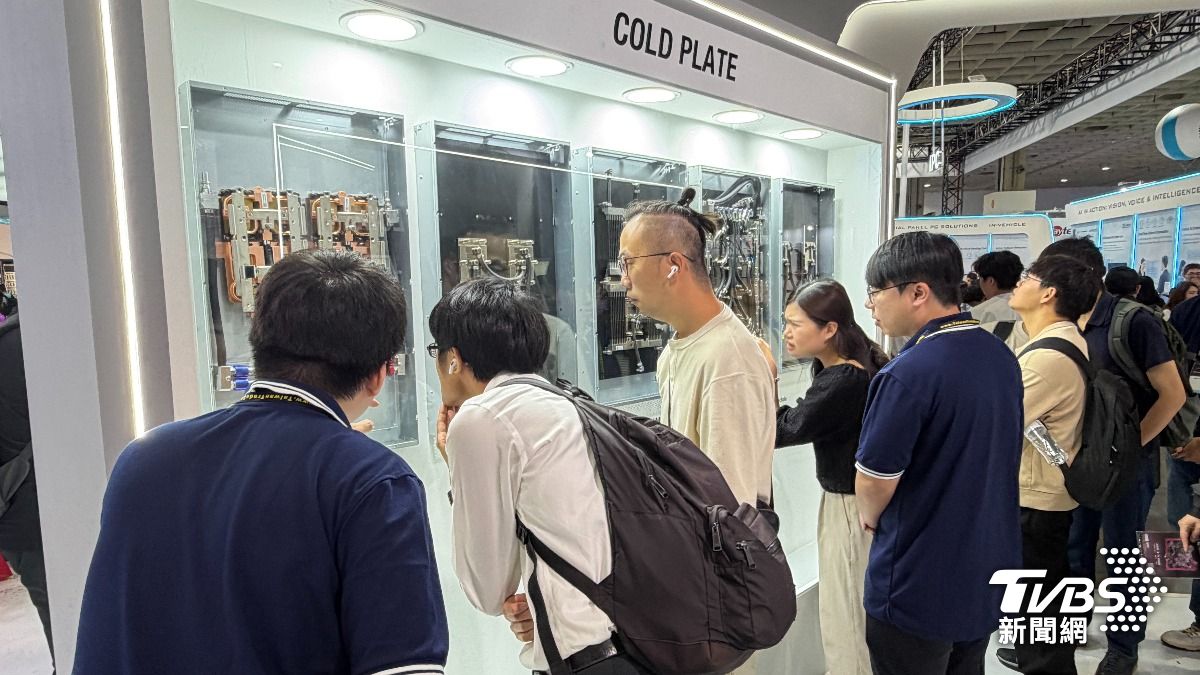
Taiwan's thermal management specialists closed May 2026 with some of the strongest growth numbers in the AI supply chain. The results landed a week after Computex 2026, where chips with thermal design power above 1,000 watts and racks headed toward one megawatt made one thing plain: cooling has moved from the periphery of server design to the center of its economics.
Asia Vital Components (AVC), the sector's heavyweight, reported May revenue of NT$15.9 billion (US$500 million), up 61 percent year on year, bringing its first five months to NT$80.5 billion (US$2.5 billion), an increase of 90 percent. Chairman Spencer Shen told shareholders on Computex's opening day that second-half growth will be stronger still on shipments for Nvidia's Vera Rubin architecture and ASIC servers, with visibility extending through 2029. The company has has built 560,000 square meters of factory space in Veitnam, while its plants in Wuhan, Dongguan, and Shenzhen run near full capacity.
Auras Technology posted the sector's sharpest jump. May revenue reached NT$3.1 billion (US$99 million), a year on year increase of 94% , with five-month revenue of NT$14.5 billion (US$460 million), up 81 percent. Chairman Steve Lin raised full-year guidance, telling investors revenue will grow 60 to 70 percent in 2026 and another 50 percent in 2027. The growth drivers are cold plates, manifolds, and cooling distribution units, or CDUs, the rack-level pumping stations that circulate coolant through liquid-cooled servers. Auras expects to ship only a few hundred CDUs this year but 2,000 in 2027, and is expanding heat spreader production in Thailand toward a million units a month by year-end.
Jentech Precision, which makes the metal lids and heat spreaders that sit directly on top of AI processors, reported May revenue of NT$2.3 billion (US$73 million), up 38 percent year on year, with five-month revenue of NT$9.9 billion (US$310 million), up 20 percent. Rising ASIC platform production is broadening its customer base beyond Nvidia chips.
Kaori Heat Treatment, a maker of brazed plate heat exchangers used in liquid cooling loops, posted NT$632 million (US$20 million) for May, up 40 percent year on year, though down a third from a record April on shipment timing. Sunon, the 45-year-old fan maker whose motors still move the air through hybrid-cooled racks, reported NT$1.7 billion (US$53 million), up 15 percent. The gap between Sunon's growth and Auras's tells its own story: the money is migrating from moving air to moving liquid.
The show confirmed where this is heading. Nvidia's Vera Rubin platform, launching in the second half, pushes AI servers toward 100 percent liquid cooling, 800-volt direct current power, and eventually the one-megawatt Kyber-class rack. Every step up in power density adds thermal content per rack, requiring more cold plates, more manifolds, larger CDUs, and more heat exchangers. Delta Electronics said its installed liquid cooling base passed three gigawatts in May, and showed a CDU line that has grown from one megawatt to three megawatt units in a year.
The caution flags are the same ones flying over the rest of the supply chain. Shen says AVC's aggressive capacity buildup will last only through 2027, after which the company will turn conservative to avoid idle plants if demand slows. Kaori's monthly swing shows how inconsistent project-based shipments can be.
Taiwan's thermal specialists were an afterthought in the PC era, stamping out fans and fins for pennies of value per box. The numbers from May say that era is over. At 200 kilowatts per rack and climbing, removing heat has become core infrastructure, and the companies that do it are being paid accordingly.