



Taipei’s oldest temple bans incense after shocking air tests
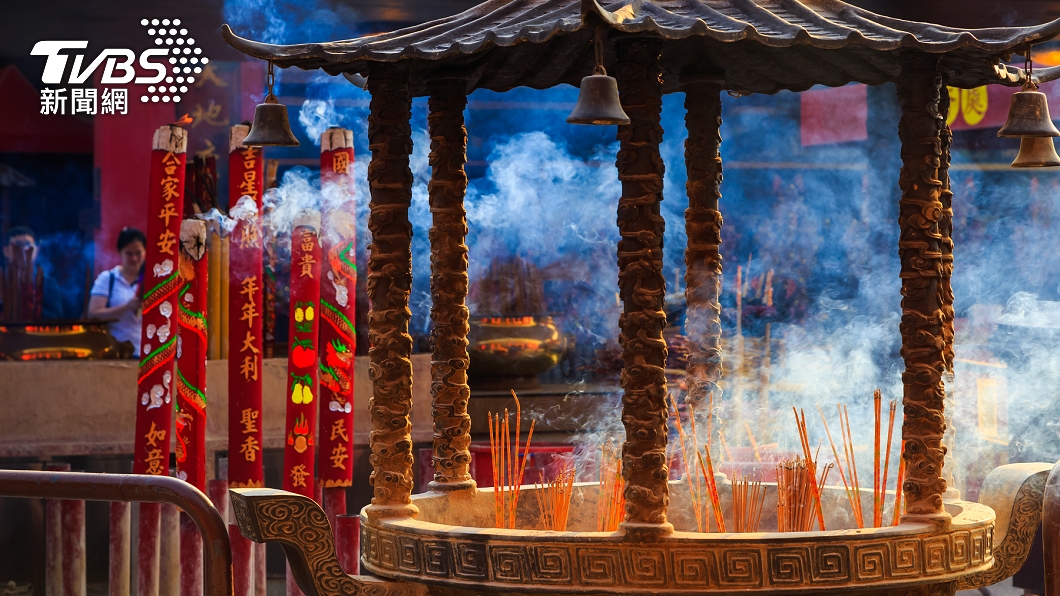
Burning incense at Taiwan's temples has long been considered an essential religious ritual, yet it has also become an undeniable source of air pollution. The push for reducing incense use is not about abolishing the practice, but about finding a way to honor both health and faith without compromising devotion.
TAIPEI (Business Today/TVBS News) — Longshan Temple (龍山寺) in Taipei's Wanhua (艋舺) district welcomes an average of more than 8,000 worshippers and tourists each day. The thick smell of incense smoke no longer greets visitors entering the temple. Worshippers use "heart incense" (心香) — a symbolic form of prayer performed without physical incense sticks — and the halls are lined with neatly arranged LED lights. The air inside the temple has become cleaner, and the lighting is brighter.
Longshan Temple, founded more than 280 years ago, did not achieve this transformation overnight. It took the temple four years to move from gradual "incense reduction" to a complete "incense ban." The temple's determination to press forward despite opposition began with testing data from 2015 that proved impossible to ignore.
That year, a team led by Dr. Su Da-cheng (蘇大成), a physician at National Taiwan University College of Medicine's (台大醫學院) Department of Internal Medicine and Cardiovascular Center, conducted fine particulate matter testing at the temple. The team found that the average PM2.5 concentration reached 1,360 micrograms per cubic meter (μg/m³) — 50 times the average outdoor level in Taipei. Long-term exposure to such elevated levels significantly increases the risk of respiratory and cardiovascular diseases.
Huang Shu-wei (黃書瑋), chairman of Longshan Temple, said that after the test results were released, internal discussions moved quickly. After obtaining the Bodhisattva's approval through "jiaobei divination" — a practice of casting crescent-shaped wooden blocks to seek divine guidance — the temple reduced the number of incense burners from seven to three starting in June 2015. Each burner was limited to one stick, with the temple providing all incense to control quality at the source.
Yet Longshan Temple still faced overwhelming internal and external pressure. Even board members and longtime worshippers expressed opposition. "We could only go back to the Buddhist scriptures, explain the historical context of burning incense, and tell everyone that whether or not you light incense, the sincerity is the same," Huang said.
Huang remained unwavering because his own health examination results showed he had already been directly affected. "For several consecutive years, my health checkups showed that my coronary artery calcium score had soared to 1,400. Many colleagues had similar warning signs, but my wife's score has always been zero, making her the best control group," he said.
Six months after Longshan Temple implemented incense reduction, Chen Bao-zhong (陳保中), then a professor at National Taiwan University's (台灣大學) Institute of Occupational Medicine and Industrial Hygiene, brought his laboratory team to collect samples on-site. The results were once again unexpected. "I had never been to Longshan Temple before," Chen said. "When I saw concentrations as high as 1,000 or 2,000, it was far beyond anything I had imagined."
"Many temples thought that switching to eco-friendly or smokeless incense would solve the problem, but after we tested different products, we found that the pollutants produced were virtually unchanged," Chen said. The report from Chen's team, along with other scientific evidence, strengthened Longshan Temple's resolve to reform.
In 2017, the temple further reduced the number of incense sticks from three to one. By March 2020, all incense burners were sealed, and personal incense burning was completely banned. Only one large incense stick, lit by temple representatives, remains. Worshippers now pray with their hands pressed together. "We ultimately chose to keep one stick of incense to strike a balance between traditional culture and modern trends," Huang said.
Over the four years of promoting incense reduction, the number of worshippers at Longshan Temple once dropped by 30 percent. But as time passed, worshippers gradually accepted the new approach, and the number of visitors is now higher than before the incense reduction began.
Although a single temple reducing incense has a limited effect on improving Taiwan's overall air quality, when a prominent temple takes action, it often carries significant symbolic weight that can influence decisions at temples throughout the island.
Encouragingly, this incense reduction reform that began at temples is gradually making its way into households through the deep connections between religious centers and their communities. These gradual changes may, in the long term, transform attitudes in countless cities, communities, and households. The voluntary movement demonstrates that traditional religious rituals and modern values can coexist—and that faith and health need not be mutually exclusive. ◼
>>> For More Reading:
This article was first released on Business Today (今周刊) website. Click here for the Chinese-language version of this story: 一份空汙檢測數據,讓燒香逾280年龍山寺禁香!擲筊菩薩同意、香客減3成又回來:「心香」祈福更清新
>>> More Coverage:
01 | 英特爾回魂系列3一陳立武獨特溝通魅力,與蔡明介一見如故!如何成功安撫張忠謀?戰友讚他「頂級喬王」