



Nvidia’s billion-dollar commitment puts Kinsus in the spotlight
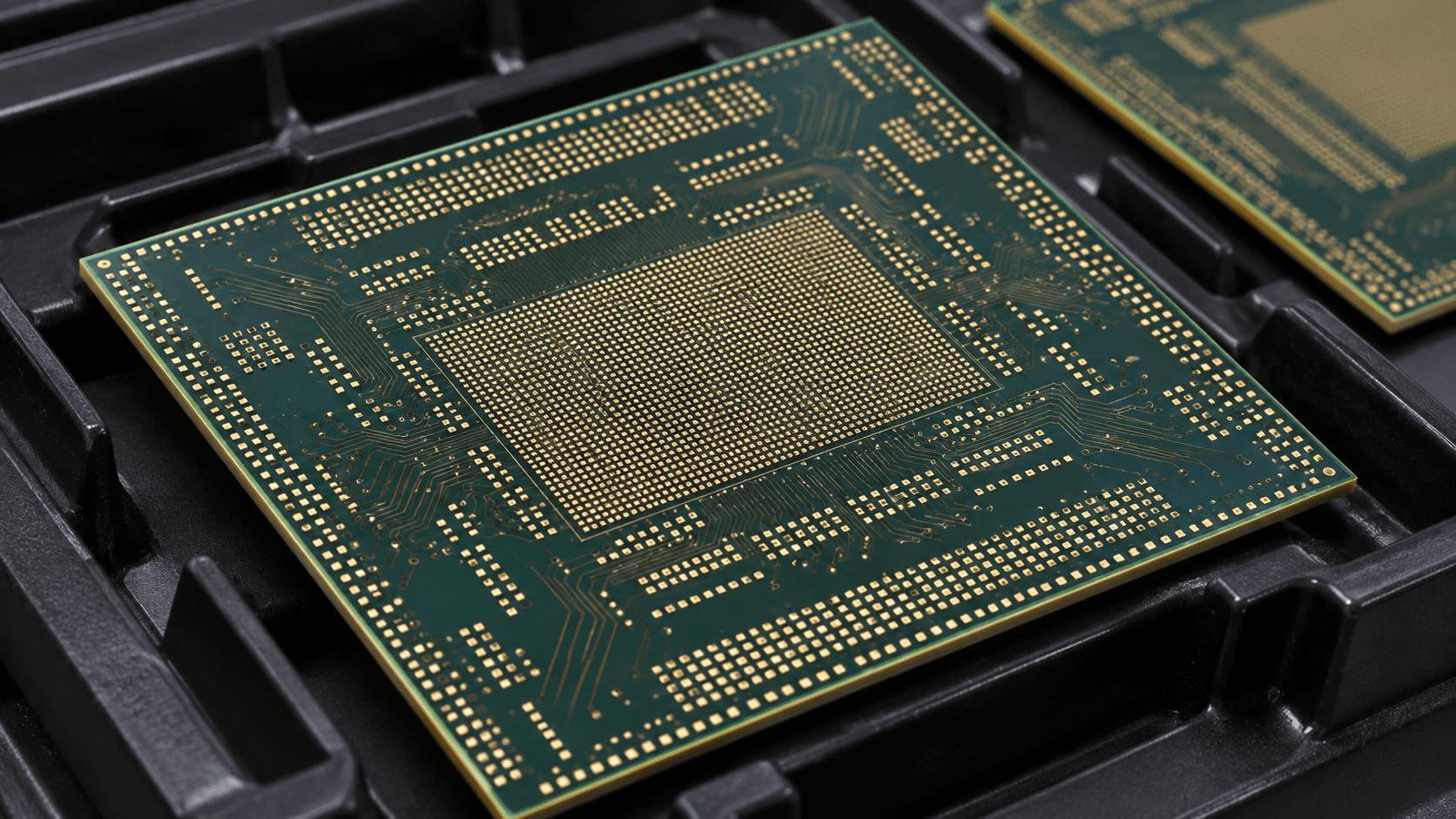
Nvidia is providing more than US$1 billion to help Kinsus Interconnect Technology, giving the substrate maker a larger place in its manufacturing plans. Kinsus makes package substrates, the densely wired structures that support chips and connect them to circuit boards. Under the new agreement, it plans to expand its Nvidia-dedicated advanced substrate capacity to more than 3.5 times the current level.
Nvidia’s November 17 announcement identifies Kinsus’s Youshi campus in Taoyuan as the expansion site. Production is expected to begin in the second half of 2027, with additional capacity targeted for the third quarter of 2028. Kinsus subsequently said the funding would be used to purchase equipment, extending a relationship of more than a decade.
Founded in 2000 and listed in Taiwan in 2004, Kinsus supplies substrates for a range of semiconductor applications. Its products include BT substrates for memory and mobile electronics, and more complex ABF substrates used in high-performance processors. ABF refers to the insulating film separating layers of fine copper wiring, allowing manufacturers to build dense electrical connections within the package.
AI is increasing the demands on those products. Packages combining processors and high-bandwidth memory need more connections, greater power delivery, and larger substrates, which are hard to make because they must hold precise dimensions without warping. At October’s Taiwan Printed Circuit Association (TPCA) Show, Kinsus highlighted dimensional stability and warpage as major challenges as advanced packages grow beyond 100 by 100 millimeters.
The company’s financial performance already reflects stronger demand. Third-quarter 2026 revenue reached NT$14.54 billion (approximately US$443 million), up 40.4% from a year earlier and 16.4% from the previous quarter. Net profit attributable to shareholders rose approximately sevenfold year on year to NT$2.39 billion (US$72.8 million). Gross margin reached 33.9%, supported by a stronger product mix and growth in both ABF and BT substrates. ABF products accounted for 46.7% of quarterly revenue, up from 44.7% in the second quarter.
Growth continued in October, when revenue rose approximately 49% year on year tp NT$5.37 billion (US$164 million) For the first nine months, consolidated revenue totaled NT$38.14 billion (US$1.16 billion), with attributable net profit of NT$4.25 billion (US$130 million).
Nvidia’s commitment gives Kinsus funding for equipment and visibility into demand before the new lines begin production. It also shows why substrates have become a strategic concern for AI chip suppliers. Every additional processor needs a suitable substrate as well as wafer output and packaging capacity. By helping finance the expansion, Nvidia is securing that supply several years ahead and giving Kinsus a larger role in successive generations of AI hardware.
US$ conversions use an illustrative exchange rate of NT$32.8 per US$1.