



Belgium finds justice on the pitch with 4-1 rout of U.S.
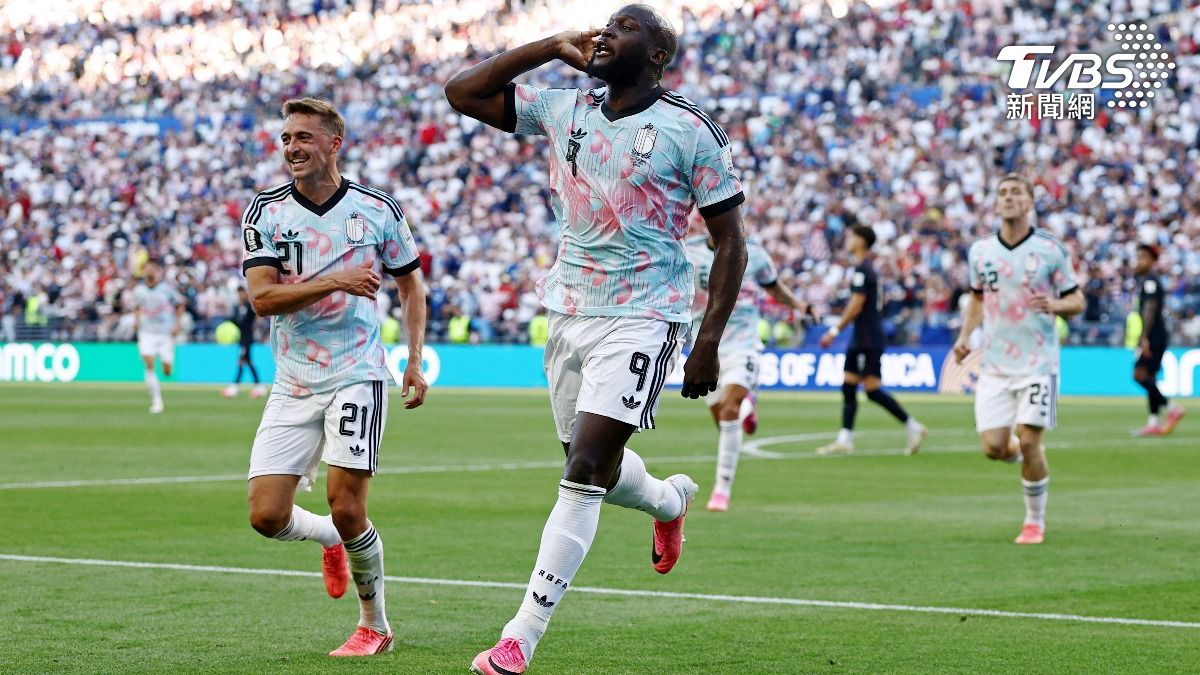
TAIPEI (TVBS News) — Belgium's 4-1 win against the United States in Seattle on Monday (July 6) delivered a measure of justice on the pitch, sending the tiny country — with a population roughly the size of Greater Los Angeles — to the World Cup quarterfinals.
Yet the match will be remembered as much for the scoreline as for the controversy that preceded it. Striker Folarin Balogun played despite a red card that, under FIFA rules, should have triggered an automatic suspension. The decision has raised urgent questions about political interference in the beautiful game.
Football has never been short on controversies, and FIFA has worked to address them — adding goal-line technology in 2014, Video Assistant Referee (VAR) in 2018, semi-automated offside detection (SAOT) in 2024 and advanced iterations of SAOT by 2026. What the sport did not see coming was the growing pressure politics now exerts on its institutions.
U.S. President Donald Trump called FIFA President Gianni Infantino to request a review of Balogun's suspension. On Saturday (July 5), the FIFA Disciplinary Committee found Balogun guilty but suspended his one-match ban under Article 27 of its disciplinary code. "Thank you to FIFA for doing what was right, and reversing a great injustice!" Trump posted on Truth Social.
Belgium head coach Rudi Garcia framed the stakes in stark terms. "The Belgian federation isn't just defending itself or the national team; it's defending football in general — its integrity and its ethics," Garcia said Sunday. The Royal Belgian Football Association challenged Balogun's eligibility, but FIFA's appeal committee declared the request "inadmissible."
Sixteen years ago, I argued in a China Post editorial that FIFA should embrace technology to protect the game's integrity. The 2010 World Cup had produced refereeing blunders that became symbols of the sport's resistance to change — Frank Lampard's disallowed goal against Germany, Carlos Tevez's offside goal for Argentina against Mexico. FIFA President Sepp Blatter apologized but insisted soccer must "keep its human face."
In the Balogun incident, the system worked exactly as designed. Referee Raphael Claus reviewed the challenge on the pitchside monitor, reversed his initial decision, and showed a red card. The technology did its job.
But what happened next revealed a threat I never anticipated. The controversy was not about what the referee could or could not see. It was about what FIFA chose to do afterward — and whether a phone call from a head of state influenced that decision.
The RBFA argues that Article 66.4 of FIFA's disciplinary code — which states that a sending-off "automatically incurs suspension from the subsequent match" — leaves no room for discretion. FIFA counters that Article 27 grants authority to suspend any sanction and that similar decisions were issued during World Cup qualifiers. The federation said it had not received the decision or referee's report, calling this a breach of FIFA regulations.
In the end, Belgium's response came not through appeals or legal arguments but through 90 minutes of football. Charles De Ketelaere opened the scoring in the ninth minute after a defensive error, and the Belgians never looked back. The 4-1 margin left no room for doubt — and rendered the controversy over Balogun's eligibility moot, at least on the scoreboard.
In 2010, the question was whether technology could make the beautiful game fairer. That question has been answered. The new question — whether institutional decision-making can resist political pressure — may prove far harder to resolve. ◼