



Forget AI: This ancient skill is dominating Taiwan's job market
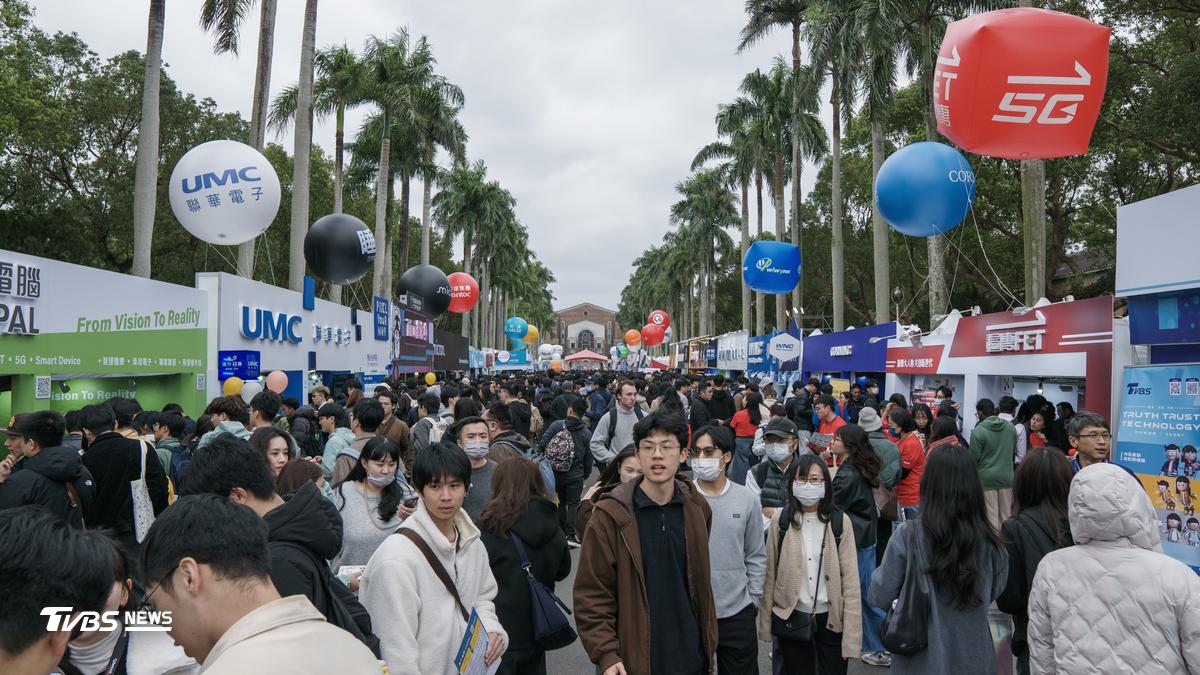
TAIPEI (TVBS News) — Everyone's resume looks perfect now. That's the problem. In Taiwan's AI-saturated job market, where algorithms polish applications to identical sheen, the candidates who stand out are the ones who do something algorithms cannot optimize: they talk to people before they need a job. It's a counterintuitive strategy, and according to recruiters and HR scholars, it's the one Taiwanese graduates chronically underuse.
"Networking is so underused in Taiwan now," said Liam Chen, a talent acquisition intern at a semiconductor equipment giant that supplies Taiwan's chip foundries. "And people start networking when they actually need a job in Taiwan." The observation cuts against the prevailing advice for job seekers: optimize your resume with AI, load it with keywords, let the algorithm do the work.
Chen, who is completing his MBA at National Taiwan Normal University (國立臺灣師範大學) while recruiting fresh graduates for customer support engineering roles, sees the paradox daily. Candidates arrive with AI-polished resumes that look nearly identical: the keywords match, the formatting gleams, the buzzwords align with job descriptions. Yet something essential is missing.
"AI can make everything look the same," Chen explained, his voice animated and emphatic. "Like, I throw the same prompt in there; I can get three or four types of outcomes. So what makes things really different is, I think, I would be human, human existing." He distilled the gap into three qualities that algorithms cannot assess: personality, context, and motivation.
Consider context. Two resumes might both claim the candidate "led a 5-person project team." But what was the outcome? What was the individual contribution? What obstacles did they overcome? "It's something that you need to wait till when you are actually interviewing with someone; then you will know," Chen said.
Alan McIvor, a headhunter at Paul Wright Group who has placed executives across Asia for 13 years, offered a parallel observation. "Ultimately, it is the person-to-person. It is the soft skill attributes that get people jobs," McIvor said. "They are presentable physically. They are charming. They make good eye contact. They tell good stories. They are confident but not arrogant."
McIvor identified a pattern among Taiwanese professionals that may explain why this gap persists. "I think that the Taiwanese are quite often a bit too modest and lack the ability to show off their own skills," he said. "And if you're going to survive in Singapore or New York or Tokyo, you need to be able to show the achievements that you've made in the company."
The roots may lie in Taiwan's education system. Prof. Tony Martinez, a Fulbright Scholar from Texas Tech University teaching at Tainan National University of the Arts (國立臺南藝術大學), asked Taiwanese students directly about the difference. Their answer: "Through a lot of primary school and the education system, a lot of the lectures are one-way communication, and there's not a lot of space for two-way conversations between the instructor and the student."
One student put it starkly: an American student who scores 70 on an exam might present it as though they scored 90. A Taiwanese student might downplay the same result. "They tie a lot of their value or their sense of self-worth to that test score," Martinez observed, his tone thoughtful. The habit of understatement, formed in classrooms, follows graduates into job interviews and into the networking events they avoid.
For Chen, the solution is hiding in plain sight: campus career fairs. "I take campus career fairs really seriously even though I'm a student," he said. "It's not easy to approach the manager and HR in like a normal life." The fairs offer rare, direct access to decision-makers, access that algorithms cannot provide.
The strategy worked for Chen himself. "I got my internship, and I met my future manager both at career fairs," he said. He arrived prepared, not with generic questions, but with specific inquiries about information absent from job descriptions. He asked about team dynamics, about what the role actually involved day-to-day.
The paradox, then, is this: in Taiwan's AI-saturated job market, the old-fashioned act of talking to people may be the strongest competitive advantage precisely because so few candidates do it. When algorithms have leveled the playing field, the candidate who has already made a human connection stands apart.
But the risks of over-relying on algorithms extend beyond missed connections. Dr. Yu-Ling Chang (張育菱), an assistant professor at National Taiwan Normal University's Graduate Institute of International Human Resource Development (國際人力資源發展研究所), pointed to a cautionary tale. Amazon trained a machine learning model on 10 years of hiring data to score resumes. "Eventually, the system actually penalized those features related to women," Chang said. Resumes mentioning women's chess clubs or women's colleges received lower scores. Amazon eventually abandoned the system.
"Because everybody uses AI, it becomes a baseline," Chang explained. "If you want to stand out from all the other competitors, then you need to make something different. This is not a finish line; it's just a starting line." The implication: AI has raised the floor, not the ceiling.
At career fairs, Chen watches candidates approach company booths with generic questions, or no questions at all. The ones who stand out are the ones who arrive having studied the job description, ready to ask about what isn't written there. They're rare. "The difference," Chen said, "is human presence." In an age of algorithmic sameness, the competitive advantage may be the oldest one: showing up prepared, in person, before you need to. ◼