



Taiwan forum reframes AI anxiety into career opportunity
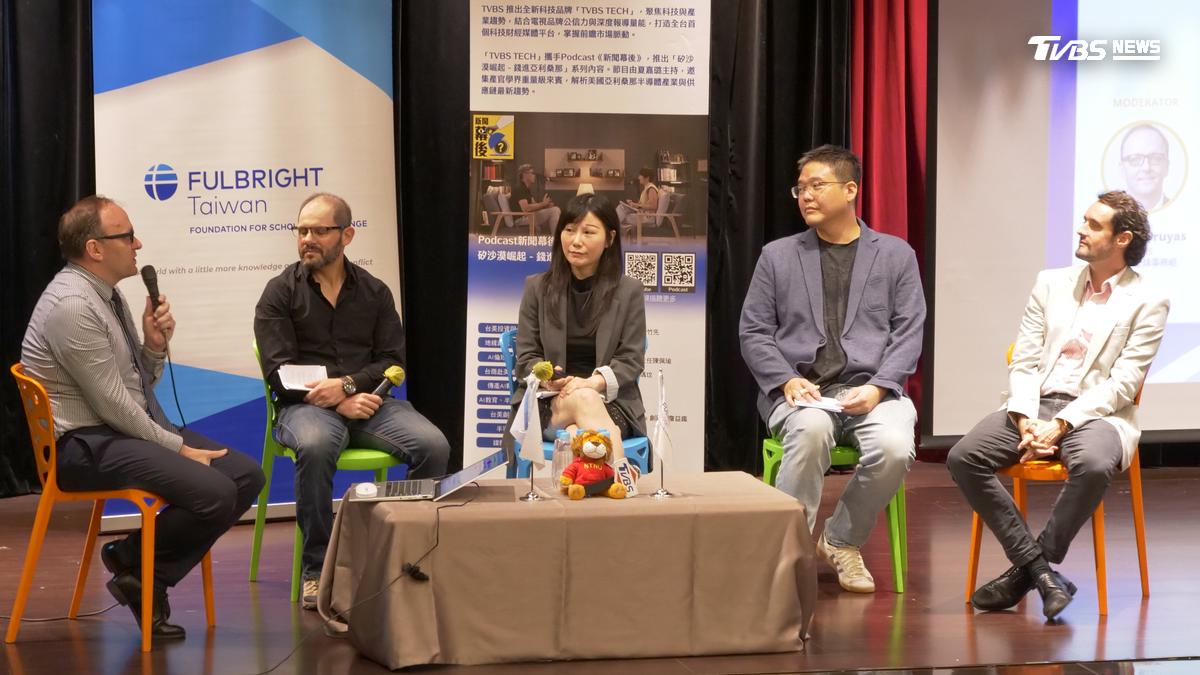
TAIPEI (TVBS News) — The resume-screening algorithm has become the villain of every career advice thread: an invisible gatekeeper that rewards keyword-stuffing and punishes authentic candidates. But at a forum held Wednesday (Nov. 4) at National Taiwan Normal University (國立臺灣師範大學), headhunters, academics, and media professionals offered a counter-narrative. The technology reshaping hiring, they argued, is a capability to master, not a judge to appease.
That conclusion emerged from a discussion co-hosted by TVBS Tech, Fulbright Taiwan (學術交流基金會), and NTNU's Center for General Education, an event that arrived when generative AI has intensified concerns about automation displacing workers. The panelists argued that the popular narrative of AI as an adversary misses the point.
What Recruiters See, and What Algorithms Miss
Alan McIvor, a headhunter at Paul Wright Group, offered a nuanced view from the recruitment trenches. Keywords were always important, long before AI screening became widespread; the technology has accelerated filtering, not fundamentally changed what employers seek. "They want people who can work with AI, not compete against it," McIvor said. "What sets candidates apart is their ability to understand context, to ask the right questions, and to translate between technical teams and business teams."
His practical advice: "fight AI with AI," using the same tools employers deploy to tailor resumes, but never fabricating experience. This underscored a central claim that emerged across the discussion: the qualities that matter most in hiring (judgment, empathy, adaptability) are precisely what algorithms cannot assess.
Dr. Randall Nadeau, executive director of Fulbright Taiwan, framed this as the program's enduring relevance. "Teaching and learning together, collaborating in the same laboratory and classroom; this kind of real-life interaction cannot be replaced by machine learning or AI generation," Nadeau said, his voice carrying the conviction of someone who has spent decades building cross-cultural bridges.
Andy Yang (楊世鐸), manager of TVBS's AI Future Tech Department, offered the industry view: AI has transformed newsroom workflows, but core skills — verification, source development, ethical judgment — have become more valuable, not less. "The journalists who will thrive are the ones who can use AI to do the routine work faster, so they have more time for the work that matters," Yang said.
Why the Fear Persists
If experts are confident that judgment and empathy cannot be automated, why does AI anxiety persist? The answer may lie in the pace of change itself. NTU professor Chang Kuo-hui (張國暉) urged students to recognize that "the direction of technology is a choice, and who benefits depends on who has power." Job seekers are not merely subjects of algorithmic sorting but potential participants in shaping how AI is deployed.
The reassurance, however, leaves questions unanswered. When AI screening produces biased outcomes, who bears accountability? Nor did panelists address which job categories face genuine displacement risk.
Dr. Yu-Ling Chang (張育菱), assistant professor at NTNU's Graduate Institute of International Human Resource Development, offered concrete guidance: build portfolios and case studies that demonstrate judgment and collaboration through evidence, not claims.
Professor Tony Martinez, a film scholar from Texas Tech University and current Fulbright scholar in Taiwan, noted that storytelling itself has become a competitive advantage: AI can generate content, but it cannot decide what story to tell, how to tell it, or what emotions to evoke.
The advice also assumes access to AI capabilities and digital literacy that not all students possess equally, and no data was offered on how many Taiwan job applications actually face algorithmic screening. Still, the central reframe, from passive adaptation to active engagement, offers a more empowering posture than the fatalism that often accompanies AI discourse.
The resume may still vanish into the digital void. The algorithm may still decide whether a human ever reads it. But the panelists' message was clear: the filter is not the gatekeeper — you are. The technology is opaque; the human on the other side of the hiring process is not. ◼