


President Lai frames Taiwan as global force in defiant National Day address
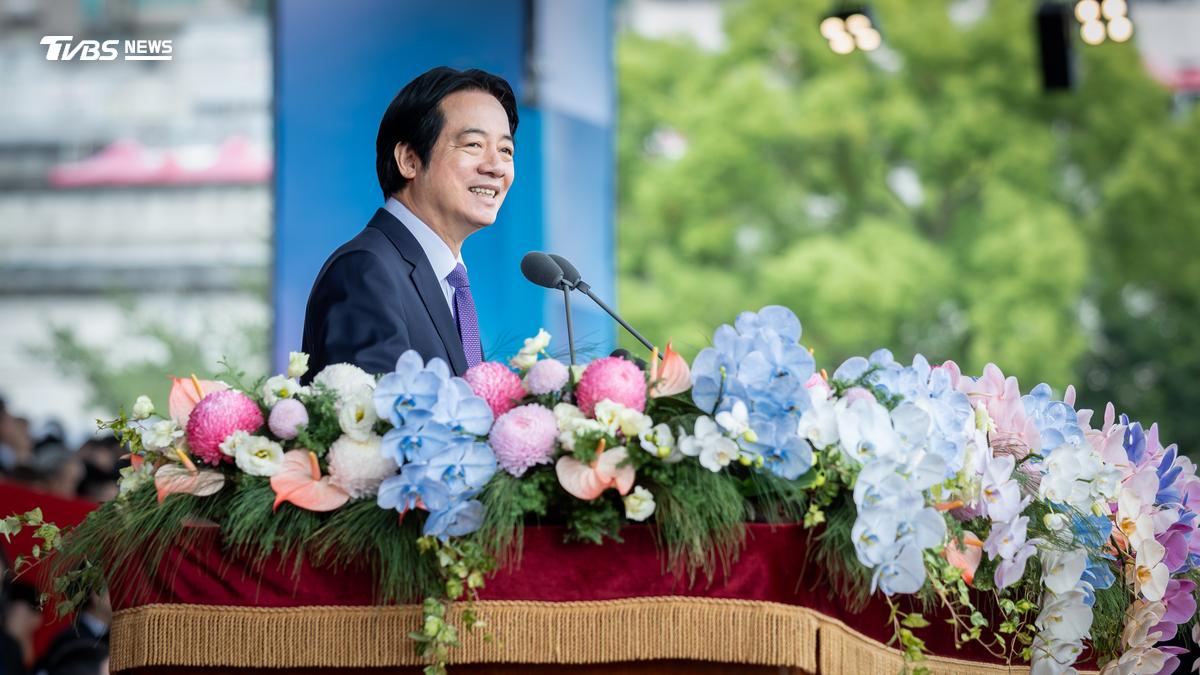
TAIPEI (TVBS News) — President Lai Ching-te (賴清德) on Saturday (Oct. 10) invoked the "city upon a hill" (山巔之城) imagery used by American presidents from Kennedy to Reagan, positioning Taiwan as a democratic beacon in his National Day address while announcing sweeping welfare policies and signaling flexibility on nuclear energy.
"We must become a 'city upon a hill,' built with courage and confidence," Lai said, his tone confident and measured, addressing thousands gathered at the Presidential Office plaza. "This is not to sing our own praises, but rather to declare our aspirations for the nation's future. It is also a responsibility Taiwan stands ready to shoulder."
The biblical reference, drawn from Matthew 5:13-14, carries deliberate geopolitical weight, presidential officials said. They described the "city upon a hill" as representing democratic governance, "salt" as symbolizing resistance to authoritarian erosion, and "light" as Taiwan's technological and humanitarian contributions to the world.
"Taiwan's light comes from the wisdom and diligence of our people, from the innovations of our industries, from our choice to share our successes with the world," Lai said. "From traditional industries to advanced chips, Taiwan's might has proven that a nation limited in resources can become an indispensable force for global prosperity."
The speech comes in the wake of a recent summit between U.S. President Donald Trump and Chinese leader Xi Jinping (習近平). Presidential officials said Beijing has attempted to undermine Taiwan's sovereignty through "narrative warfare and public opinion warfare" following the meeting.
"Taiwan cherishes peace, but we will not give up our freedom," Lai said, his tone measured but firm. "Taiwan is open to exchanges, but will not accept subordination."
The president announced welfare initiatives, including a monthly allowance of NT$5,000 (around US$156) for every child from birth to age 18, a universal "AI dividend" of NT$10,000 (around US$313) per person, and a monthly allowance of NT$10,000 (around US$313) for elderly farmers.
On energy policy, Lai signaled potential flexibility on nuclear power, a significant shift for the ruling Democratic Progressive Party (民主進步黨), which has long championed a "nuclear-free homeland." The president said the government would "pragmatically evaluate all energy options by drawing on scientific evidence, following due process of law, and applying safety standards."
"Energy policy cannot be built on slogans; it must be built on considerations of safety, expertise, and responsibility," Lai said. "We will not rule out options solely for ideological reasons, nor will we compromise the sustainability of future generations for short-term gains."
Tso Yi-en (左宜恩), an associate professor of political science at Soochow University, told the United Daily News that the energy language "lays the groundwork for not ruling out other energy forms such as nuclear power" while still reassuring supporters of the nuclear-free policy by emphasizing green energy development.
Lai touted Taiwan's economic performance, citing first-half GDP growth of 14.15 percent and projecting full-year growth exceeding 11 percent, which he said would be a 39-year high. Per capita GDP is expected to reach US$45,332, nearly double the 2016 figure, while the TAIEX stock index has surged past 49,000 points.
Lai's address followed remarks by Legislative Speaker Han Kuo-yu (韓國瑜), who chairs the National Day Celebration Committee. Han delivered an off-script speech accusing the administration of "political hunting" and warning Taiwan risked being seen as a "fake democracy, real dictatorship."
Presidential officials said Lai responded by taking "the high road." "Political parties may compete, and opinions can differ, but the Taiwan we are so firmly rooted in should not be divided as a result," Lai said. ◼ (At time of reporting, US$1 equals approximately NT$31.96)