



How Nvidia’s move into AI servers transformed Taiwan’s PC manufacturers
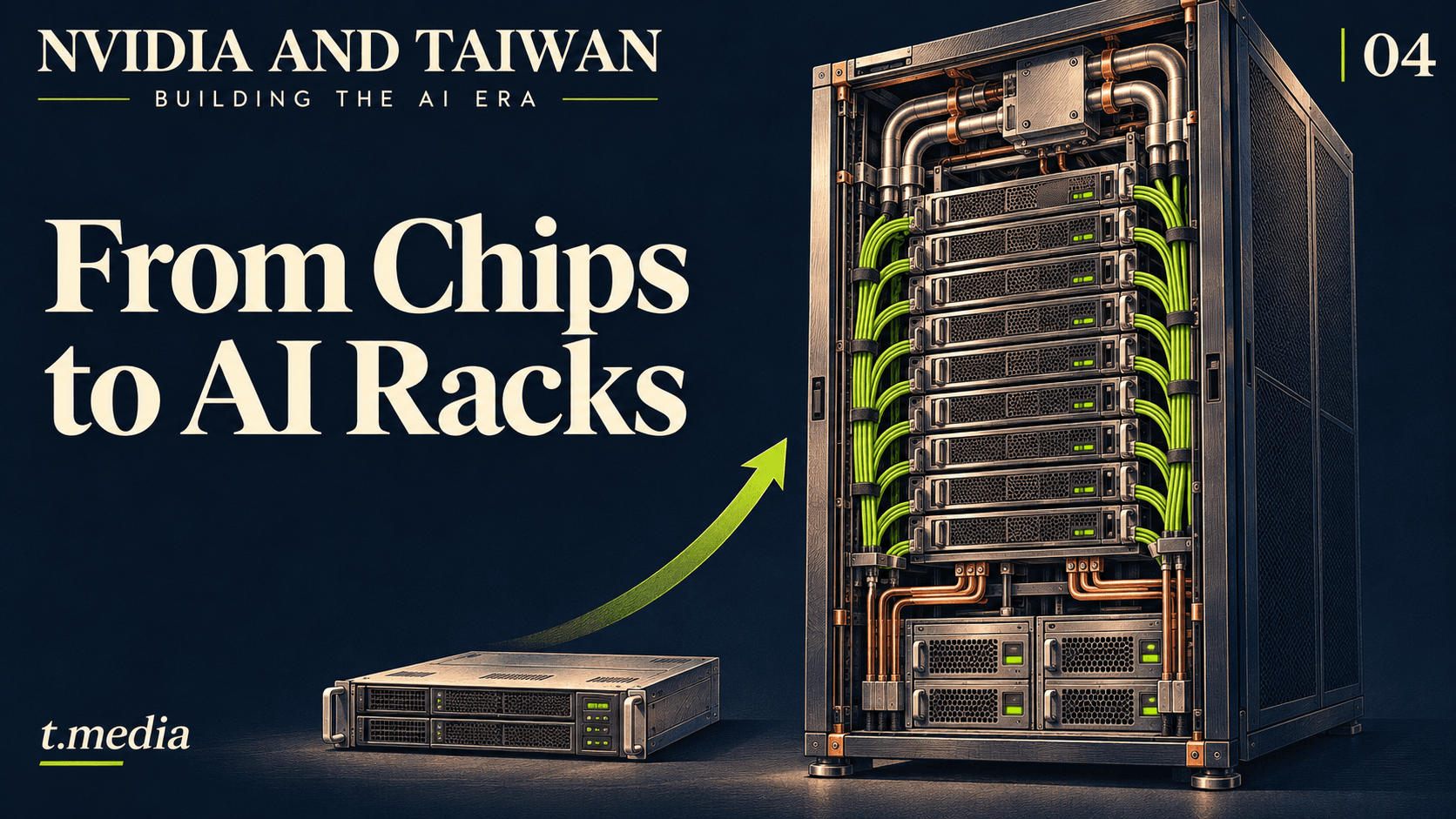
In April 2016, Nvidia introduced a product unlike anything it had sold before. The DGX-1 was a complete computer built for AI research, containing eight of its newest processors and priced at US$129,000. Jensen Huang later recalled that nobody understood it and nobody placed an order. He gave the first one to OpenAI, delivering it in person that August.
The machine marked a change of direction. For two decades Nvidia had supplied chips for other companies’ computers. Now it was specifying the whole system, from the processors and the links between them to the software that ran when the machine was switched on. It was built with QCT, the server arm of Taiwan’s Quanta.
The risk was considerable. PCs and general-purpose servers were established markets with standard designs and predictable demand. AI computers had neither. A handful of research laboratories and cloud companies were experimenting with them, and no one could say how large the business would become.
Nvidia’s own DGX-1 suited a research laboratory, but cloud companies wanted machines adapted to their own data centers. In March 2017, Nvidia and Microsoft published an open design for that purpose, the HGX-1, with Foxconn’s Ingrasys subsidiary as its first manufacturer. Facebook’s equivalent, Big Basin, was built by Quanta.
At Computex that May, Nvidia extended the approach to four of Taiwan’s server makers through the HGX Partner Program. Foxconn, Inventec, Quanta, and Wistron received early access to its reference design, processor technology, and engineering guidelines, and Nvidia’s engineers worked alongside theirs to shorten the time from winning a customer’s design to starting production.
For the manufacturers, joining was a gamble. They assigned engineers and production lines to a category with few customers, unfamiliar components, and no assurance of volume. Their established business lay in standard servers, where designs changed gradually and demand could be forecast.
The engineering was harder too. The DGX-1 drew 3,200 watts in a single chassis. Eight years later, its successor filled an entire rack. The GB200 NVL72 joined 72 processors in one cabinet weighing about 1.4 tons, with some 600,000 parts, more than 5,000 cables, and a power requirement of about 120 kilowatts.
Power on that scale reshaped the design. Eight power shelves fed a metal bar running the height of the rack, carrying currents of thousands of amperes to each tray. Many data centers needed new electrical equipment before a single rack could be installed.
Cooling changed as well. The processors packed into each rack produced more heat than fans could blow away, so coolant was piped to metal plates fixed to each processor. The liquid absorbed the heat and carried it out to the building’s cooling system. Every joint had to stay sealed, since one leak could damage equipment worth millions of dollars. The cabling carried signals so fast that a cable’s length and routing affected whether the processors could communicate at all.
Each of these problems drew in more of Taiwan’s industry. Delta and Lite-On supplied power equipment, AVC and Auras made cooling components, and BizLink produced the cables and connectors, with other specialists providing chassis and rails. A liquid-cooling system was worth more than 15 times the air cooling it replaced. The server assemblers also pulled more of the work inside their own factories. Foxconn said it made 80% to 90% of a GB200 rack’s key components itself, apart from the chips.
Nvidia and its partners took the rack from faulty early units to volume production in less than a year. During the second half of 2024, processors overheated in the full configuration, coolant connections leaked, and links between processors failed. Nvidia revised the design and its partners rebuilt their test procedures. Production racks reached Microsoft that December, and by May 2025 each of the largest cloud providers was installing nearly a thousand racks a week.
The risks Nvidia and its manufacturing partners took in 2016 and 2017 have repaid both many times over. Nvidia’s data center revenue reached US$193.7 billion in the year to January 2026.
The manufacturers that joined the HGX program in 2017 were transformed with it. At Foxconn, cloud and networking products, the division that builds AI servers, supplied 54% of third-quarter revenue this year, against 29% for the consumer electronics business that includes the iPhone. Quanta and Wistron, long known for manufacturing notebook computers, each reported quarterly revenue above NT$1 trillion (about US$30 billion) on AI server orders.
The first DGX-1 attracted no orders. A decade later, Taiwan’s manufacturers are delivering entire racks of AI computing to the world’s largest technology companies. Their early commitment gave Nvidia the engineering and production capabilities to grow and transformed their own businesses in the process.
This is the fourth article in "Nvidia and Taiwan: Building the AI Era," a six-part series exploring the partnership behind the AI boom. You can read the first three articles here:
How Taiwan helped Jensen Huang build Nvidia
How gaming paid for Nvidia's long bet on AI computing
How TSMC’s CoWoS packaging became the key to Nvidia’s AI processors