



Phison uses flash storage to cut the memory cost of on-premises AI
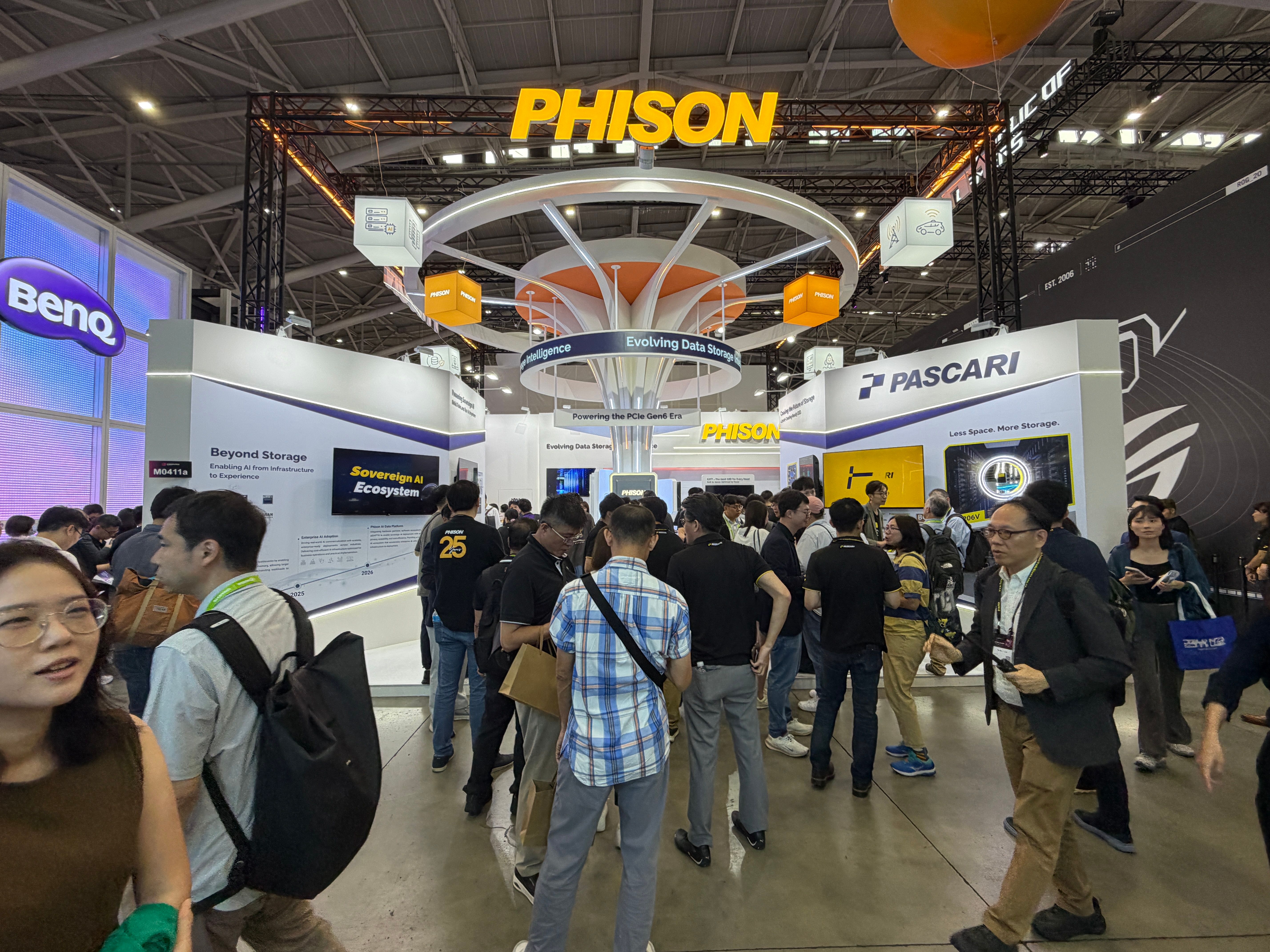
Phison Electronics built its business designing the controllers that manage data in solid-state drives and other flash-storage devices. Now, the company is applying that expertise to a costly obstacle facing businesses adopting on-premises AI: large models need more memory than most affordable computers provide. Its move into AI systems builds on years of developing the chips, firmware, and software that move data between storage and processors.
At the center of that strategy is aiDAPTIV, a combination of software and specialized flash storage that gives AI workloads access to an additional memory tier. It manages data across conventional memory and SSDs, reducing the amount that must remain in expensive DRAM. This allows supported systems to run larger models and adapt existing models using an organization’s own data, with lower hardware requirements.
Its collaboration with Intel extends that approach to AI PCs using Core Ultra Series 3 processors and integrated graphics. The companies are working to optimize local AI workloads using Intel’s OpenVINO software toolkit, giving computer manufacturers a way to incorporate aiDAPTIV into supported notebooks and compact desktops.
At Computex 2026, Phison said its internal tests showed aiDAPTIV could run a 26-billion-parameter AI model with 16GB of system memory, compared with 32GB without the technology, potentially reducing hardware costs for businesses deploying local AI. That matters because memory capacity can determine whether a business needs a more expensive computer to run its chosen model. Reducing that requirement could lower the cost of equipping employees with local AI capabilities, particularly across a large fleet of PCs. It also expands the potential market beyond specialized AI workstations.
The broader AI investment boom is already transforming Phison’s business. Third-quarter revenue reached NT$86.08 billion (approximately US$2.62 billion), up 374.6% from a year earlier and 26.8% from the previous quarter. Net profit was NT$30.55 billion (US$931 million). Its AI ecosystem category accounted for 57% of revenue and grew 88% sequentially. That category includes enterprise SSDs and products serving AI PCs, networking, and servers, alongside aiDAPTIV.
Phison is extending its reach through partners in Taiwan and overseas. Taiwan Mobile markets enterprise solutions combining its AI² services with aiDAPTIV, targeting organizations including financial institutions, hospitals, and government agencies. In the United States, Maingear offers aiDAPTIV-based AI workstations. Phison’s wider hardware and integration network includes Asus, MSI, Gigabyte, and Supermicro, providing several routes into business customers.
The next step is to supply more of the software businesses need. Phison’s AI Data Platform brings together enterprise knowledge, document processing, customer-service applications, and AI agents, alongside model management and access controls. The company has identified a repeatable, scalable software business as a goal, extending its commercial ambitions beyond selling controllers and drives.
Software turns Phison's hardware into a way for businesses to use AI without giving up control of their data. Contracts, customer records, and internal documents can stay on the company's own PCs and servers rather than going to a cloud service, and access controls set who can see them. By cutting the memory those models need, Phison can now sell those businesses the drives, systems and applications for private, on-premises AI.