



Foxconn’s record profit strengthens Its push into AI infrastructure
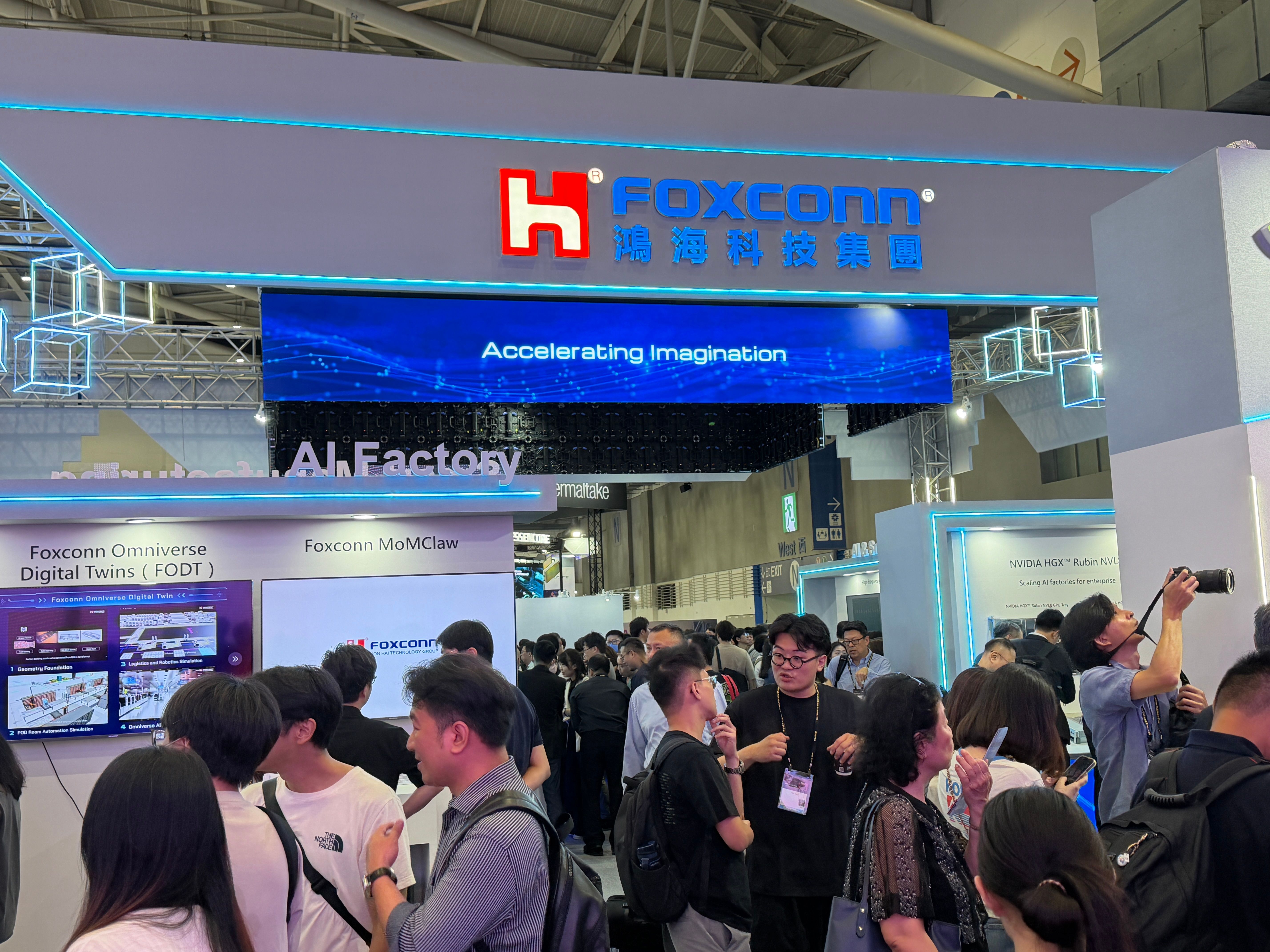
Foxconn reported record third-quarter profit as AI server demand accelerated its transformation from the world’s largest electronics assembler into a broader supplier of computing infrastructure. The company, a major manufacturer for Apple and Nvidia, expects strong fourth-quarter growth and further gains in 2027, supported by investment from cloud operators and specialist AI computing providers.
Revenue reached NT$3.02 trillion (approximately US$91.9 billion), up 46% from a year earlier and 19% from the previous quarter. Net profit attributable to shareholders rose 34% year on year to NT$77.52 billion (US$2.36 billion), with earnings per share of NT$5.51. Operating profit increased faster than sales, climbing 64% to NT$115.35 billion (US$3.52 billion).
Although gross margin slipped to 6.02%, operating margin increased to 3.83%, from 3.43% a year earlier. Greater production scale, automation and the manufacturing of more components internally are helping Foxconn retain more profit as its business grows.
Cloud and networking products accounted for 54% of quarterly revenue, compared with 29% for smart consumer electronics. The company expects AI rack shipments to increase at a high double-digit rate sequentially in the fourth quarter, alongside the seasonal increase in consumer-electronics production, and forecasts high double-digit growth again in 2027. Demand spans systems using GPUs and custom AI chips, broadening its exposure across customers and processor designs.
Foxconn’s strategy is to supply more of the infrastructure surrounding those processors. Its manufacturing capabilities cover server systems, networking equipment, power distribution, and liquid cooling. Expanding the range of components produced within the group gives it greater control over delivery and more opportunities to earn revenue from each installation.
Its collaboration with TECO illustrates that ambition. At Foxconn’s October’s technology day, the companies displayed a modular data-center concept based on Nvidia’s DSX POD design, in which a 40-foot container combined computing racks, power distribution, cooling, energy management, and fire protection. Completing more integration and testing in the factory could reduce the construction and specialist installation work customers need to undertake on site.
Foxconn is applying the same combination of design, components, and manufacturing to businesses beyond data centers. In electric vehicles, it used the same event to unveil three new reference designs, including a small truck aimed at Japan’s light-vehicle market. These give automotive customers a starting point for vehicles that Foxconn can help engineer and manufacture, reducing development time and costs.
In space, the focus is satellite communications. Two second-generation PEARL satellites launched in May carry equipment for testing communication between satellites, extending earlier work on satellite-to-ground connections. The program builds experience in designing and integrating equipment that must operate reliably in orbit.
Healthcare and robotics provide another route to selling complete systems. Foxconn is working with hospitals and technology partners on AI tools that support clinical decisions, alongside robots that deliver medicines and transport specimens. Its Nurabot nursing-assistance robot has completed field validation and is moving toward wider deployment in hospitals and long-term care facilities. The company has also demonstrated an integrated system linking chemotherapy drug preparation, autonomous transport, and delivery to nursing stations. These projects combine computing, software, and mechanical equipment around specific hospital tasks, giving Foxconn opportunities to supply both the underlying hardware and the systems that coordinate its use.
Expansion on this scale requires substantial financing. Capital expenditure reached NT$161.73 billion (US$4.93 billion) in the first nine months, up 43%. Free cash flow was negative NT$287.45 billion (US$8.76 billion), reflecting the funding demands of growth, including inventory, receivables, and factory investment.
Chairman Young Liu expects cloud and networking products to exceed 60% of revenue within three to five years, while identifying tight supplies of chips, memory, and other components as constraints likely to persist into 2027. Foxconn’s next stage of growth therefore depends on turning its manufacturing scale and supply-chain relationships into reliable deliveries of increasingly complex systems. With cloud and networking products already providing more than half of the revenue, the third-quarter results show that this shift is well underway.