


Huang’s exit leaves Nvidia’s Taiwan partnership without its architect
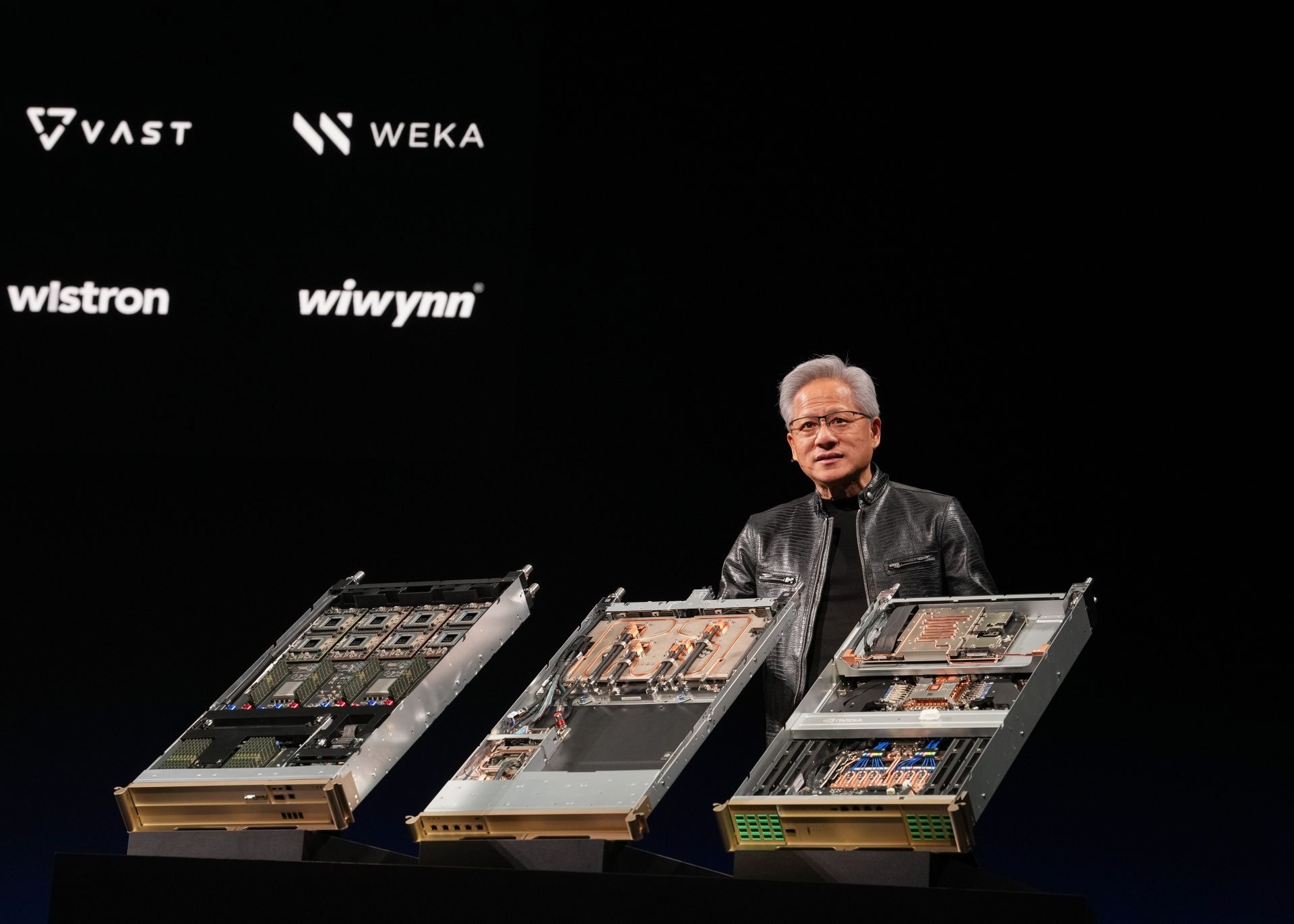
Jensen Huang’s resignation removes a central figure in the partnership that turned Taiwan’s semiconductor and electronics capabilities into the manufacturing foundation of the AI boom. Nvidia announced his departure on November 12, naming finance chief Colette Kress interim chief executive. For Taiwan manufacturers, the immediate concern is less about existing orders than whether Nvidia can sustain the technical direction and supplier coordination that supported its rapid growth.
Nvidia's ties to Taiwan began long before AI servers. Its partnership with TSMC dates to 1998, when it Huang contacted Morris Chang, the TSMC’s chief executive, after production problems at SGS-Thompson. Nvidia also relied on Taiwan’s graphics card makers, including Asus, Gigabyte, LeadTek, and MSI, to bring successive generations of its GPUs to market. As Nvidia moved into accelerated computing, that collaboration extended into servers. In 2017, Foxconn, Inventec, Quanta, and Wistron adopted its HGX reference architecture to build AI systems for large data centers.
Huang understood how both sides of Taiwan’s technology industry worked. Advanced graphics processors required close coordination with TSMC on manufacturing and packaging; delivering working servers required equally detailed cooperation on circuit boards, enclosures, networking, power, and cooling. That understanding became more valuable as Nvidia moved from supplying individual GPUs to designing complete computing racks. Each generation was more complex than the last, posing harder problems of heat, connectivity, and scale for Taiwan’s manufacturers to solve.
Personal relationships reinforced that cooperation. Huang maintained close ties with TSMC founder Morris Chang and met regularly with individual executives including TSMC’s C.C. Wei, Quanta’s Barry Lam, and Foxconn’s Young Liu. He also hosted larger gatherings of Taiwan’s technology leaders, which became known locally as “trillion-dollar dinners,” reflecting the market value of the companies represented. Together, these meetings gave Nvidia a network through which it could communicate its ambitions directly to the people deciding where Taiwan’s manufacturers would invest.
The near-term impact on the industry should be limited. Orders, manufacturing schedules, and customer deployments already under way will continue through the change in leadership. The harder test for Nvidia comes in 2027 and beyond. Cloud operators are increasing their use of custom AI processors, or ASICs, designed for particular workloads, and Taiwan manufacturers produce chips and systems for these customers too. To maintain its position, Nvidia must continue to execute on its roadmap, delivering each new generation on schedule.
That increasingly depends on technologies outside the GPU itself. Nvidia is working with partners in Taiwan on co-packaged optics, which places optical connections close to networking chips to reduce power consumption and support faster communication, and on the transition to 800-volt direct-current power, which requires common standards for converters, connectors, and safety. Settling those technical choices, securing capacity, and keeping suppliers moving together now falls to Huang’s successors. They must do so without the founder who built Nvidia's ties to Taiwan, and against custom chips that grow more competitive with each generation.