



Why Taiwan is learning from Paris to save its concrete jungle cities
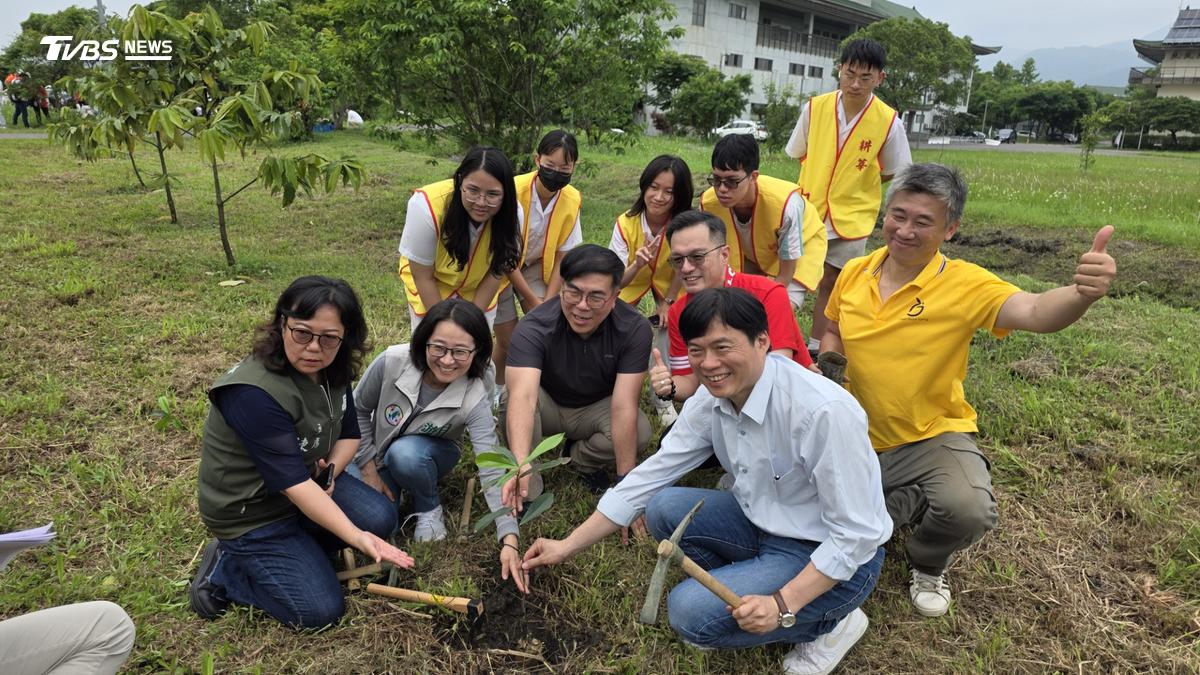
TAIPEI (TVBS News) — How many urban trees does Taiwan have? Authorities say about 1 million. Environment Minister Peng Chi-ming (彭啓明) says that number is nearly useless — "only Taipei, New Taipei City, and Taichung have some data," and even that treats trees as "decorations, not alive."
Now Taiwan is borrowing technology from Paris to find out the truth: LiDAR mapping, AI analysis, and augmented reality to count every tree and identify where millions more should grow.
The initiative began with a presidential memo seven months ago. When President Lai Ching-te (賴清德) handed Peng the assignment, the minister's first instinct was to pass the buck. "I think, okay, this is not my business; it's Ministry of Agriculture, they're in charge of the trees," Peng recalled in an exclusive interview on July 21.
A week later, the president called back. The trees, Lai insisted, were now Peng's responsibility—and the centerpiece of Taiwan's climate adaptation strategy.
Here is how the policy works — and why the minister believes it could transform Taiwan's concrete-heavy cities into greener, cooler places.
Taiwan's Missing Tree Data
LiDAR — a laser-based remote sensing method — can measure tree density, species composition, and identify priority planting zones. Taiwan intends to deploy drones and aerial surveys to create comprehensive urban tree maps. The ministry is also developing an augmented reality application to show residents how streets might look with mature trees a decade from now.
The initiative has moved rapidly through Taiwan's bureaucracy. On July 23, President Lai presided over the eighth meeting of the National Climate Change Committee (國家氣候變遷對策委員會), where the tree initiative featured prominently. "The urban forest planning we proposed at the seventh committee meeting is a climate action in which the entire public can participate," Lai said in measured, formal remarks at the Presidential Office.
The Executive Yuan, Taiwan's cabinet, established a National Urban Forest Promotion Committee (國家都市林推動委員會) in May. "I want to invite the administrative team to ensure that there are channels for participation in the plan by all levels of government, as well as schools, communities, enterprises, and citizens," Lai added. "We must work together in the planning and maintenance of urban forests to make them an important foundation for enhancing urban resilience."
The committee, chaired by Vice Premier Cheng Li-chun (鄭麗君), has convened approximately 20 interministerial meetings involving 10 government agencies. "We want to make this a plan where everyone has a goal," Peng told the committee. "Environmental education is not about sitting in a classroom memorizing books — it should originate from residents' stories about their land and their understanding of life."
The plan calls for 50 public forums by year's end, and the government aims to submit a draft Urban Forest Law (都市森林法草案) to the Legislative Yuan, Taiwan's parliament, next year.
From Tokyo to Taipei
Peng frequently invokes international comparisons to illustrate what Taiwan lacks. In Tokyo, century-old ginkgo trees line streets with elegance. In Melbourne, individual trees have names, and residents can write letters to them. Taiwan's street trees, by contrast, often resemble "an old, very old man, and maybe lost something and not saw sunshine," Peng said.
Lai's vision extends beyond climate metrics to quality of life — "his dream," Peng said, is that Taiwanese "can go out and eat lunchbox in the shadow of the trees."
The initiative faces significant structural hurdles. Under Taiwan's governmental system, only municipal authorities can plant trees; the central government can only set policy. The ministry said it would provide cities with detailed maps identifying where to plant, noting that trees can cool urban areas, reduce air conditioning use, and absorb PM2.5 particulate matter.
No specific budget or tree-planting targets have been announced yet. The draft Urban Forest Law won't reach parliament until next year. For now, the ministry is building something more modest: an augmented reality app that lets residents point their phones at treeless streets and see what shade might look like in 10 years.
"We shall have organization and law and a budget for the trees," Peng said. "That's what we want."
It's a small thing — digital shade on a phone screen. But for a country that doesn't yet know how many trees it has, imagining the forest may be the first step toward planting it. ◼