



Experts warn of Typhoon Ragasa’s powerful circulation
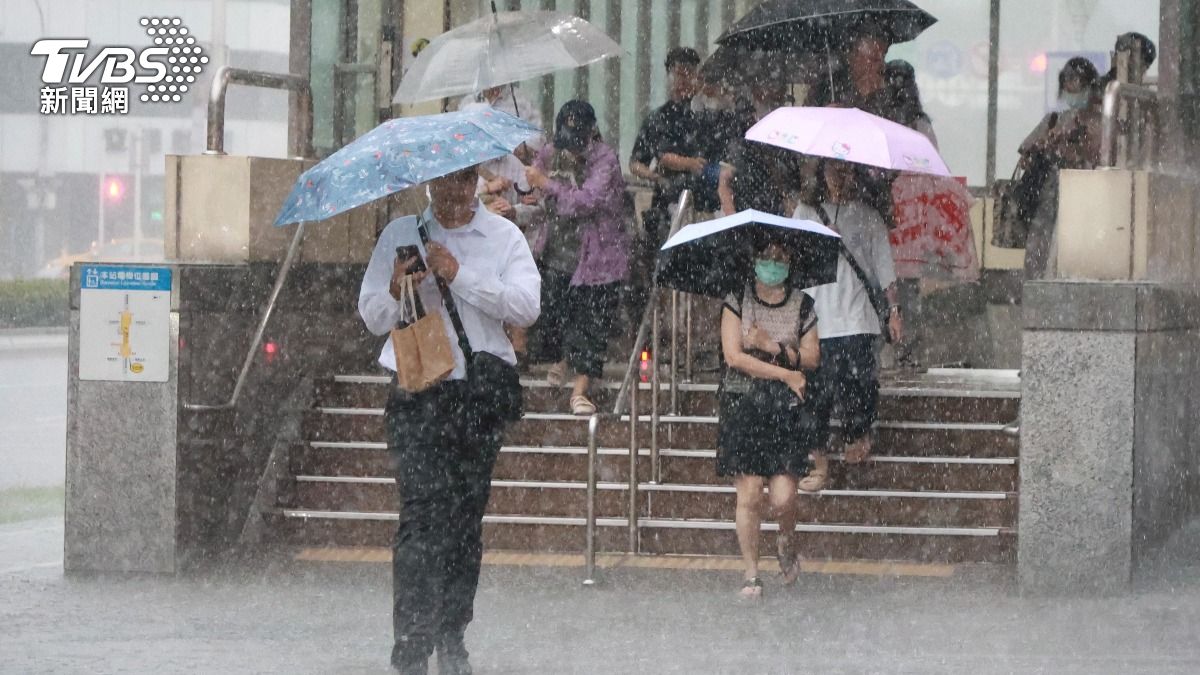
TAIPEI (TVBS News) — Meteorologist Wu Der-romg (吳德榮) declared Typhoon Ragasa (樺加沙) this year's strongest storm Monday (Sept. 22) as it tracked 400 kilometers southeast of Eluanbi (鵝鑾鼻). The powerful typhoon advances west-northwest at 19 to 22 kilometers per hour, threatening Taipei, eastern, and southern Taiwan with heavy rainfall. Weather officials warn the storm's massive circulation poses significant risks to multiple regions across the island.
Wu Der-romg (吳德榮) explained in his National Central University (NCU, 中央大學) column that European weather models predict Ragasa (樺加沙) will traverse the Bashi Channel into the South China Sea from Monday through Wednesday (Sept. 22-24). The meteorologist noted the typhoon's outer circulation interacting with Taiwan's terrain will generate rainfall across Taipei, eastern, and southern regions. Wu also warned Taitung and Hengchun Peninsula (恆春) residents to prepare for dangerous winds and high waves along coastal areas.
Taiwan will experience hot weather amid the typhoon's circulation, with northern temperatures reaching 25 to 32 degrees Celsius (77 to 90°F). Central regions face 24 to 36 degrees Celsius (75 to 97°F), southern areas 24 to 35 degrees Celsius (75 to 95°F), and eastern regions 23 to 30 degrees Celsius (73 to 86°F). Wu Der-romg (吳德榮) projected Ragasa (樺加沙) will move away by Thursday (Sept. 25), improving conditions in Hualien and Kaohsiung before sunny, hot weather dominates Friday through Sunday (Sept. 26-28). ◼
>>> In case of a typhoon or natural disaster, you should prepare for the storm and avoid going outside. Stay away from beaches and coastal areas for wave-watching or water activities. Be alert for strong winds and heavy rain while watching for landslides and falling rocks. Remember that emergency assistance is available at 119/1999, maritime emergencies at 118, and police or disaster reporting at 110/119.