


Taiwan tech weekly roundup: Nvidia deepens Its manufacturing commitments
Jensen Huang’s departure has focused attention on the manufacturing relationships behind Nvidia’s growth. This week, the company reinforced them, announcing supplier agreements alongside quarterly results in which revenue doubled. Across Taiwan, the same AI investment cycle is reshaping PC brands, expanding the chip testing industry, and creating business around competing chip architectures.
Nvidia’s agreements show how securing production now means helping to pay for it. Kinsus will receive more than US$1 billion for equipment and plans to increase its Nvidia-dedicated substrate capacity to more than 3.5 times its current level. Production at its Taoyuan site is expected to begin in the second half of 2027, with additional capacity targeted for 2028. Substrates carry signals and power between chip packages and circuit boards, and they become harder to manufacture as AI packages grow larger.
ASE subsidiary SPIL secured multibillion-dollar backing to triple the advanced packaging capacity covered by its Nvidia agreement by mid-2029. The expansion includes bumping, interposer fabrication, assembly, and testing. Together with earlier commitments involving Unimicron and KYEC, the agreements give suppliers funding and a committed customer to build for. They also underline how much of Nvidia’s roadmap depends on manufacturing it does not own.
The shift is equally visible among Taiwan’s PC brands. Gigabyte’s third-quarter revenue rose 94.4%, with servers now generating most of its sales. Asus’s infrastructure business contributed 30% of quarterly branded revenue, and the company is combining servers with partners’ power and cooling equipment. Both are taking responsibility for more of the systems customers need to deploy AI.
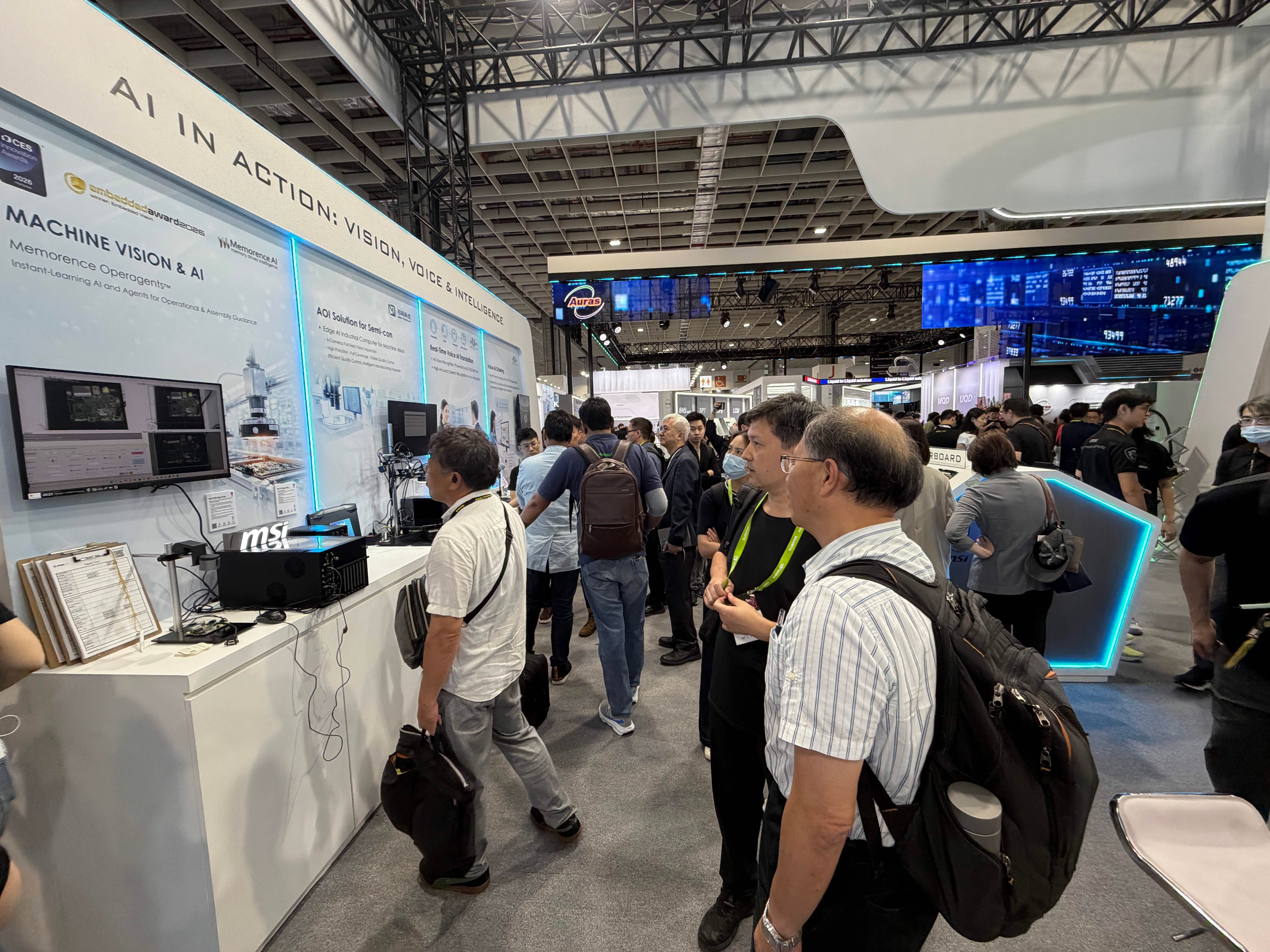
MSI is concentrating on private AI workstations and compact systems, supported by software partners through its AI Connect initiative. Acer is pursuing a related opportunity through Altos servers and workstations, deployment software, and system-integration partners. Their customers need help putting AI into operation within their own organizations, a market that extends well beyond the largest cloud data centers.
Custom AI processors, or ASICs, are adding a second source of expansion. Google’s TPUs and Amazon’s Trainium systems generate orders for Taiwan’s chip designers, foundries, packaging companies, server builders, and cooling suppliers, and AVC expects ASIC-related revenue to exceed its GPU-related business in 2027. Competition that challenges Nvidia is therefore bringing more additional business to many of its partners in Taiwan.
The government’s draft 2027–2030 technology strategy looks at the next step, which is turning manufacturing strength into wider technological and commercial capabilities. Presented on November 16, it links semiconductor leadership with sovereign AI, robotics, silicon photonics, and broader business adoption of AI.
The week’s news points in two directions. Nvidia’s commitments are underwriting Taiwan’s next round of capacity investment, tying its customers more closely to the company in the years ahead. Growing ASIC orders and private AI deployments are meanwhile widening the range of customers those same suppliers serve. Taiwan’s technology industry is deepening its largest partnership and reducing its reliance on it at the same time.