



Taiwan wraps up war games as U.S. touts quiet deterrence
TAIPEI (TVBS News) — President Lai Ching-te (賴清德) stressed societal resilience Thursday (Aug. 13) as Taiwan's annual Han Kuang military exercises entered their last stretch — a theme that aligns with the Trump administration's emphasis on "strategic stability" over rhetorical escalation.
The 10-day drill, which mobilized more than 5,000 reservists, wraps up Friday after China conducted a rare joint naval exercise with an Indonesian warship in waters east of the island. Taiwan's Mainland Affairs Council (大陸委員會) condemned the drill as "political manipulation" aimed at creating a false impression that Beijing holds jurisdiction over those waters.
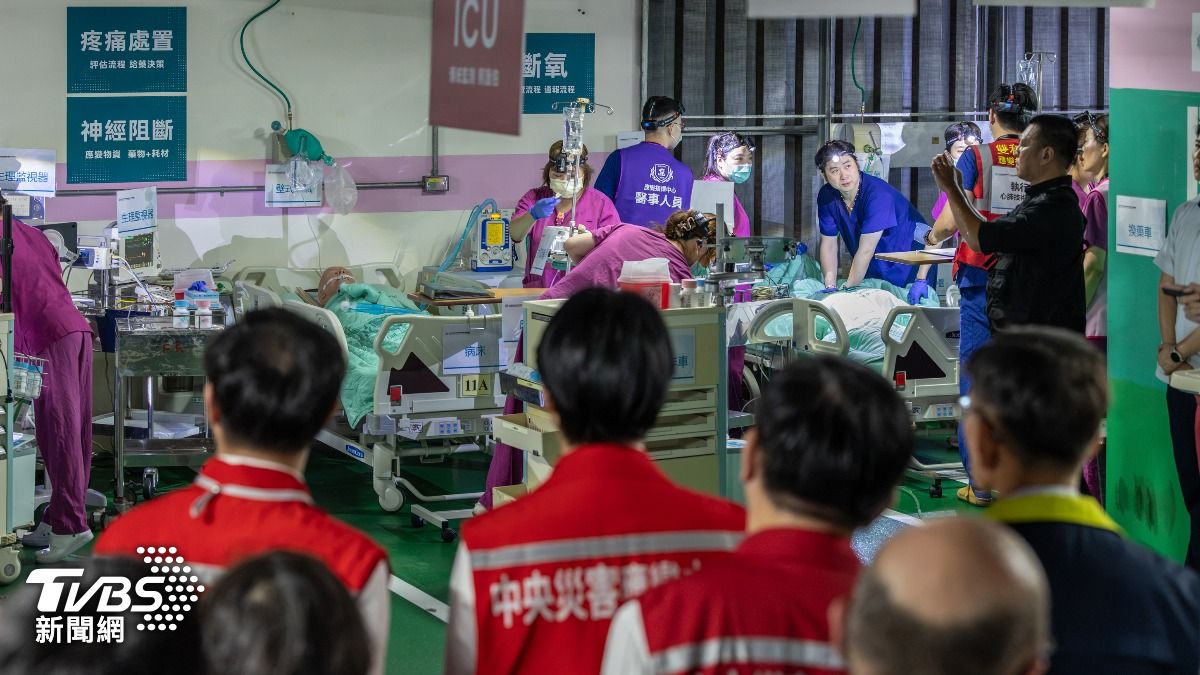
Speaking at an Urban Resilience Exercise (城鎮韌性演習) in New Taipei City on Thursday, Lai said civil defense preparedness is essential to maintaining stability during crises. This year's civil defense component was expanded from one day to two and coordinated with the Han Kuang military drills.
"When we have more exercises, we have more resilience," Lai said. "When resilience increases, society gains more stability when situations arise, and the impact on our lives is reduced."
American Institute in Taiwan Director Raymond Greene attended the civil defense drills alongside Canadian and Israeli representatives and other foreign envoys.
Lai framed Taiwan's security as a matter of international concern, invoking the Confucian saying: "Virtue is not solitary; it must have neighbors" (德不孤,必有鄰). He added: "Facing changes in regional geopolitics, we do not face them alone."
Pentagon policy chief Elbridge Colby, who met with Indonesian officials in Jakarta earlier this week, outlined the administration's approach during a virtual press briefing Thursday. He said the U.S. is "consciously distinguishing" its strategy from the Biden administration, which he characterized as emphasizing rhetoric over military capability.
"Strong and clear, but quiet," Colby said of the U.S. deterrence posture. He described a strategy of "quietly, relentlessly increasing deterrent strength and capability, but coupling that with well-advised rhetorical language."
Colby placed the approach in historical context, citing Dwight Eisenhower, Richard Nixon and Ronald Reagan. "President Reagan was the one who met General-Secretary Gorbachev in Reykjavik and visited Moscow while he was president and brought the Cold War to a conclusion through diplomacy," he said.
The Han Kuang 42 (漢光42號) exercises tested Taiwan's ability to repel a Chinese invasion through four phases: war preparation, force preservation, joint anti-landing operations and sustained defense. For the first time, commanders operated without predetermined scripts.
China's announcement of the joint drill with Indonesia came as Colby met with Indonesian Defense Minister Sjafrie Sjamsoeddin in Jakarta on Tuesday. Wu Tien-jen (吳天任), Taiwan's assistant deputy chief of the general staff for intelligence, told legislators Wednesday the Indonesian warship was returning from Japan rather than specifically deploying for the exercise, Reuters reported.
Wu said the drill does not have a direct military impact on Taiwan but carries geopolitical significance.
The ship was positioned 70 to 80 nautical miles (130 to 148 km) off Taiwan's east coast. Taiwan's Ministry of Foreign Affairs (外交部) said it had asked Indonesia for clarification.
Colby said Indonesia is "a very important country" and the U.S. is "looking to deepen our defense relationship" with Jakarta. He described the administration's broader approach as "that relentless strengthening of deterrence throughout the region designed for that peace-through-strength model."
Colby, who has sought unsuccessfully for months to secure an invitation to Beijing, said the approach is designed to promote "strategic stability." Beijing has declined to host him, reportedly citing displeasure with a record US$11 billion (around NT$353 billion) arms sale to Taiwan approved in December.
Taiwan's government says only the Taiwanese people can decide their future. ◼ (At time of reporting, US$1 equals approximately NT$32.11)