


Why AI’s real-world shift demands a new focus on trust
While everyone debates how much code generative AI has written for us and how many decisions AI agents have made on our behalf, Physical AI has quietly entered the real world. If video generation fails, a simple refresh allows a do-over. But when self-driving cars take to the roads and caregiving robots enter hospital wards, AI development undergoes a massive paradigm shift, shifting the competitive focus from technical accuracy to societal accountability.
This is the central idea I want to propose: if Physical AI brings machines into the real world, then we need Soft AI to truly integrate AI into human society.
Hard AI Provides the Engine; Soft AI Builds Trust
Taiwan has long possessed world-leading capabilities in hardware technologies such as semiconductors, sensors and motor systems. If technology and hardware serve as the engine of Physical AI — what we might call Hard AI — then social acceptance and institutional trust represent Soft AI. These are the pivotal factors that determine whether technology can be deployed at scale.
Having worked in the media industry for many years, I have seen TVBS, a major Taiwanese television network, consistently uphold three core values: Truth, Trust and Technology. Technology determines whether something can be achieved. Truth determines whether it can withstand scrutiny. And Trust determines whether the public is willing to entrust their lives and livelihoods to it. This is not only a standard journalists hold themselves to but also a mandatory lesson for the entire AI industry going forward.
At TVBS, we have organized AI hackathons, deployed more than 800 AI agents and developed an AIQ diagnostic tool. These experiences have led me to a profound realization: machines handle speed, while humans handle expertise and trust. The softer elements, social communication and humanistic thinking, form the foundation for technology to realize its value.
Observations From Arizona: Taiwan's Shift From 'Just Do It' to 'Just Say It'
Recently, I traveled to Arizona to observe firsthand how the local semiconductor industry cluster is taking shape. That experience offered profound insights: for a world-class industry cluster to truly function, it requires leading companies like TSMC (台積電), supply chains, government, universities and infrastructure all working in tandem. When Arizona State University (亞利桑那州立大學) rapidly translated corporate needs into talent development programs, the cluster's ecosystem came alive.
This brought Taiwan to mind. Taiwanese companies have always excelled at "Just Do It," working quietly, pushing yields to perfection and making our manufacturing so essential that the world cannot function without it. This same ethos is the foundation enabling operations in Arizona. But in the next stage of the global technology race, hard work alone is no longer enough. We must learn to "Just Say It."
The "Say" here is by no means superficial marketing spin, but rather a strategic, macro-level capability for storytelling.
As we witnessed while producing "The Rise of the Silicon Desert" (矽沙漠崛起) during our visit to Arizona, we saw this principle in action: when we tell the story of how Taiwanese companies are transforming an American city and driving supply chains and talent development, the world finally grasps Taiwan's critical influence on the global stage.
Can we turn an extremely complex technology into a story that global markets and the public can understand, one that explains why it matters? Can we help international capital recognize long-term value? Competition in the technology industry extends beyond product specifications to encompass attention, talent, capital and the power to set standards. Whoever can articulate an issue clearly can define it; whoever can consistently provide credible information can build international trust.
From the hardcore technology of Hard AI to the social trust of Soft AI; from the practical "Just Do It" ethos to the globally influential "Just Say It" approach, when Technology, Truth and Trust advance together, technology can truly empower cities and industries, leading us into a future that combines technological sophistication with humanistic warmth. ◼
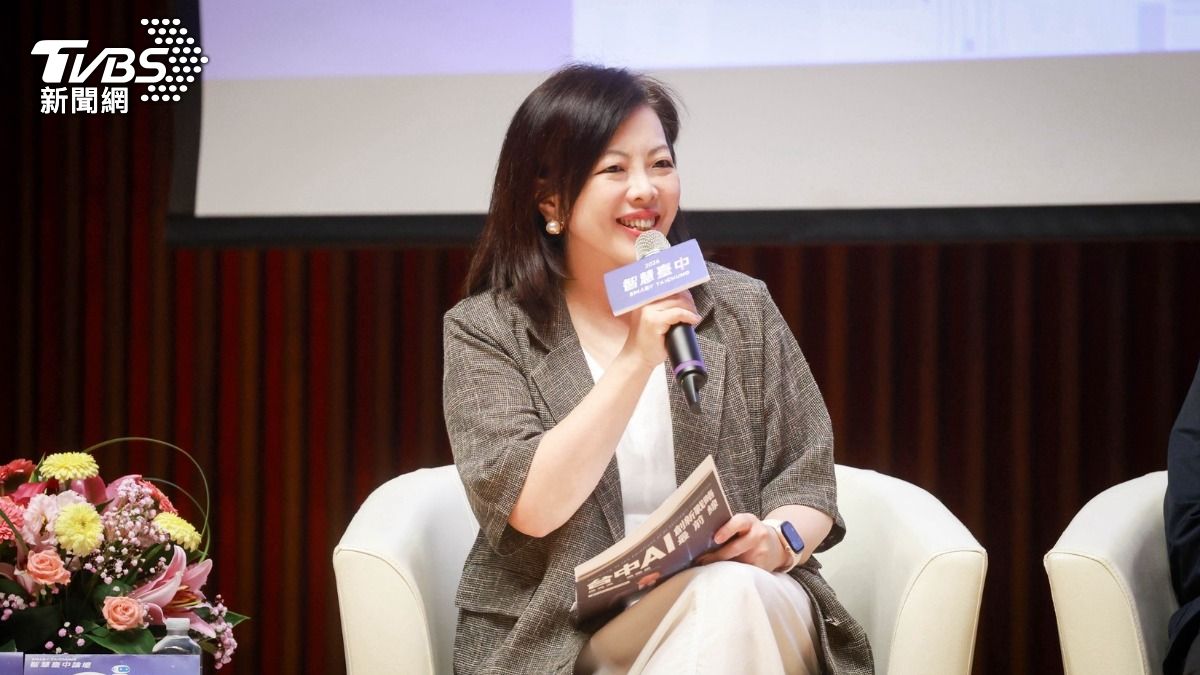
>>> Sheena Liu is the president of TVBS Media Inc., Taiwan's leading media company, where she has led a comprehensive digital transformation integrating AI, OTT platforms and cross-department collaboration. Under her leadership, TVBS has earned the Harvard Business Review Digital Transformation Award and the Asia Corporate Social Responsibility Award.