


Why Trump’s Taiwan arms gamble has Asian allies on edge
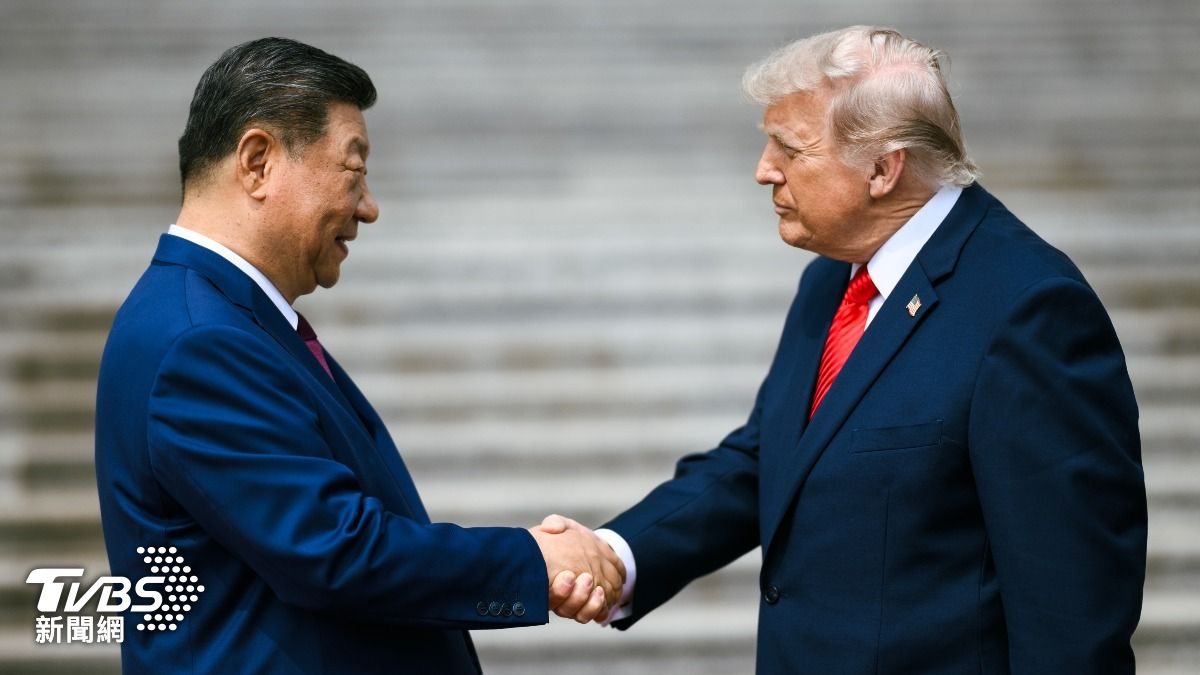
TAIPEI (TVBS News) — The Trump administration has frozen a US$14 billion (around NT$444 billion) arms sale to Taiwan since May, calling it a "bargaining chip" in negotiations with Beijing. But on the eve of the Trump-Xi summit, U.S. allies in Asia are pushing back with a rare joint statement backing Taiwan Strait stability.
The statement, issued Monday by the foreign ministers of the U.S., Japan, and South Korea, "emphasized the importance of maintaining peace and stability across the Taiwan Strait" and "encouraged the peaceful resolution of cross-Strait issues."
Taiwan's Presidential Office (總統府) welcomed the trilateral statement. Spokesperson Karen Kuo (郭雅慧) said on Tuesday that peace and stability across the Taiwan Strait "represent the broadest consensus in the international community" and "concern core interests shared by countries around the world."
Chinese President Xi Jinping (習近平) arrives in Washington on Wednesday (Sept. 23) local time for a three-day state visit, with bilateral meetings scheduled for Thursday. President Trump will personally greet Xi at Joint Base Andrews in Maryland, an unusual gesture that includes a military ceremony with nearly 480 service members.
The arms package, which includes weapons Taiwan has already ordered, has been on hold since Trump's Beijing visit in May. Even scheduled F-16 deliveries have been delayed. A separate US$11 billion (around NT$349 billion) sale was approved last year, but the larger package remains stalled.
Kuo said Taiwan "stands on the frontline of the democratic world." She added that Taiwan would continue working with democratic partners to strengthen its self-defense capabilities and supply chain resilience.
Beijing is pushing Trump to invoke the 1982 August 17 Communiqué, which stated the U.S. would gradually reduce arms sales to Taiwan. Xi may raise the document during his visit, possibly at the U.S. National Archives, where the original is stored, Reuters reported.
Secretary of State Marco Rubio, Japanese Foreign Minister Toshimitsu Motegi, and South Korean Foreign Minister Cho Hyun met on the sidelines of the U.N. General Assembly in New York to issue the statement. It opposed "any attempts to unilaterally change the status quo" and supported Taiwan's "meaningful participation" in international organizations.
The trilateral statement appeared to reflect prior coordination before the Trump-Xi meeting, according to reports. But the summit agenda is being driven by Treasury Secretary Scott Bessent, not the State Department or National Security Council, the Washington Post reported.
Trump's 2026 National Defense Strategy no longer names China as a primary threat, instead calling for "stable, peaceful relations" with Beijing.
Taiwan's Ministry of Foreign Affairs (外交部) welcomed the statement, with Foreign Minister Lin Chia-lung (林佳龍) expressing "sincere gratitude." Taiwan's Mainland Affairs Council (陸委會) has maintained that three things remain unchanged: U.S.-China competition, U.S. policy goals toward Taiwan, and Taiwan's commitment to the status quo.
National security officials in Taipei believe Beijing's goal is to push any major arms sale past November's APEC summit, or even past Christmas. "There's no doubt China will try to drag this out," one official told the Liberty Times.
Taiwan's ruling Democratic Progressive Party (民進黨) argues the Communiqué has a precondition: that China pursue peaceful resolution of cross-strait issues. The U.S. issued the "Six Assurances" (六項保證) on the same day in 1982, declassified in 2020. Those assurances state the U.S. has not set a date to end arms sales and will not consult Beijing beforehand.
State Department spokesman Jakob Lengacher reaffirmed in an interview with Voice of America on Tuesday (Sept. 22) that U.S. policy toward Taiwan "has not changed." But for Taiwan and its regional allies, the question remains: whether Trump's pursuit of "stable, peaceful relations" with Beijing will come at their expense. ◼ (At time of reporting, US$1 equals approximately NT$31.73)