



Xpeng takes its automotive AI into humanoid robots
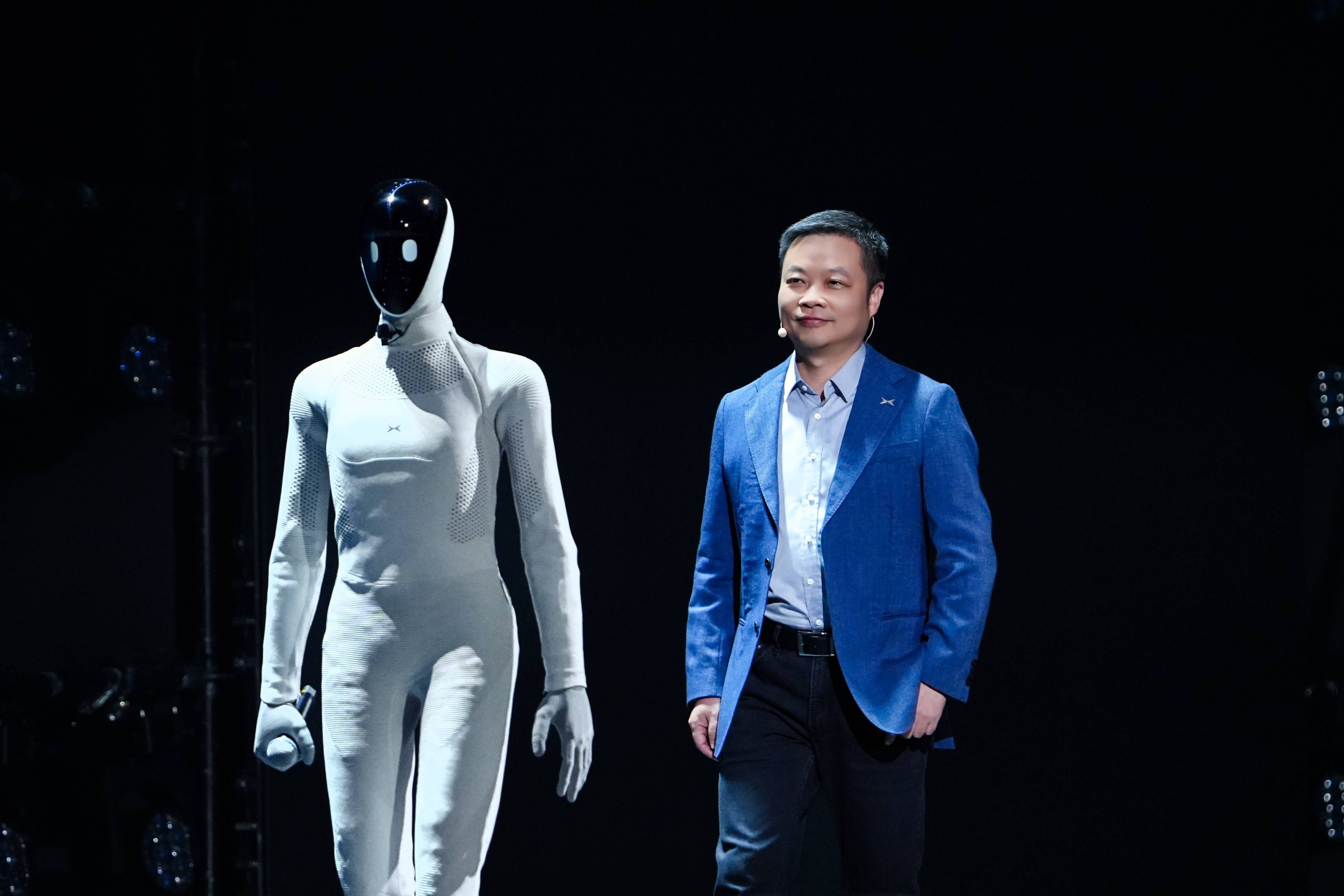
Xpeng plans to turn its car showrooms into workplaces for humanoid robots. The Chinese electric-vehicle manufacturer will begin training its IRON robots as store assistants in early 2027. Customer reception and product guidance will test whether its automotive AI expertise can support a business beyond cars.
At its AI Day in Guangzhou on November 25, Xpeng introduced its Turing Physical AI Architecture, a framework linking perception, decision-making, and physical movement. Physical AI refers to systems that interpret their surroundings and act on them through machines. The strategy brings vehicles and robots onto a shared foundation of proprietary chips, software, and control technology.
The architecture divides the work between three layers. One plans tasks, another interprets the environment and makes rapid decisions, and a third controls the hardware. The separation addresses a practical problem. A robot can take a moment to interpret an instruction, but it must keep its balance and react to contact instantly.
IRON runs on three Xpeng-designed Turing AI chips. It has 76 degrees of freedom, the independent movements its joints can perform, and more than 1,500 tactile sensing points. Xpeng says touch sensing covers over 80% of key body areas. Together, these let the robot move, interact, and handle objects.
Manufacturing is central to the plan. Xpeng says mass production of the hardware will begin in January 2027. Its automated line is designed to complete one robot every 2.5 minutes at full capacity. A dedicated training facility covers more than 250 scenarios and 15 job categories.
The proposed business combines robot sales with software subscriptions and downloadable capabilities developed by partners. Starting in its own stores gives Xpeng controlled locations in which to refine tasks, collect operating data, and identify failures before pursuing wider deployment.
The same technology extends to autonomous transport. Xpeng plans to release its purpose-built YOYO-01 robotaxi in 2027, supplying vehicles and autonomous-driving technology to operating partners.
Xpeng’s car business gives it engineering, testing, and manufacturing experience that robotics startups must build from nothing. The showroom is a sensible place for IRON to start. The tasks repeat, the setting is controlled, and Xpeng is its own customer. The harder sales comes later, when another business has to decide whether a robot earns more than it costs to maintain and supervise.