



Taiwan tech weekly roundup: AI orders grow as pressures spread
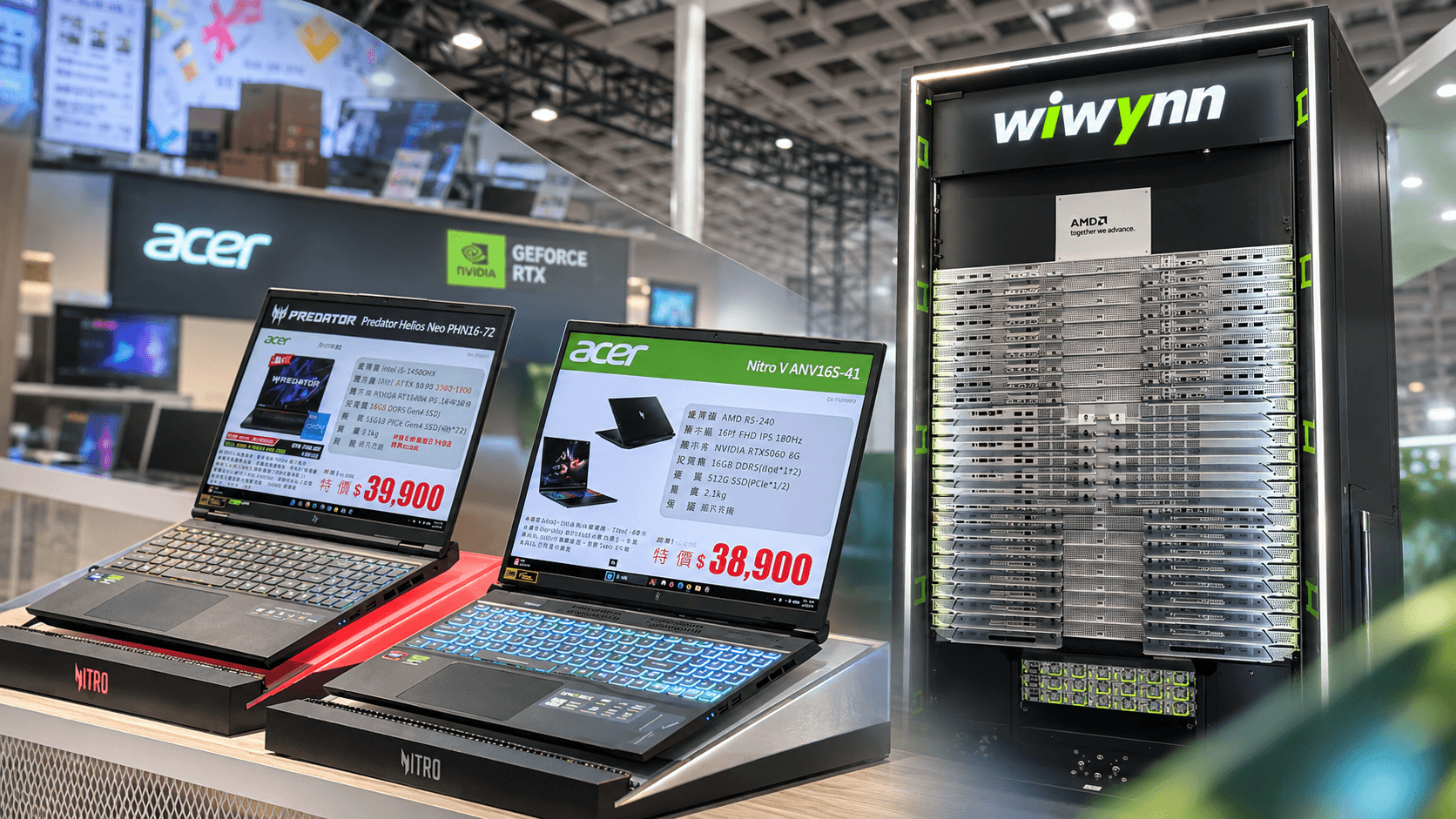
Dell’s results this week showed both faces of the AI boom inside one company. Its AI server orders reached US$60.2 billion in the quarter, even as customers postponed PC purchases to fund infrastructure. Across Taiwan, that divide is widening. Companies supplying advanced chips, circuit boards, and packaging are expanding, while computer brands are contending with higher costs and cautious buyers.
AI infrastructure demand remains firm. Dell’s backlog reached US$132.3 billion, and UBS expects global AI-related investment to rise from US$1 trillion this year to US$1.4 trillion in 2027. Taiwan’s manufacturers are seeing demand broaden beyond Nvidia’s platforms, with Quanta expecting other projects to contribute a double-digit share of its AI server revenue next year. Custom processors bring orders to many of the same suppliers that build Nvidia systems.
The growth is reaching further into the manufacturing chain. Taiwan’s PCB makers are supplying boards with more wiring layers and tighter tolerances to connect increasingly powerful processors. AI servers now generate more than half of Gold Circuit Electronics’ revenue. Tripod is benefiting from conventional servers and memory modules as well, showing how the investment spreads beyond the AI accelerators themselves.
Substrates, the finely wired bases beneath chip packages, face similar demands. Larger processors and memory assemblies require more connections, more manufacturing steps, and better control of distortion. Unimicron, Kinsus, and Nan Ya PCB are investing to meet those requirements. Their expansion depends in turn on specialty fiberglass cloth, which strengthens boards and substrates, helps preserve signals, and resists temperature changes. Materials once overlooked in discussions of computing performance are becoming constraints on production.
The activity shows in Taiwan’s industrial output, which rose 29.8 percent in October to a record. Servers and networking equipment led the increase alongside semiconductor inspection and testing systems. Manufacturers are filling current orders while buying the equipment needed to supply the next round. SEMI Taiwan president Terry Tsao expects the AI supply chain to remain short of capacity through 2028 and possibly 2029.
TSMC is preparing for that longer expansion. Its Texas application outlines a proposed US$22.6 billion facility, still subject to approvals and a final investment decision. In Arizona, it will break ground on its next phase on December 4. In southern Taiwan, Taipower’s planned US$3.3 billion grid investment shows that new chip capacity needs electricity infrastructure built alongside it.
PC makers face the other side of these pressures. HP’s quarterly computer revenue rose 14 percent even as shipments fell 29 percent. Its operating margin narrowed as memory and storage approached 40 percent of component costs. Acer is concerned about inventory, and Dell says corporate buyers are directing budgets toward AI infrastructure. Higher prices are holding up revenue while demand stays weak.
Taiwan’s manufacturers are also seeking new uses for the computing they build. At next week’s Healthcare+ Expo, Asus and Compal will demonstrate AI agents, robots, and software designed to coordinate hospital work. The projects apply the industry’s experience of integrating hardware to services that hospitals can put to use.
The week’s news shows AI investment spreading through Taiwan’s economy, with benefits and costs arriving together. Component suppliers gain from more demanding products and scarce capacity. PC brands face the resulting price pressure. If SEMI’s forecast is right, that imbalance will last until new factories catch up with orders, which make take until 2029.